
en

Scissor lift hour meter tampering cannot be prevented completely, and any supplier who says otherwise is selling a feeling. What you can rely on is the stored controller log: runtime hours, fault codes with timestamps, charge cycles and overload events. That log survives an hour meter reset and is difficult to alter without specialist equipment. The mechanical hour meter on the dash survives nothing, and treating it as the primary record is the mistake most hire desks make.
| Record | Where it lives | Survives a reset | Practical value |
|---|---|---|---|
| Mechanical hour meter | Dash, wired to ignition | No — and it can be disconnected in minutes | Almost none as evidence |
| Controller runtime counter | Controller memory | Yes, until the log rolls over | Good, if you read it regularly |
| Fault code history | Controller memory, timestamped | Yes | High — shows what the machine has been asked to do |
| Charge cycle count | Controller or charger | Usually | High — cycles track real working days better than hours |
| Overload events | Controller memory | Yes | High — the only proof that a machine was abused |
The pattern is consistent: the records that are easiest to read are the easiest to falsify, and the scissor lift usage data that matters needs a laptop or a service tool to extract. Anyone seriously worried about scissor lift hour meter tampering should be reading those, not the dash display, which is the least reliable number on the machine.
Hours tell you how long the machine was switched on. They do not tell you whether it was working or parked with the key in. Two machines can show 400 hours where one did 300 lifts and the other did 60, and the maintenance burden is completely different.
Charge cycles are a better proxy. A machine that went out on forty separate hires will show a cluster of charge cycles; a machine that stayed on one site for two months shows one charge cycle per day and a high hour count. Read together, the two numbers tell you which machine led the harder life, and that is the machine you inspect more closely before it goes back out.
Fault code history is the part operators do not think about. A tilt warning logged every afternoon for three weeks is not a fault. It is a machine being driven on ground it should not be on, and it is worth a conversation with the customer before the damage happens rather than after.
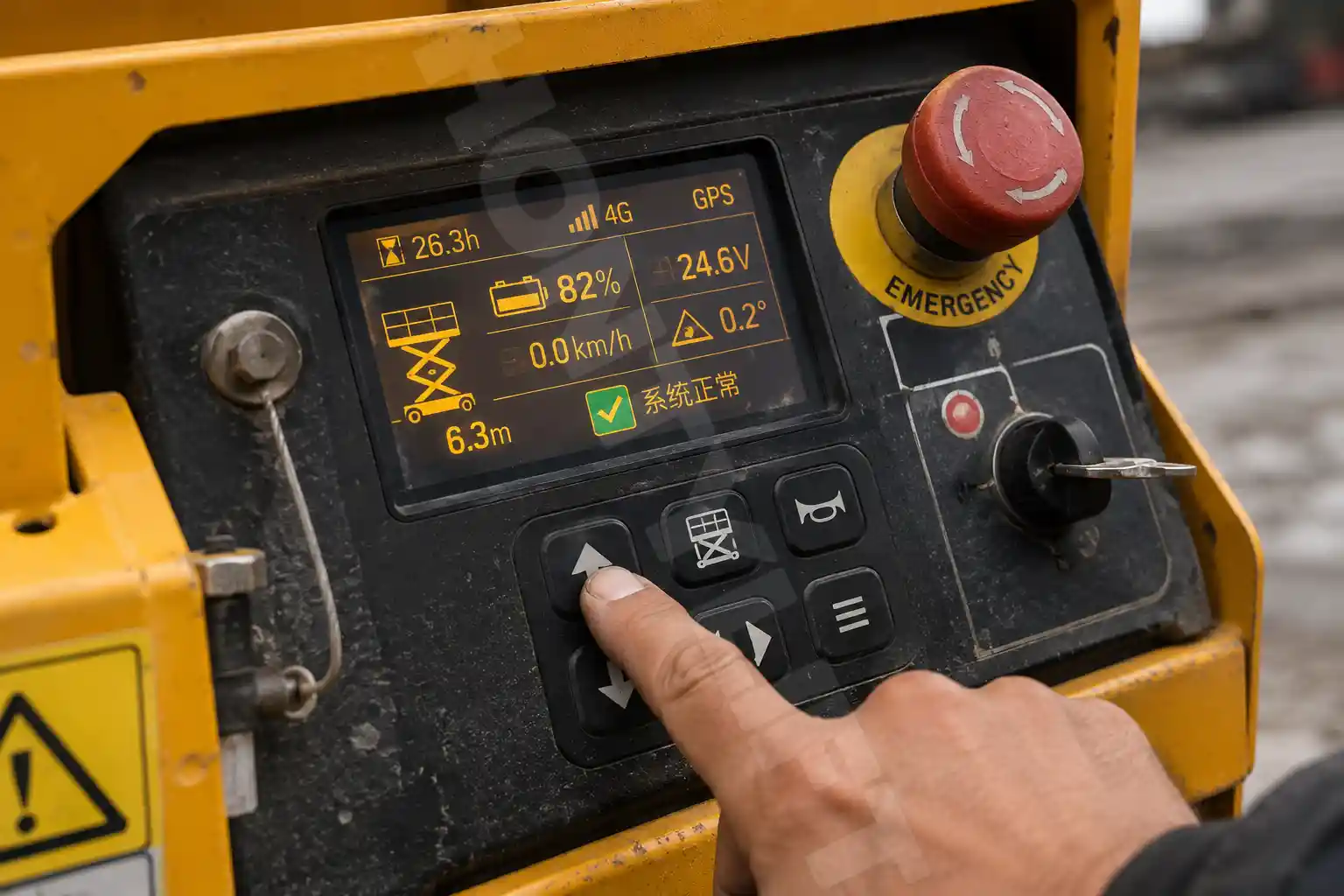
The display is the least reliable record on the machine. The stored log behind it is the one that matters.
The log rolls over. Controller memory holds a fixed number of events. On a busy machine the oldest entries disappear in weeks, not years. If you plan to use the log in a dispute, you have to read it at the point of return, not at the end of the quarter.
The clock is only as good as its battery. Timestamps depend on the controller keeping time. On a machine that has had its main pack disconnected for a long period, the timestamps can be meaningless or reset to a default date. A log without a valid clock is a list of events with no order.
Access is not universal. Reading the full log needs the right service tool and, on some controllers, a manufacturer-level password. Ask before you buy whether the full log is accessible to the owner, and get the answer in writing. A machine whose history only the manufacturer can read is not much use to a hire fleet.
A scissor lift controller log is evidence of what happened. It is not a contractual term. If the hire agreement does not say who bears the cost of an overload event, the log will prove the event occurred and will not tell you who pays for it. The two things work together: the contract sets the rule, the log establishes the facts.
The clauses worth having, in plain terms: hours billed are those on the controller, not the dash; the customer accepts that the controller records overload and tilt events; and the machine is returned with the log unread until the return inspection. That third clause is what makes the other two enforceable, because it puts the reading at a moment when both parties are present.
We provide a log extract template that becomes part of your hire fleet records: a one-page sheet for controller hours, charge cycles, overload count and the last twenty fault codes, to be filled in at return. It takes about four minutes per machine. Fleets that use it recover damage costs far more often than fleets that do not, and the reason is not the technology. It is that the reading happens while the customer is still standing there.
Ask for the template with your quotation, or send us the controller model you already run through the contact form and we will tell you what is readable on it. Machine specifications are on the range page.
Tell us the constraint you are stuck on — floor loading, doorway width, cold store, aisle width, charge window. We will tell you which model works, what it costs, and what we would refuse to sell you.
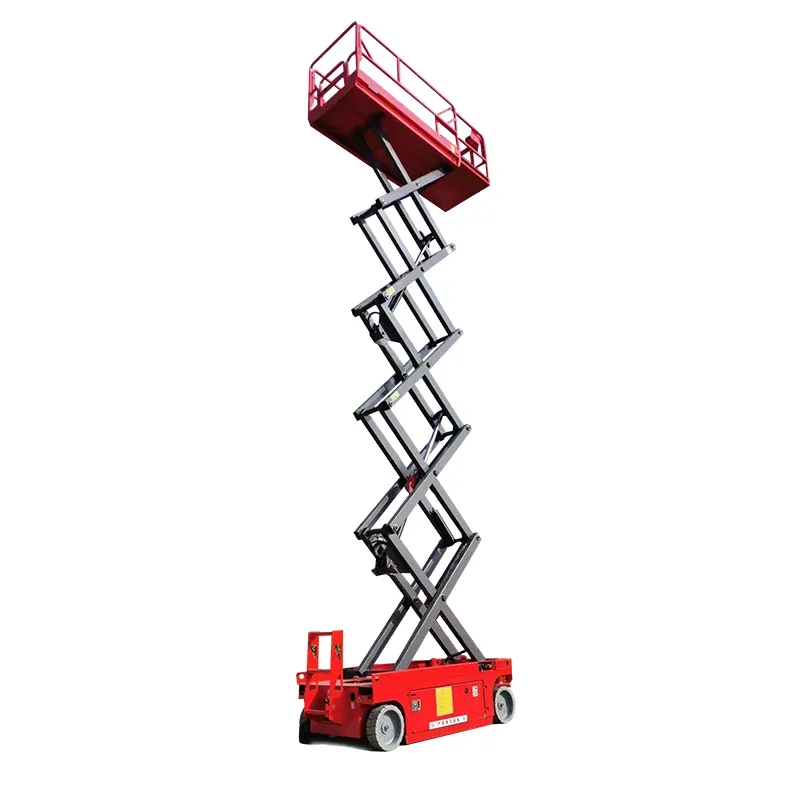 GTJZ-1012 32ft (9.8 m) Self-Propelled Scissor Lift — 320 kg