
en

A scissor lift pre-delivery inspection on a returning machine takes about ninety minutes if it is done in a fixed order, and the order matters more than the duration. Start at the structure, move to hydraulics, then electrics, then safety devices, and finish with cleaning and photography. Done in that sequence, the inspection finds the twelve things that actually account for returns. Done in the order people naturally work — plug it in, raise it, see if it moves — it finds almost nothing.
A machine that raises smoothly can still have a bent pothole bar, a cracked weld at the mast base or a controller that lost its fault history. All three pass a functional test and all three come back off hire within a week. The order below is arranged so that a failure early on stops the scissor lift PDI: there is no point testing electrics on a machine with a structural crack.
| Stage | Time | What is checked | Stop condition |
|---|---|---|---|
| 1. Structure | 20 min | Mast pins and bushes, weld toes at the base, deck and deck hinge, guardrail straightness | Any crack, or pin wear beyond spec: machine goes to workshop |
| 2. Hydraulics | 20 min | Cylinder seals, hose condition, oil level and colour, leak traces at fittings | Any weeping fitting, or oil that is milky or black |
| 3. Electrics | 25 min | Battery condition, terminal torque, charger output, emergency stop, horn, controls | Charger output more than 10% below rating |
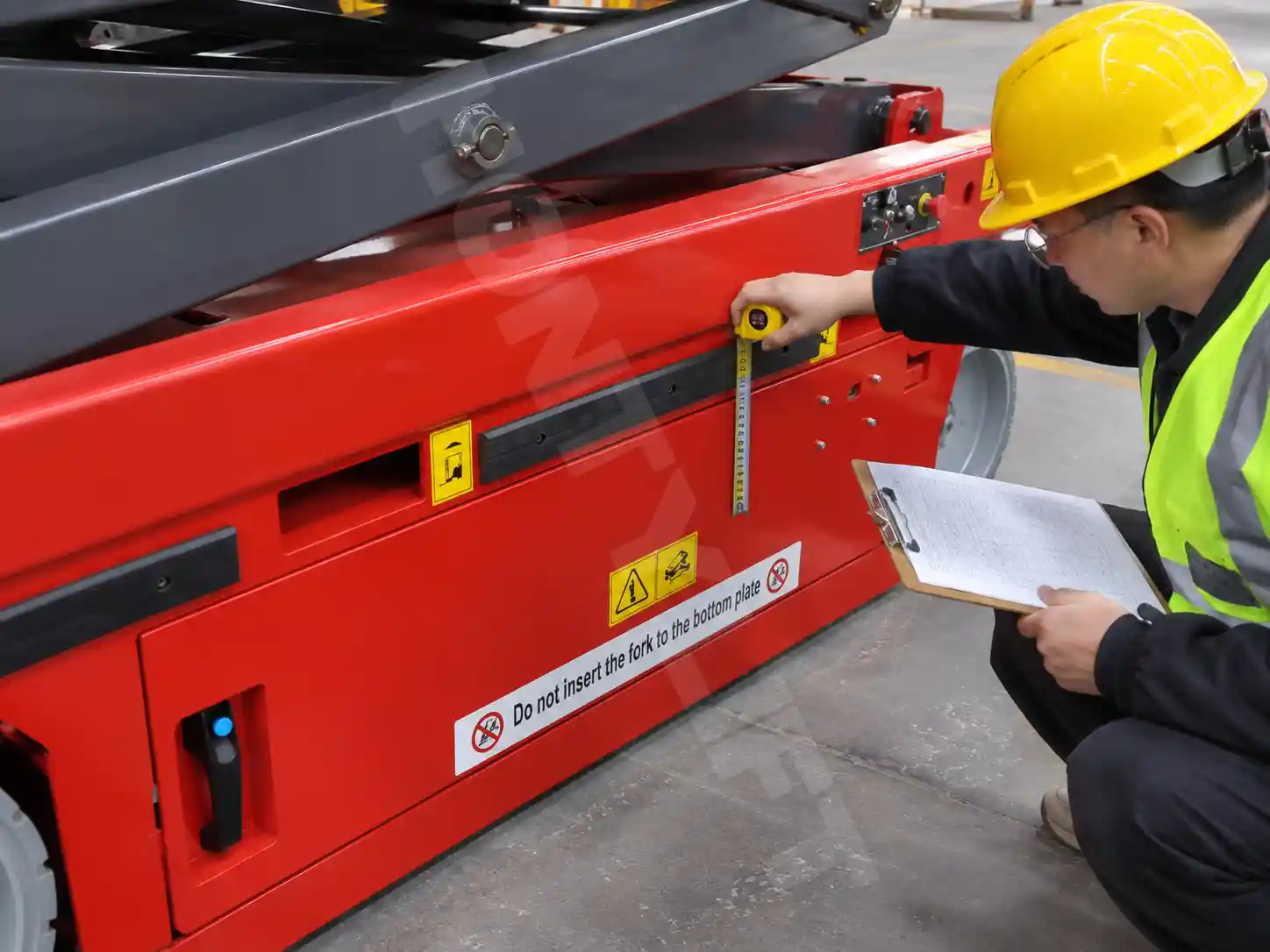
| 4. Safety devices | 15 min | Pothole bars, tilt switch, overload, gate switch, descent alarm | Pothole bar deformed over 5 mm |
| 5. Clean and photograph | 10 min | Machine washed, hour meter photographed, four corner photographs | Missing photographs: no dispatch |
The pothole protection bar hangs under the chassis and is designed to fold down and stop the machine if a wheel drops into a hole. On a returning machine it is the most commonly damaged component, because it is the lowest thing on the machine and every kerb, ramp and loading lip finds it.
Slight deformation is normal and harmless. Beyond 5 mm out of line, the bar no longer sits at the correct height when deployed, and the switch that confirms deployment can read "down" when the bar is not fully down. That is the failure that matters, because the machine will then drive with the platform raised in a condition it believes is safe. We replace the bar rather than straightening it. A straightened bar looks correct and has lost the stiffness that made it work.
Ninety minutes is not a service. It is a decision about whether the machine goes out this afternoon or goes into the workshop.
Pin and bush wear at the mast. A worn bush shows as a small step in the platform as it rises, and it is easy to mistake for a hydraulic issue. Measure at the pin, not at the platform. Worn bushes are cheap to replace and expensive to ignore, because they transfer load into the mast plates.
Oil colour. Hydraulic oil that has gone milky has water in it, usually from a cold store or a washdown area, and it will damage the pump long before it causes a visible fault. Black oil means overheating. Either one means an oil change and a look at where the water came from.
Battery terminal torque. A loose terminal passes a voltage check and fails under load. This is the single most common cause of "the battery is flat" complaints on machines that were fine in the yard.
Photographs, four corners and the hour meter. These are not for the customer. They are the evidence base for the damage-charge conversation that follows every hire, and an inspection without them is a hire without protection.
Our scissor lift pre-delivery inspection sheet is numbered, and the pothole bar check is item 14 out of 38. It is also the item most often skipped when a machine is needed on site by lunchtime, which is why we moved it to the structural stage rather than leaving it with the safety devices. If the bar is going to fail the inspection, it should fail it in the first twenty minutes, while there is still time to substitute another machine.
We can supply the sheet as a scissor lift maintenance checklist with the machine. If you run a hire fleet and want the version we use, ask for it through the contact form. Specifications for the whole range, which share the same inspection points, are on the range page.
Tell us the constraint you are stuck on — floor loading, doorway width, cold store, aisle width, charge window. We will tell you which model works, what it costs, and what we would refuse to sell you.
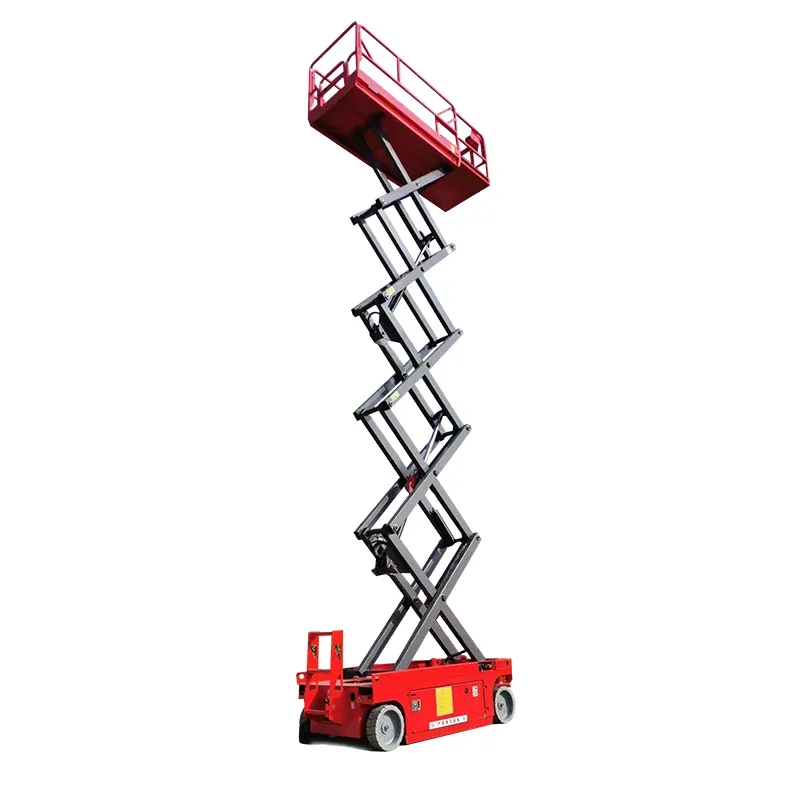 GTJZ-1012 32ft (9.8 m) Self-Propelled Scissor Lift — 320 kg