
en

Scissor lift rental payback on a 10 m unit lands at 18 to 30 months in a market where the machine is out on hire 55% of the year, and at 30 to 40 months at 45%. Below about 40% utilisation the machine does not pay for itself at all, and renting in capacity when you need it is the cheaper decision. The number that moves the answer is hire days, not the scissor lift hire rate — a higher rate at low utilisation loses to a lower rate at high utilisation almost every time.
Purchase price varies by market, by specification and by order size, and a scissor lift ROI figure built on someone else's price is worse than useless. So the maths below is expressed as a ratio: net daily hire income as a percentage of the purchase price. Put your own numbers in and the table gives you months.
Net daily hire income means the day rate minus the costs that only occur when the machine is out: transport both ways, damage and cleaning, consumables, and the commission or discount you give the booking channel. It does not include maintenance, insurance or storage, which run whether the machine is working or not.
The fleet payback period, in days, equals one divided by the net daily rate as a fraction of purchase price. So a machine earning 0.25% of its purchase price per hire day needs 400 hire days. Then divide by the hire days available per month, which is 30 multiplied by utilisation.
| Utilisation | Net daily rate 0.20% | Net daily rate 0.25% | Net daily rate 0.30% |
|---|---|---|---|
| 45% (13.5 days/month) | 37 months | 30 months | 25 months |
| 55% (16.5 days/month) | 30 months | 24 months | 20 months |
| 75% (22.5 days/month) | 22 months | 18 months | 15 months |
The 0.25% column is where most European and CIS markets sit for a 10 m unit. The 0.20% column is a competitive market with several fleets chasing the same work. The 0.30% column exists in smaller markets with less competition, and it does not last: the first competitor to arrive takes it to 0.25%.
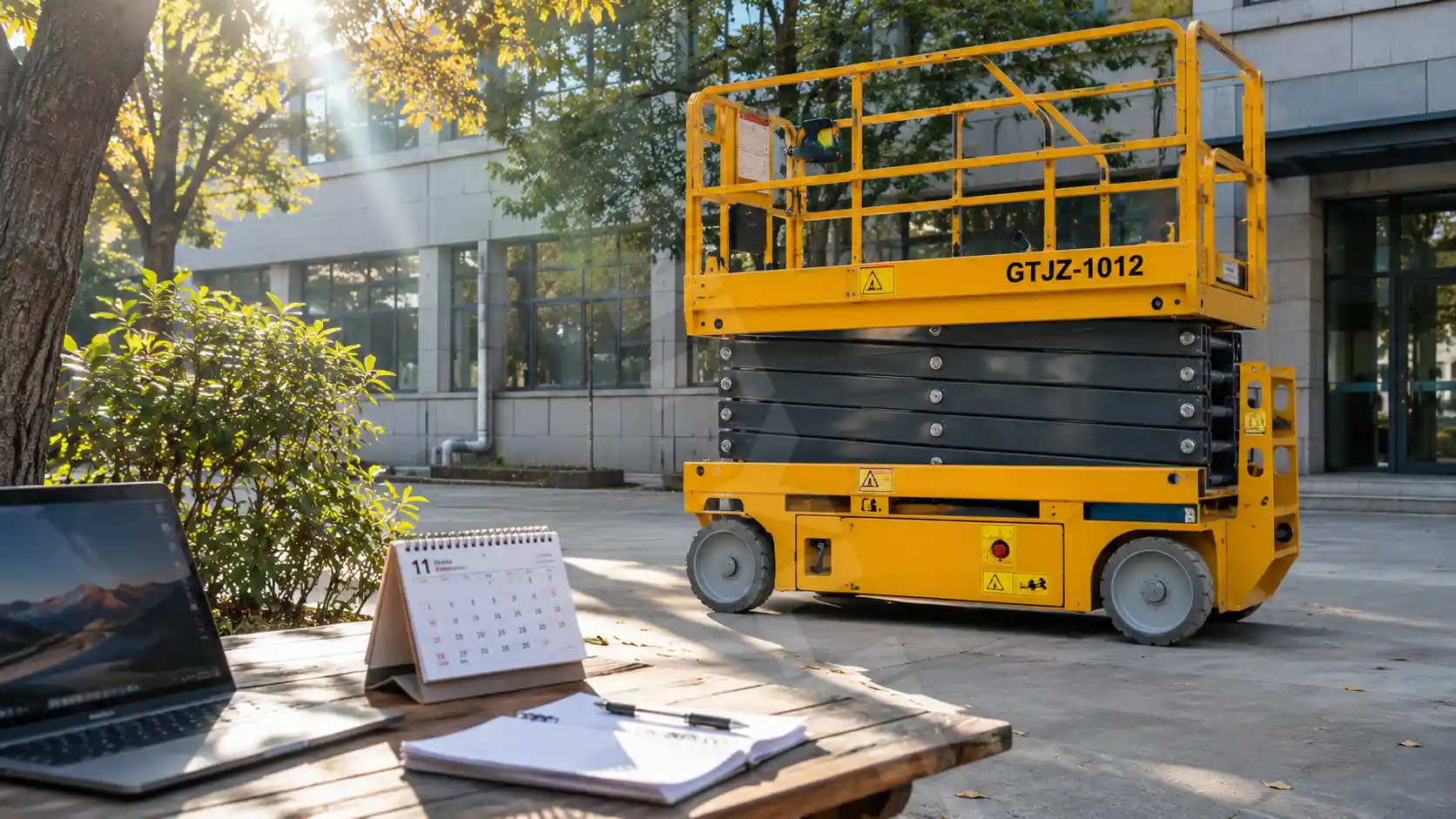
Payback on a 10 m unit is decided by hire days, not by hire rate. Rate sets the ceiling; days set the answer.
Maintenance. Budget 1.5 to 2.5% of purchase price per year, unevenly: almost nothing in year one, a battery set and tyres around year three to four. A payback calculation that ignores the battery year is a calculation that will disappoint.
Residual value. A well-maintained 10 m unit holds value better than a small one, because the buyers of used fleets are usually going into high-bay work. That residual is the reason a slightly more expensive machine can be the cheaper one over eight years.
Idle capital. The table treats the machine as earning or not earning. In reality a machine at 45% utilisation still costs storage, insurance and depreciation every day, and those costs are what turn a 37-month payback into a four-year one.
The 10 m band is where rental fleet investment most often goes too far. It is the smallest machine that reaches high-bay racking, so it feels like the workhorse, and it is bought in numbers that the actual high-bay work does not support. Our own view, from order patterns rather than from a market study: for every ten small units in a mixed fleet, two or three 10 m units is right, and five is a fleet with idle capital.
If you want the scissor lift rental payback arithmetic run against your own rates and costs, send the day rate, the utilisation you actually achieve and the delivery cost per move through the contact form. The GTJZ-1012 page has the specification, including the 2,550 kg machine weight that sets your transport cost.
When a rental customer asks for a quotation on ten units, we ask how many they plan to keep on long-term contract rather than on daily hire. Long-term contract units and daily hire units have completely different payback shapes, and mixing them into one calculation is the most common mistake we see. A unit on a twelve-month site contract can pay back in half the time of a daily hire unit and still look worse on a spreadsheet, because the spreadsheet assumes one utilisation figure for the whole fleet.
Tell us the constraint you are stuck on — floor loading, doorway width, cold store, aisle width, charge window. We will tell you which model works, what it costs, and what we would refuse to sell you.
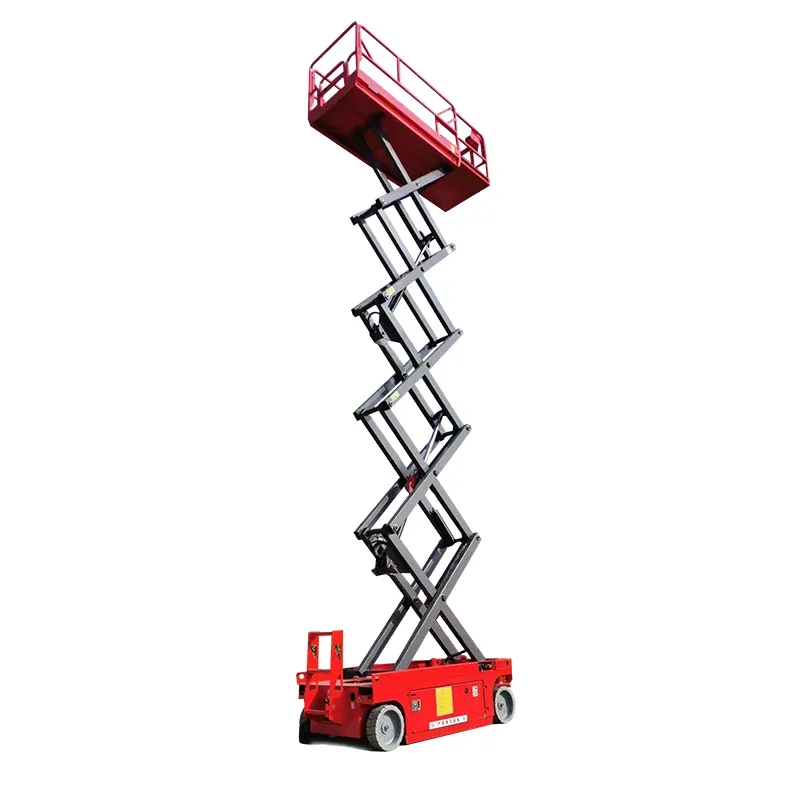 GTJZ-1012 32ft (9.8 m) Self-Propelled Scissor Lift — 320 kg