
en

Rain is the most common reason people ask about scissor lift outdoor use, and the answer is not the one the IP rating suggests. An electric scissor lift will work in rain. It will not work in standing water, and the difference between the two is a depth you can measure with a ruler: about 127 mm, one third of the wheel diameter. Rain itself causes far less damage than the two things that follow it — water sitting against the mast base, and a control box that breathes moist air in as it cools overnight. Both are avoidable, and neither is covered by the IP number most people quote.
The scissor lift IP rating is two numbers. The first is solids, the second is water. On a scissor lift control box you will usually see IP54 or IP65, and both are routinely misread.
| Rating | First digit | Second digit | What it means in practice |
|---|---|---|---|
| IP54 | 5 — dust protected | 4 — splashing water | Rain from above is fine. A hose pointed at the seal is not. |
| IP65 | 6 — dust tight | 5 — water jets | Survives a washdown jet, but not immersion. |
| IP67 | 6 — dust tight | 7 — temporary immersion | Rare on lift control boxes; do not assume it. |
Note what none of these cover: condensation. A sealed box that heats during the day and cools at night draws moist air in through its breather, and that moisture condenses on the inside of the lid. The IP rating is about water arriving from outside. It says nothing about water forming inside, which is where most scissor lift water damage starts.
Water at the mast base. The scissor stack sits in a recess at the chassis. On a slab with a fall towards the machine, water collects there and the lowest pins sit in it. This is the failure that produces a rusted pin six months later, long after the rain has been forgotten. If a machine has to stand in the open, put it where the slab drains away from it, not towards it.
The breather valve. Control box water ingress usually starts at the breather, a pressure-equalising valve with a correct orientation: pointing down, or fitted with a U-bend. When a box is replaced or re-sealed on site, the valve sometimes goes back facing up, which turns it into a funnel. We have traced two controller failures in a season to exactly this. It is a two-minute check and nobody does it.
The platform floor. The deck has drain holes at the corners. They block with site debris, the deck fills to 20 or 30 mm, and the operator works the shift standing in water next to a 24 V pack. The electrical risk is low, the slip risk is not.
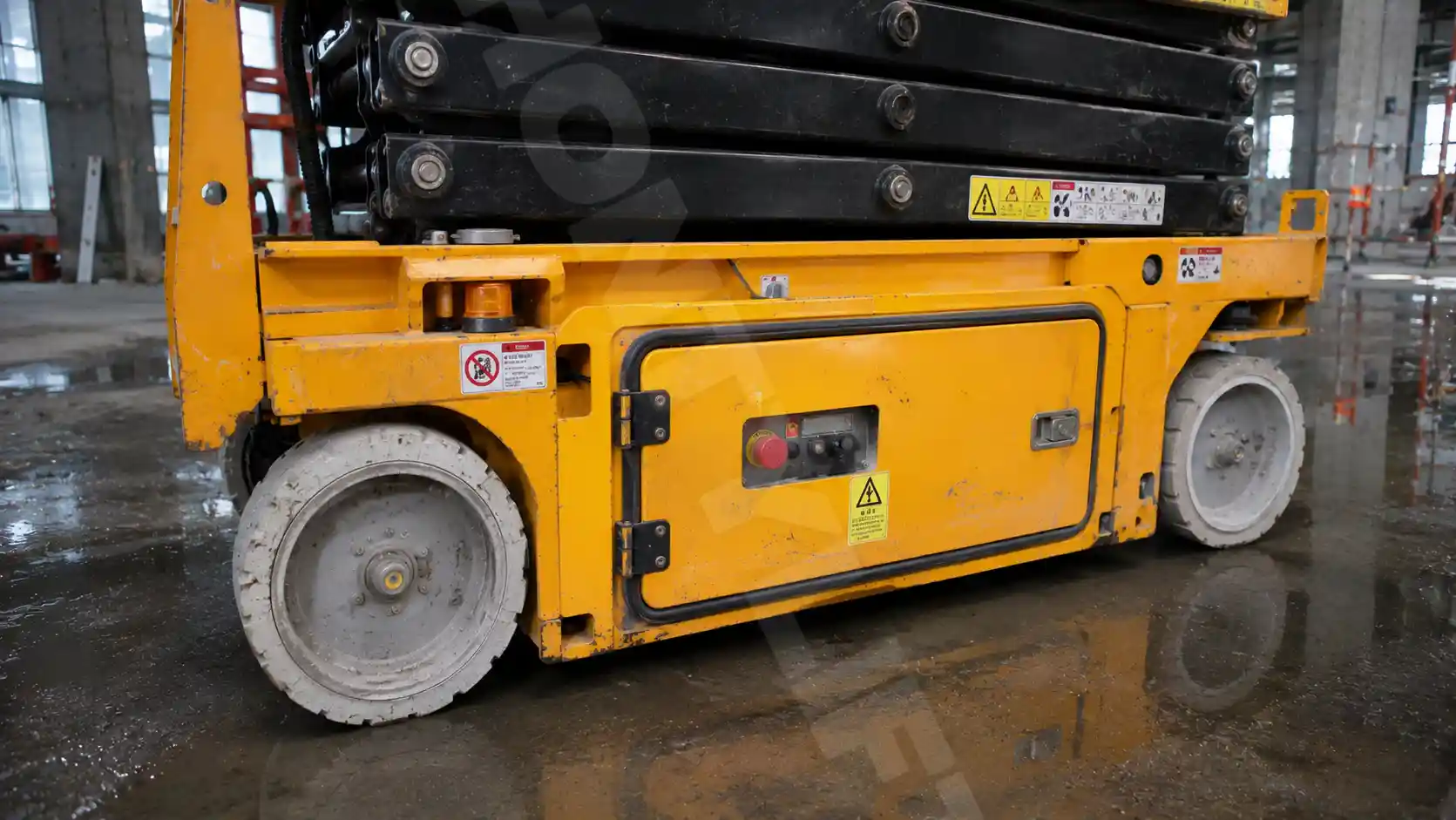
Rain is not the problem. Standing water at the base of the mast, and a control box breathing damp air, is the problem.
In scissor lift wet weather, park on the high side. Keep a squeegee on site and clear the area around the charging point. Re-point the control box breather down if it has been disturbed. Above all, decide before the wet season which tasks stop in rain and which continue — the answer is usually different for a fit-out at 5 m than for a facade job at 12 m, because the higher platform catches more wind and the consequences of a slip are worse.
For a taller machine the wind point matters more than the water point. On a GTJZ-1214 at 11.8 m, the platform is a bigger sail and the travel speed when raised is limited to 0.8 km/h for the same reason. Specification detail is on the range page.
Every control box we ship has the breather valve photographed in its correct orientation and that photograph goes in the technical file. It is not there for the customer. It is there because the most common water-related warranty claim we receive is a box that was re-sealed on site with the valve facing the sky, and the photograph settles the question of how it left the factory in about thirty seconds.
If your site is exposed and you need to know what the machine will tolerate, send the conditions through the contact form and we will answer against the actual specification rather than the brochure.
Tell us the constraint you are stuck on — floor loading, doorway width, cold store, aisle width, charge window. We will tell you which model works, what it costs, and what we would refuse to sell you.
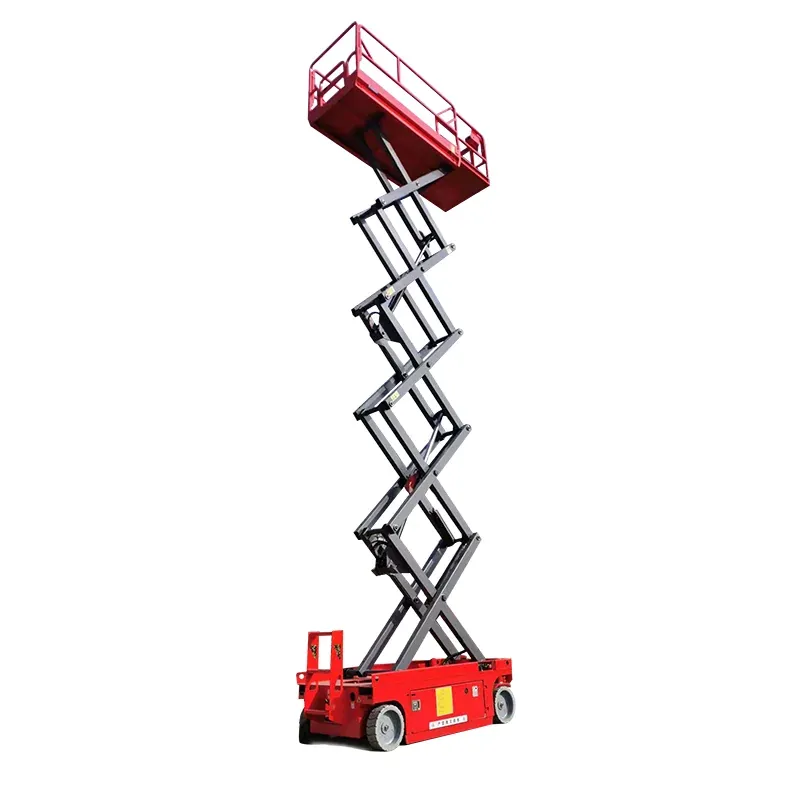 GTJZ-1214 40ft (11.8 m) Self-Propelled Scissor Lift — 320 kg
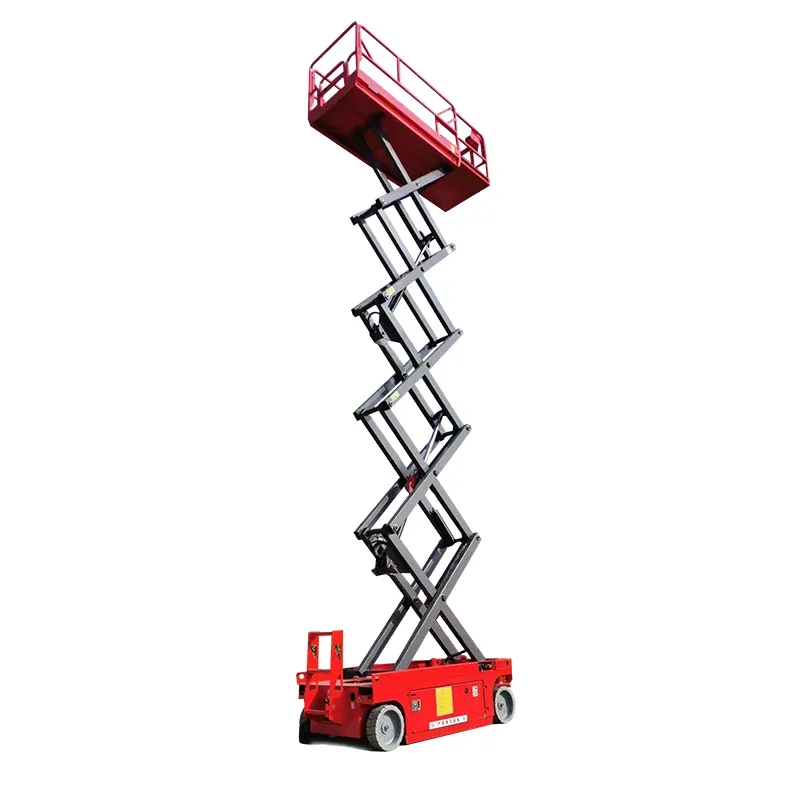 GTJZ-1012 32ft (9.8 m) Self-Propelled Scissor Lift — 320 kg