
en

On 20 January 2027, Directive 2006/42/EC stops being the document a self-propelled scissor lift is certified against. Regulation (EU) 2023/1230 takes over completely, and from that date a machine placed on the EU market with a Declaration of Conformity citing the old Directive is not compliant, even if nothing about the machine changed.
We rebuilt our technical files around that date over the past eighteen months. This is the short version of what it cost us, written for the importer and the distributor rather than for a certification body.
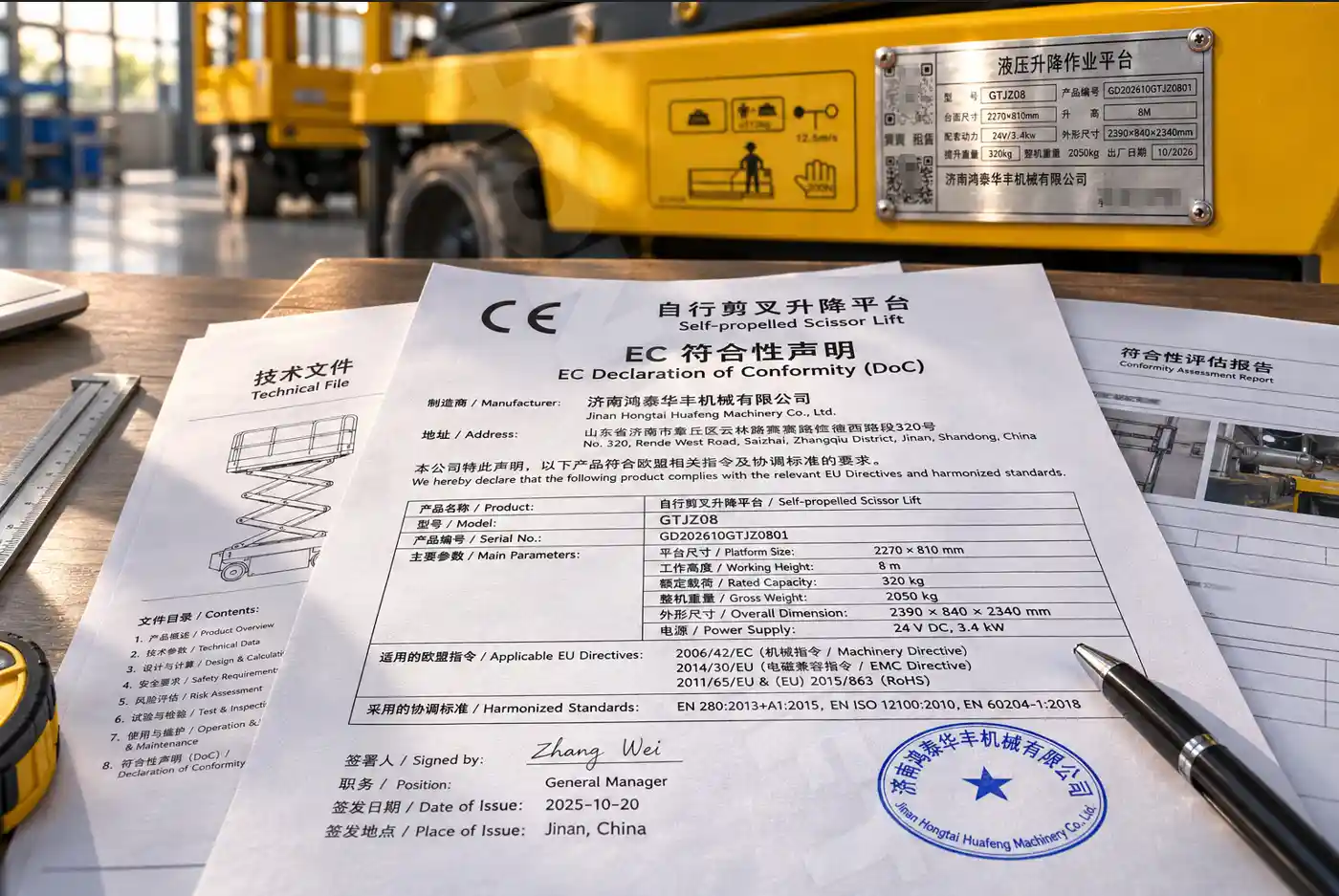
An EC Declaration of Conformity with the technical file behind it, the two documents a buyer should ask for before the container is sealed.
Buyers keep asking whether a scissor lift ordered in 2026 is "grandfathered". It is not. What counts is when the machine is placed on the market, which in practice means when it is first made available to a distributor or end user inside the EU. A unit that leaves Qingdao in March 2027 sits under the new regulation, whatever the invoice says.
| Order and shipment | Which regulation applies | What it means for you |
|---|---|---|
| Ordered Nov 2026, shipped Nov 2026, arrives Dec 2026 | 2006/42/EC | Business as usual, no action |
| Ordered Nov 2026, shipped Feb 2027 | 2023/1230 | New DoC required, finance and customs paperwork will not match the old one |
| Ordered 2027, machine built 2027 | 2023/1230 | New DoC, new technical file index, new manual revision |
| Ordered 2027, machine from existing stock built 2026 | Depends on the file, not the build date | Ask the supplier which Declaration the unit ships with. This is where deals go wrong |
The last row is the one to watch. Stock machines built in 2026 that ship in 2027 need their technical file brought up to the new regulation, and a manufacturer who has not planned for that will either delay your shipment or send a Declaration that a customs officer or a safety inspector can challenge.
Not the machine. The Declaration of Conformity, because it is one page and it either matches the machine in front of them or it does not. Four things have to line up: the legal manufacturer name and address, the model designation on the machine plate, the legislation cited with the correct Annex reference, and the list of harmonised standards actually applied.
The two traps we see most often in files coming from other factories are a Declaration that names a product family rather than the model, and a standards list that still quotes EN 280:2013 when the machine was assessed to EN 280-1:2022, alongside EN ISO 12100:2010, EN 60204-1 and EN ISO 13849-1. Neither is a paperwork detail. Both allow an inspector to treat the file as unsupported.
The old Directive was written for machines made of steel and hydraulics. The new Regulation assumes that safety functions may live in firmware, and it expects the manufacturer to describe and control them. On a self-propelled scissor lift, that means the controller logic behind the tilt limit, the overload cut-out, the pothole protection interlock, and the platform gate interlock.
Three questions are worth putting to any supplier before a 2027 shipment, and we answer them in writing for every order now:
A supplier who cannot answer the second question should not be shipping into the EU in 2027. Version control is not bureaucracy; it is the only way to prove that the machine you certified is the machine that is standing on site.
Mobile elevating work platforms are high-risk machinery. That does not change with EU Machinery Regulation 2023/1230: a Notified Body is still involved, and the usual routes remain EU type-examination plus production conformity (Module B plus C or D), or full quality assurance for high-volume manufacturers. What an EU importer should verify is unchanged in principle and stricter in practice: a four-digit Notified Body number on the certificate, cross-checked against the NANDO database, and a certificate scope that names the model you are buying rather than the family it belongs to.
For our own range, from the compact 780 mm GTJZ-0608-M up to the 17.8 m working height GTJZ-1618, each model carries its own scope line. If a distributor is offered one certificate covering seven models with no model list attached, that is worth a hard question.
Three clauses cover most of the risk, and none of them is unusual enough to slow a negotiation:
The second clause matters more than it looks. Documents that travel inside the container arrive after customs has already asked for them.
Can a 2026 scissor lift be re-declared under EU Machinery Regulation 2023/1230? Yes, if the technical file is updated and the design already meets the new essential requirements. It is a documentation exercise for a machine that was designed to the current harmonised standards, and a redesign for one that was not.
Does the CE mark on a scissor lift change? No. The mark stays the same. What changes is the legislation referenced beside it and the depth of the file behind it.
Is the UK affected? The UKCA regime runs on its own timetable. A machine can need both marks, and the documentation sets are not identical. Plan for two files, not one.
If you are ordering for delivery in the first half of 2027, the question is not whether your supplier is ready, but whether their file is. Ask for the Declaration before you ask for the price. We send ours with the quotation, and you can request the current document set for any scissor lift in the range.
Send the working height, the load and the site constraint. An engineer replies with a model recommendation and a written quotation within one business day — or tells you it cannot be done.
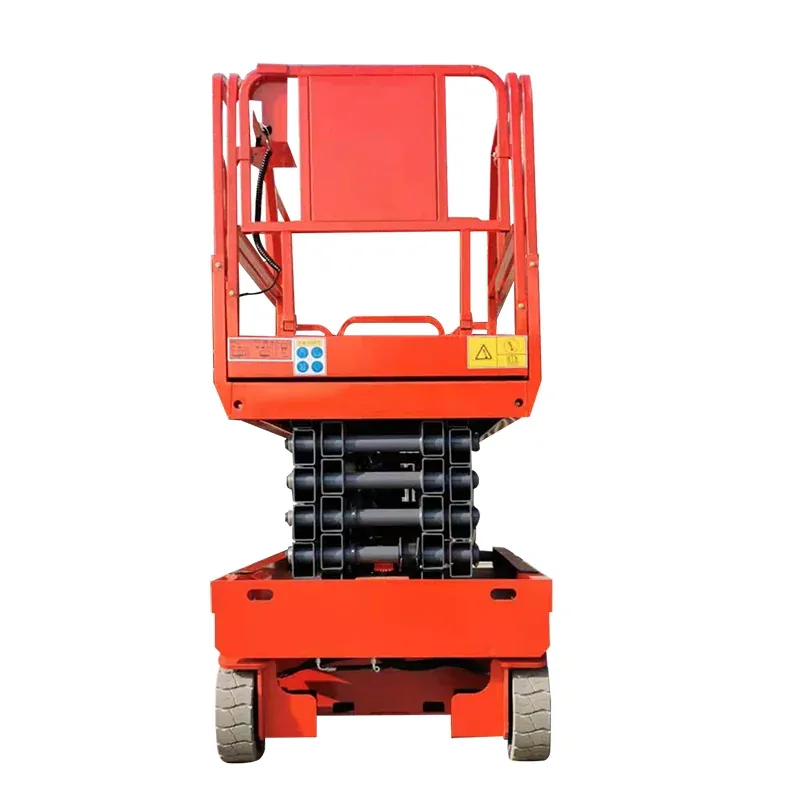 GTJZ-0608-M Compact 19ft (5.8 m) Hydraulic Drive Scissor Lift — 230 kg
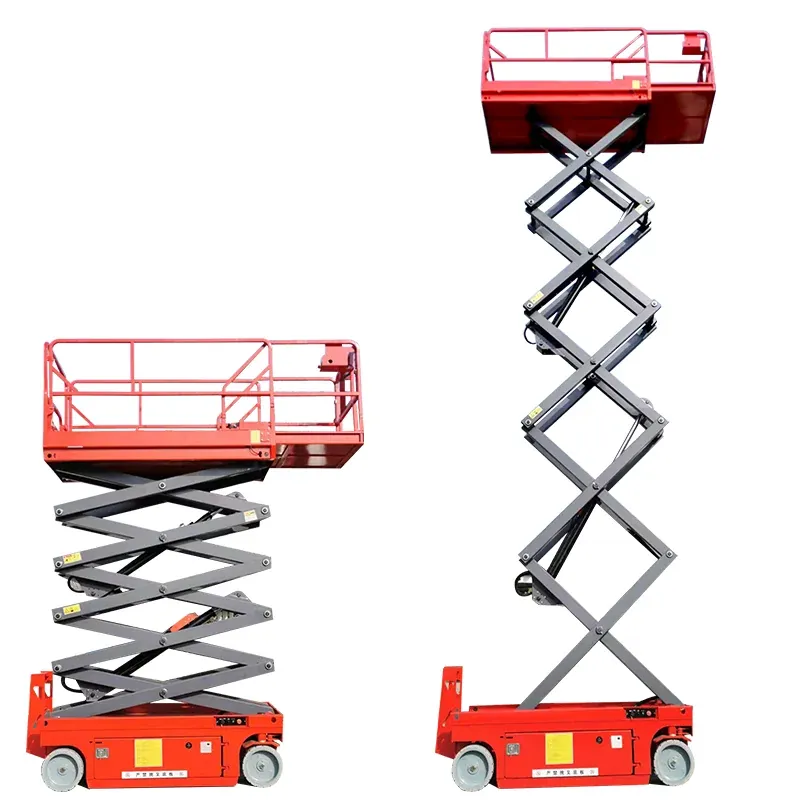 GTJZ-1618 52ft (15.8 m) Scissor Lift — Our Tallest, 320 kg
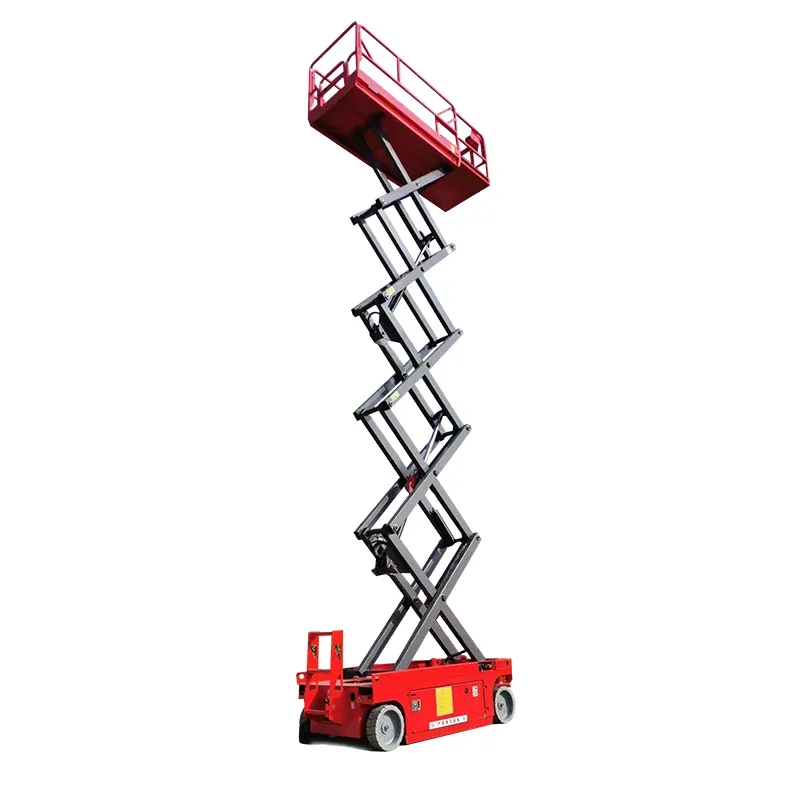 GTJZ-1012 32ft (9.8 m) Self-Propelled Scissor Lift — 320 kg