
en

A battery powered scissor lift on a 24 V 200 Ah pack will not cover a ten-hour shift on one charge in real site conditions. That is the realistic scissor lift shift runtime: six to seven hours of mixed driving and lifting when a 24 V 200 Ah scissor lift battery is healthy and the temperature is above 10°C. The remaining three hours have to come from a mid-shift top-up, a second battery set, or a different power strategy. Which of those three you pick depends on how the site is wired, and most sites have less capacity than the contractor assumes.
People compare amp-hours and conclude the pack is too small. Usually the pack is fine. The constraint is that a scissor lift charging site shares its power with everything else drawing at the same time, and the charging point is wherever the extension lead happens to reach.
Three things go wrong, in this order:
Take a GTJZ-1012 on a fit-out: 9.8 m platform, 320 kg, 24 V pack, charger 24 V 30 A. A typical day is not continuous lifting. It is 40 to 60 lifts, several hundred metres of travel, and long periods parked with the platform up while someone works.
| Duty in one shift | Rough share of pack | What it looks like on site |
|---|---|---|
| Travel, stowed, mixed | 15-20% | Moving between work faces, loading bay to floor |
| Lifting and lowering | 25-30% | 40-60 full cycles on a 10 m unit |
| Parked at height, controls live | 10-15% | The part everyone forgets: hours with the platform up |
| Cold, or battery over two years old | +20-30% | Same work, shorter day |
That adds up to a pack that is doing well to finish eight hours, and a site that plans for ten.
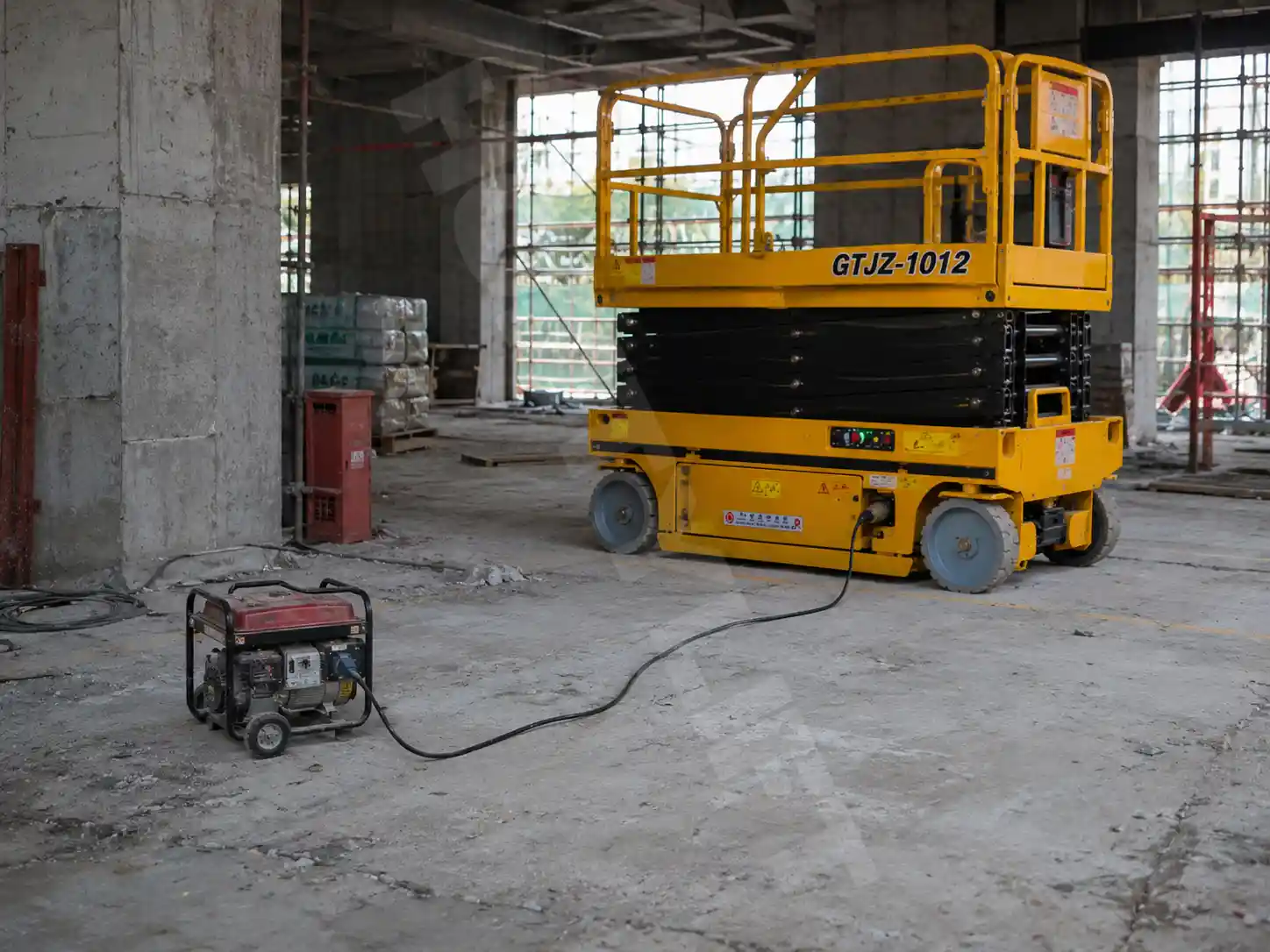
A 1.5 kW charger input is not the same as a 1.5 kW generator. Start-up surge is what trips a small set.
Option one: mid-shift top-up. Bring the machine back at lunch and put it on charge for 60 to 90 minutes. This recovers enough for the afternoon on most sites and costs nothing except discipline. It also needs the charger to be somewhere the operator will actually walk to. If the charging point is 200 m away, this option does not exist in practice.
Option two: scissor lift generator charging, sized properly. Allow 2.5 times the charger input for the set, so around 4 kVA for a single 24 V 30 A charger, and keep the run from generator to charger under 20 m. Do not put site tools on the same set. This is the option most contractors choose, and the one that fails most often because the generator gets shared.
Option three: a second battery set. The cleanest answer for a ten-hour shift is two packs and a swap at mid-day. It is also the most expensive, and it only works if the machine was specified for it. Retrofitting a swap arrangement to a machine bought without one is not a job for the site.
Tell us three things: shift length, lifts per shift, and whether the site has a fixed 230 V supply or only a generator. With those we can say whether a battery powered scissor lift with a standard pack is enough, whether a second set is worth the money, or whether the honest answer is to hire in a diesel machine for the groundworks phase and bring the electric units in for the fit-out.
For higher work faces the same maths applies with a larger machine: the GTJZ-1214 carries the same charger rating but lifts more mass per cycle, so cycle count costs more. Details on the range page.
We ship the charger with a 5 m lead, not the 10 m that customers sometimes ask for. The reason is the one above: a longer lead on a 30 A charger is the most common cause of a machine that "charges but never finishes". If the site needs more reach, the correct fix is to move the socket, not to extend the lead. Send your site power layout through the contact form and we will check it against the charger before delivery.
Tell us the constraint you are stuck on — floor loading, doorway width, cold store, aisle width, charge window. We will tell you which model works, what it costs, and what we would refuse to sell you.
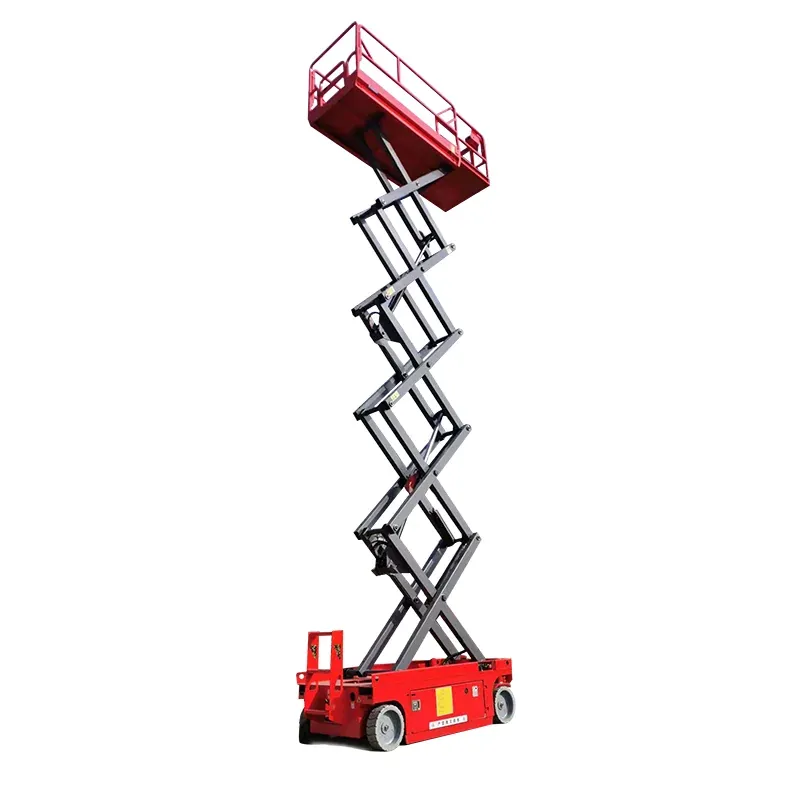 GTJZ-1214 40ft (11.8 m) Self-Propelled Scissor Lift — 320 kg
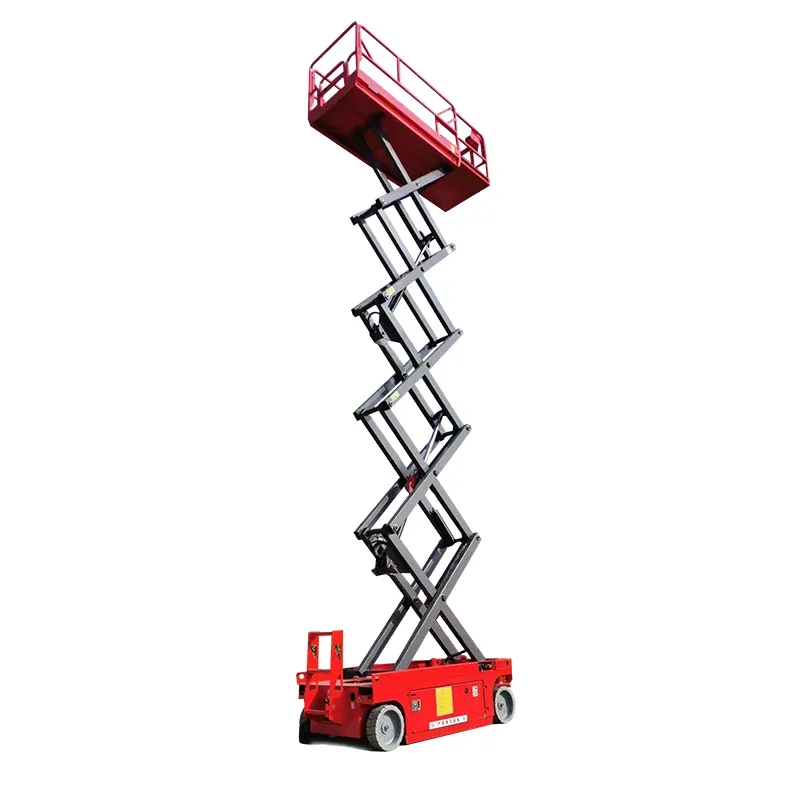 GTJZ-1012 32ft (9.8 m) Self-Propelled Scissor Lift — 320 kg