
en

No scissor lift charging schedule closes a three-shift gap on one pack. A 24 V 200 Ah pack will not cover three shifts of warehouse maintenance work, and it will not cover two comfortably. Three shift warehouse access needs either a second battery set with a mid-shift swap, or a disciplined opportunity-charging routine that accepts a shorter pack life. The first costs money once. The second costs money every three years, and it is the option most sites choose because the cost lands later.
Warehouse maintenance is not continuous lifting. It is periods of travel, a lift, a long stop while someone works, then travel again. Per shift, a 10 m machine typically draws between half and three quarters of a usable pack.
| Shift pattern | Energy per 24 h | Packs needed | Comment |
|---|---|---|---|
| One shift, 8 h | 50-75% of one pack | 1 | Overnight charge is sufficient |
| Two shifts, 16 h | 100-150% | 1, with a mid-shift top-up | Works if the top-up is enforced |
| Three shifts, 24 h | 150-225% | 2 | One pack cannot do this, however it is scheduled |
The third row is not an opinion. Two hundred and twenty-five percent of a pack cannot come out of one pack in twenty-four hours, and the arithmetic does not change with a bigger charger because the pack's acceptance rate limits it.
Two packs, one on the machine and one on charge, swapped at the shift change. A scissor lift battery swap on a 10 m machine takes about fifteen minutes with two people and a trolley, and it is the only arrangement that keeps both packs in their comfortable band and gives each a full, unhurried charge.
The cost is the second pack plus a handling arrangement, and the constraint is that the machine has to be specified for it: a battery compartment that opens fully, terminals that are accessible, and a tray that can be slid rather than lifted. Retrofitting a swap-friendly arrangement afterwards is not practical.
If the site runs three shifts and the machine is used for real work in all three, this is the answer. Everything else is a compromise with a known expiry date.
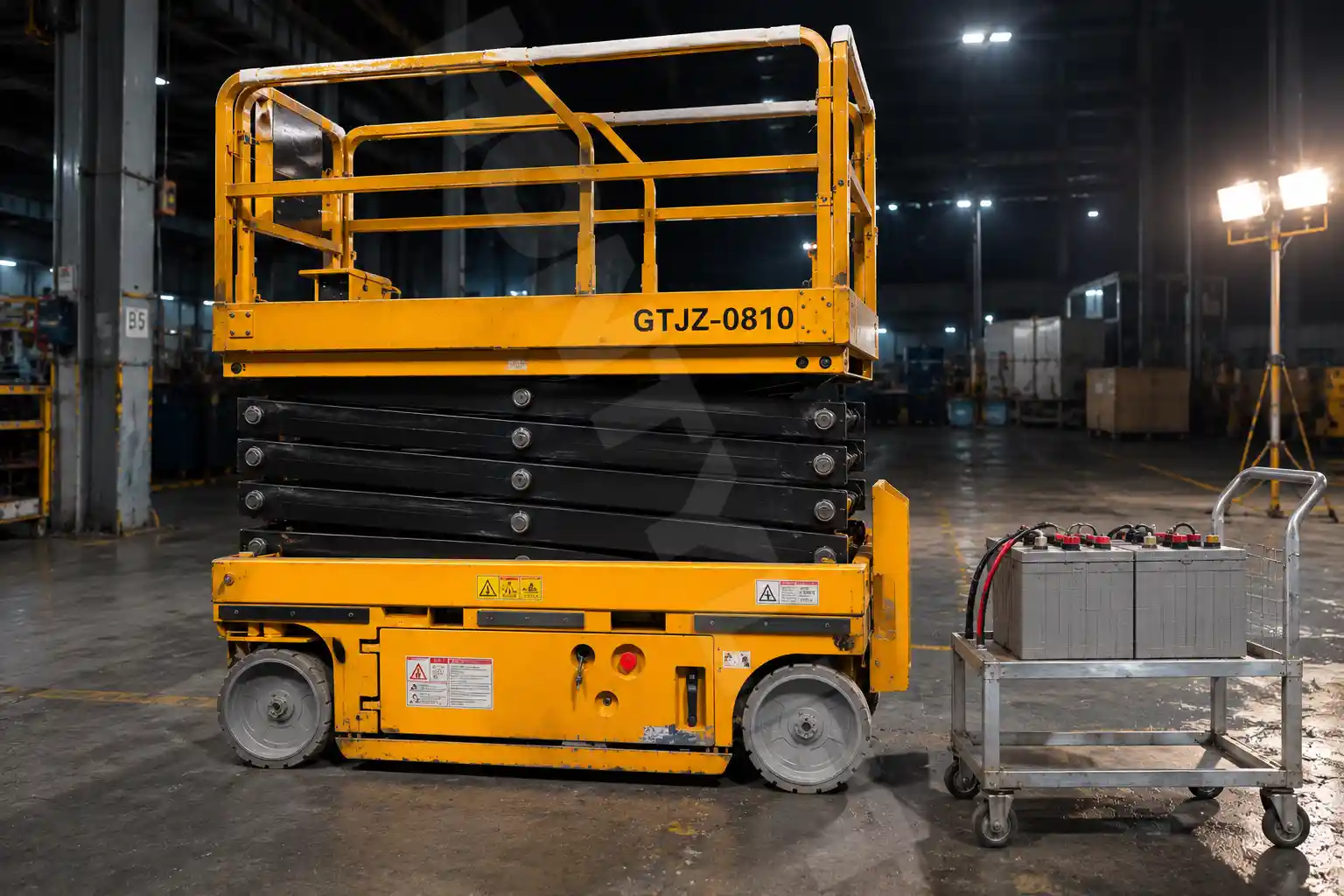
A swap takes about fifteen minutes with two people. It is the only option that does not shorten pack life.
Opportunity charging means plugging in whenever the machine is idle: the twenty minutes before a shift starts, the half hour while a team is in a meeting, the gap between tasks. With a 24 V 30 A charger and 0.85 efficiency, twenty minutes returns roughly 8 Ah, or about 4% of a 200 Ah pack. Three such windows per shift returns about 12%.
Across three shifts that is roughly 36% of a pack recovered per day, against a daily draw of 150 to 225%. It helps. It does not close the gap, and the machine will run deep cycles every day in order to keep up.
Deep cycling is the hidden cost. A pack that is taken to 20% and back every day delivers noticeably fewer cycles than one that stays between 40% and 90%. In practice, a three-shift site relying on opportunity charging replaces packs about a year to eighteen months earlier than a site doing full cycles, and the replacement lands outside warranty often enough that it becomes a budget line rather than a claim.
If the site will not buy a second pack, the schedule below is the least damaging version of opportunity charging:
We ask every 24/7 warehouse customer one question before confirming the order: is the machine working in all three shifts, or parked in one of them? The answer changes the quotation by one battery pack, and customers who say "working" but order one pack come back within two years for a replacement. It is the most predictable conversation we have, and it is entirely avoidable at the point of order.
Tell us the shift pattern and where the sockets are through the contact form, and we will size the battery arrangement for it. Charger ratings and pack specifications for each model are on the range page, including the GTJZ-1214 for taller high-bay work.
Tell us the constraint you are stuck on — floor loading, doorway width, cold store, aisle width, charge window. We will tell you which model works, what it costs, and what we would refuse to sell you.
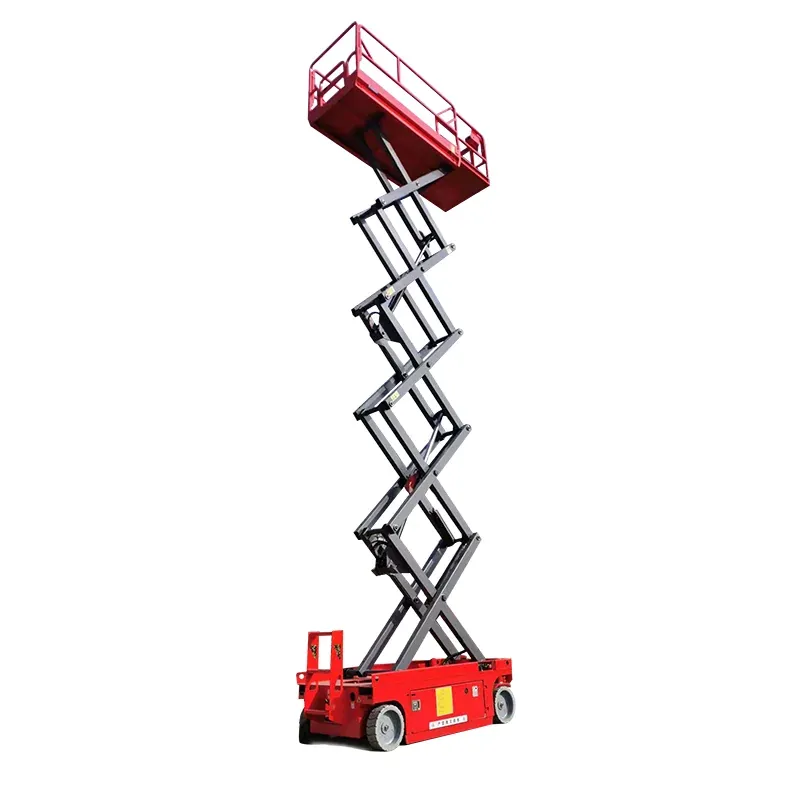 GTJZ-1214 40ft (11.8 m) Self-Propelled Scissor Lift — 320 kg
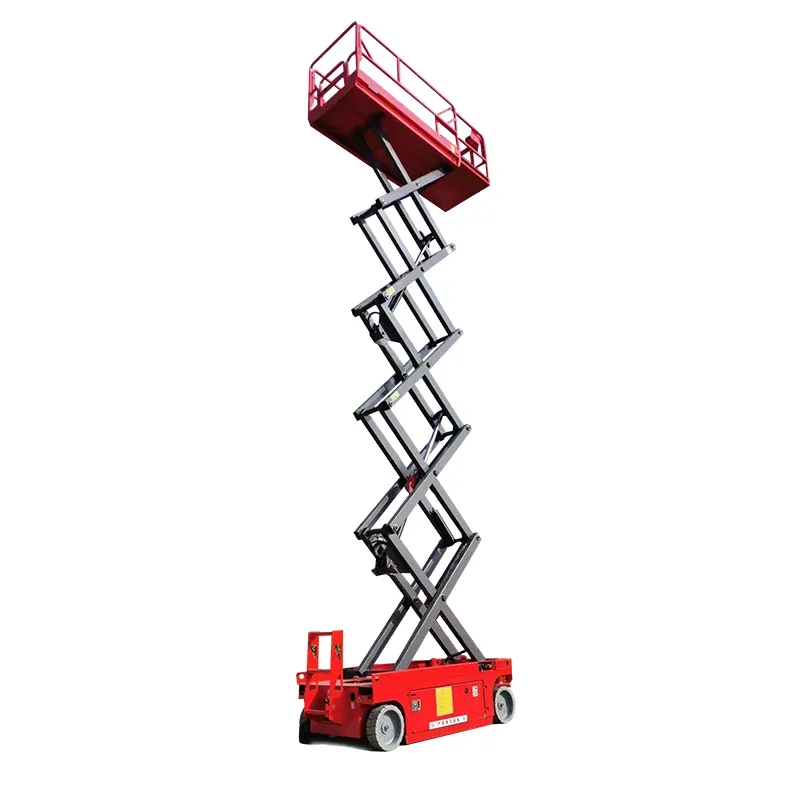 GTJZ-1012 32ft (9.8 m) Self-Propelled Scissor Lift — 320 kg