
en

Buying a 450 kg scissor lift instead of a 320 kg one only pays back when the material you are lifting falls between those two numbers. If a component weighs 250 kg, both machines carry one at a time and the extra capacity is wasted money. If it weighs 200 kg, the 450 kg machine carries two and the job halves. Work out the component weight first, then choose. Most steel erection crews buy capacity they never use, or one size too small.
A scissor lift for steel erection is not a crane. For steel erection access, it is a work position that also happens to carry the piece. Every extra trip is a full cycle: lower, drive, position, raise, align, fix, lower again. On an 8 m platform that cycle runs four to six minutes with a competent operator, and it does not shorten because the machine is bigger.
So the real comparison is cycles per shift, and cycles per shift comes straight from the component weight against the scissor lift platform capacity.
| Component weight | GTJZ-0810, 450 kg | GTJZ-0810-Z, 320 kg | Difference per shift* |
|---|---|---|---|
| 150 kg (purlin bundle) | 2 per trip (+ tools) | 2 per trip | None |
| 200 kg (beam) | 2 per trip | 1 per trip | ~11 extra cycles |
| 250 kg (beam) | 1 per trip | 1 per trip | None |
| 300 kg (column section) | 1 per trip | 1 per trip, at the limit | None, but no margin |
| 400 kg (fabricated frame) | 1 per trip | Cannot lift | Job not possible |
*Based on a 45-component day and a 5-minute cycle.
Only one row in that table justifies the bigger machine. Everything else is either no benefit or impossible. That is why the question "should we buy 450 kg" has no general answer, and why we ask for a component list before quoting.
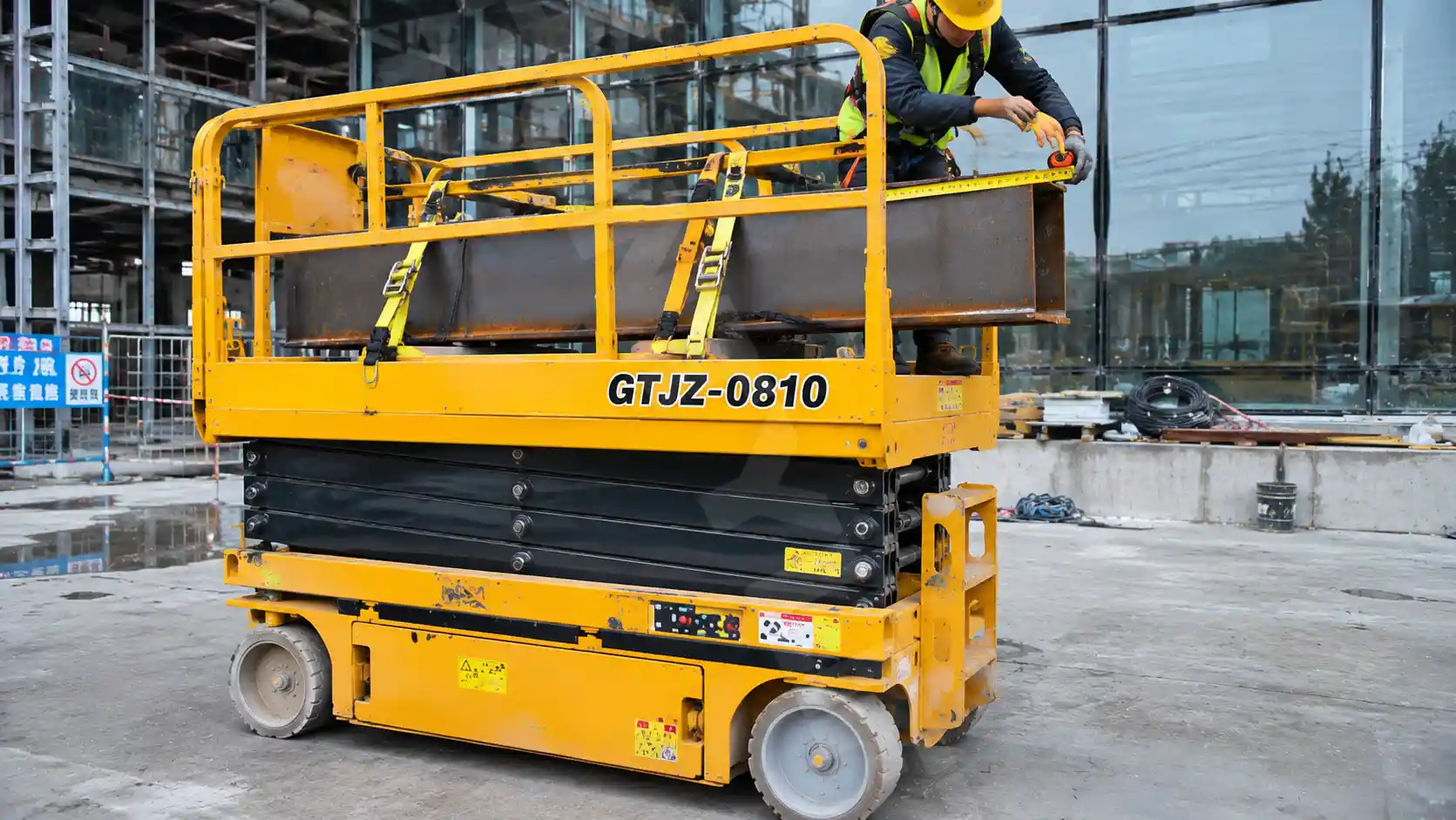
The 450 kg rating only helps if the beams fit the platform. Anything overhanging has to be tied, and tied loads change the rating.
The GTJZ-0810 platform is 2,270 x 1,130 mm. A 3 m beam does not fit, so it overhangs, and an overhanging load is no longer a simple platform load. It shifts the centre of gravity outboard, it needs tying down, and the tie points are designed for restraint, not for carrying a cantilever.
The practical rule: keep the load inside the platform footprint, or accept that the rated capacity no longer applies and reduce the working load. A 400 kg frame hanging 600 mm over the end of the deck is not the same load case as 400 kg sitting flat on the floor. We will not sign off the first one, and neither will any competent inspector.
The 450 kg model is not just a bigger number on a plate. It is a heavier machine: 2,250 kg against 2,050 kg for the narrow 320 kg unit. On a hard standing that difference is irrelevant. On a slab, on a mezzanine, or on a site with poor ground, it changes what you can drive over.
It is also wider at 1,160 mm against 840 mm, which decides whether the machine gets between the columns it is erecting. On a tight grid, the 320 kg narrow unit may be the only one that reaches the work face at all, in which case the capacity question never arises.
If the components land in the 200 kg band and the grid is generous, the GTJZ-0810 halves the cycles. If the grid is tight or the ground is marginal, the narrower GTJZ-0810-Z gets to the work face and the 320 kg is not a limitation once you accept one piece per trip. Both are on the range page with full load charts.
When a customer orders the 450 kg model for a scissor lift for steel erection job, we ask for the heaviest single component and its length. If the length is more than the platform, we send a drawing showing where the load sits and what tie points exist. About one order in six comes back with a shorter component once the customer has seen the drawing, and that order usually changes to the 320 kg unit. It is cheaper for everyone to find that out before the container ships than after.
Tell us the constraint you are stuck on — floor loading, doorway width, cold store, aisle width, charge window. We will tell you which model works, what it costs, and what we would refuse to sell you.
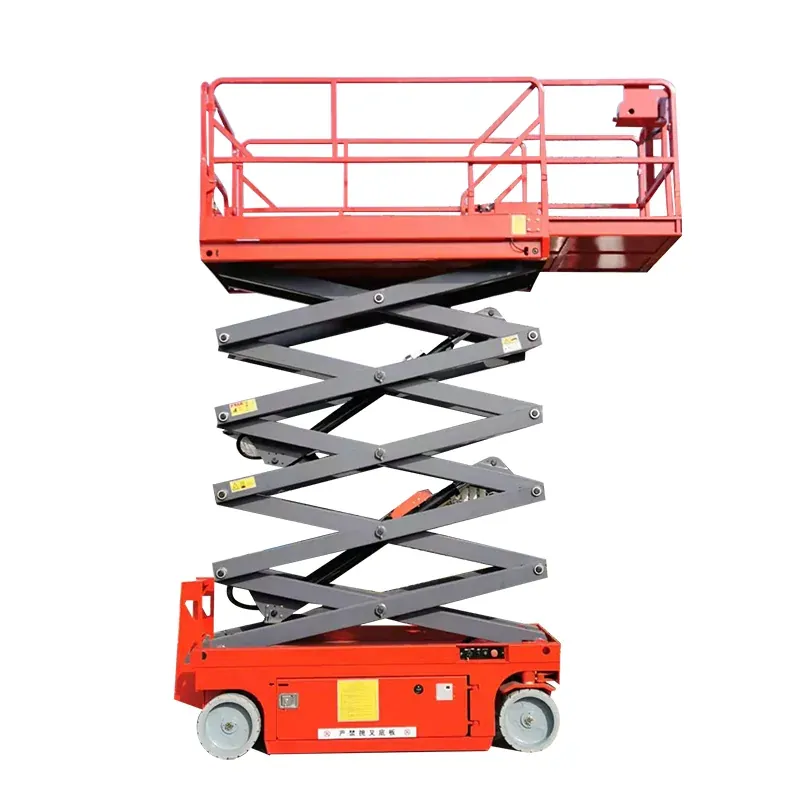 GTJZ-0810 26ft (7.8 m) Self-Propelled Scissor Lift — 450 kg
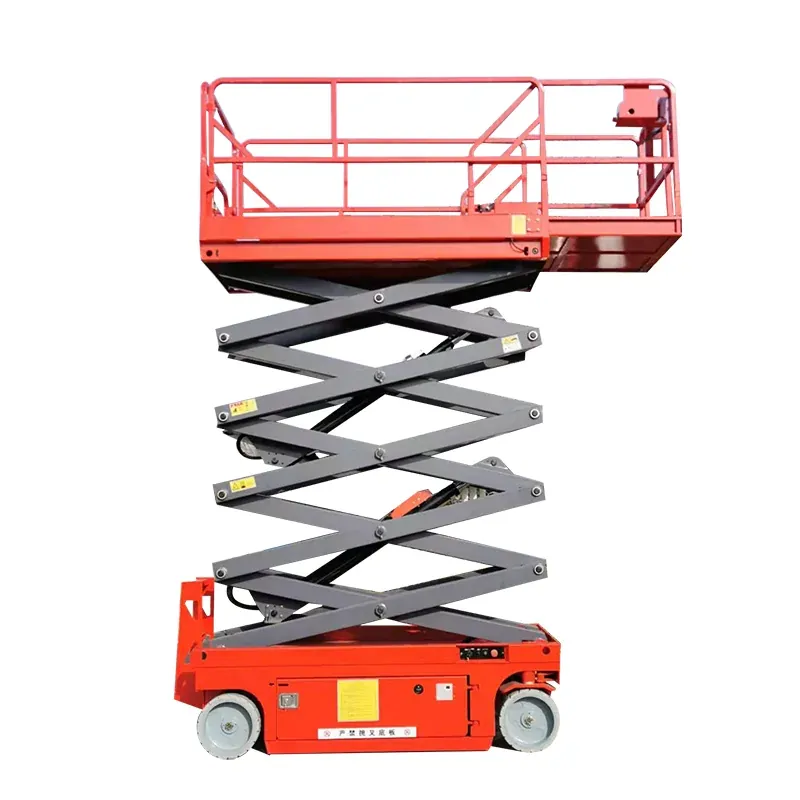 GTJZ-0810-Z Narrow 840 mm Scissor Lift — 26ft (7.8 m), 320 kg