
en

A scissor lift for loading dock work crosses a 43°C temperature difference twice a day, and that crossing is harder on the machine than the freezer itself. A machine that works inside a -25°C store and never leaves is a simple engineering problem. A machine that crosses a dock twenty times a day moves through a 43°C temperature difference twice each time, and every crossing deposits water on it. Most cold chain access equipment failures we see trace back to the dock, not the freezer.
Air at 18°C and 60% relative humidity has a dew point of about 10°C. Any surface colder than 10°C will collect condensation, and a machine coming out of a -25°C store is far below that. It does not collect a little condensation. It collects water until its surface temperature rises above the dew point, which in still air takes far longer than people expect.
| Surface temperature | What happens in a 18°C / 60% RH dock | Practical consequence |
|---|---|---|
| Above 10°C | Nothing | Machine can stand |
| 0 to 10°C | Light film of water | Deck slippery; wipe before use |
| -10 to 0°C | Heavy condensation, runs in streams | Water into control box breather and pin clearances |
| Below -10°C | Frost forms, then melts to standing water | Deck floods; water pools in the chassis recess |
Twenty minutes in the transition zone is long enough for a machine to be visibly wet. That is the number to design around: not the freezer temperature, but how long the machine stands between the two.
The machine does not stop in the transition zone. It goes through. Parking a scissor lift beside the strip curtain while someone finds the supervisor is the single most damaging habit on a cold chain site, because that is where condensation in a cold store dock accumulates and where it has time to enter the electrics.
The second rule follows: it does not charge there either. A charging point in a dock area is a charging point in the wettest part of the building. If the only socket is at the dock, the machine will be plugged in there, and the control box will be wet when it happens.
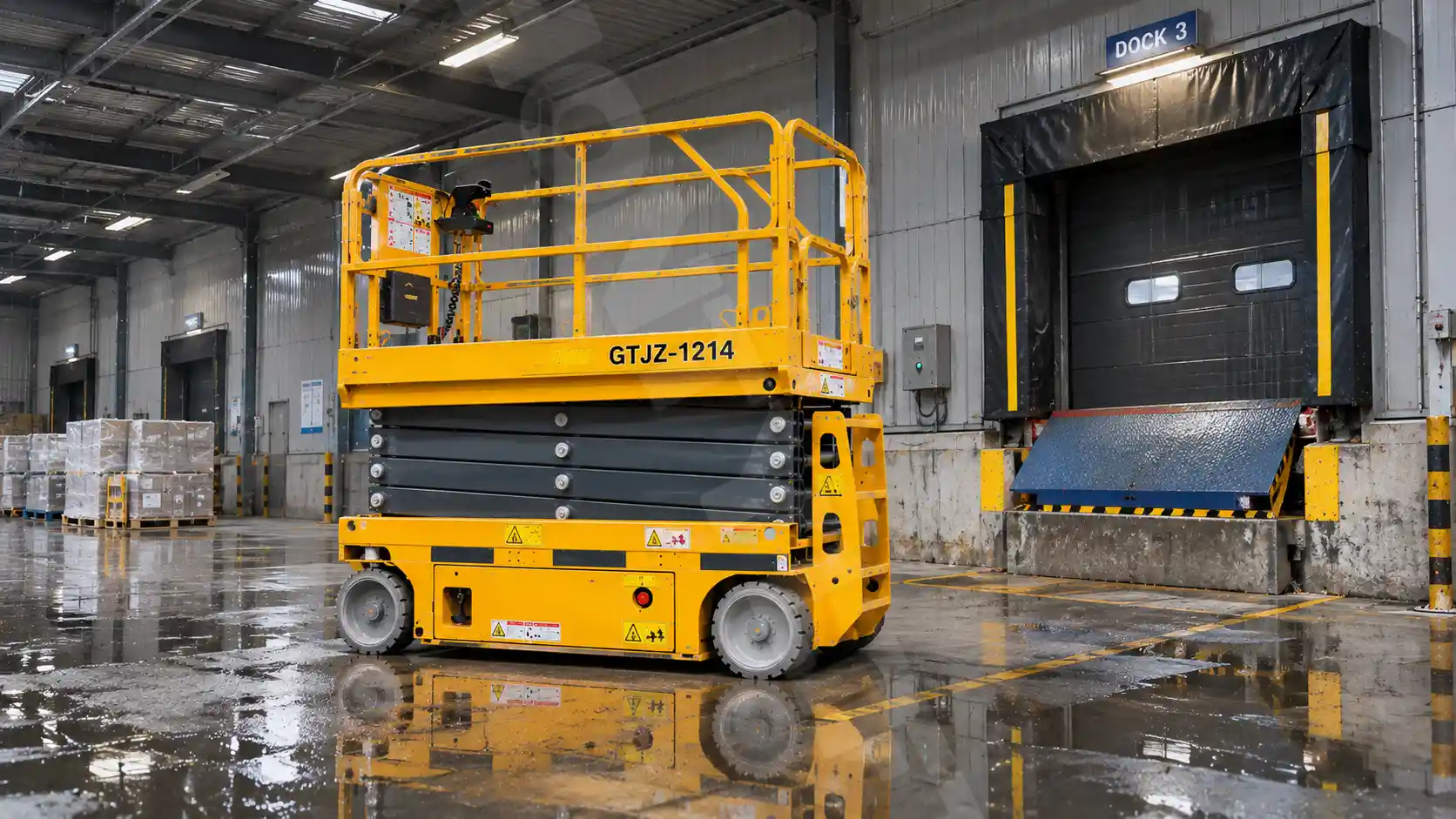
Forty-three degrees of temperature difference across twenty metres. Nothing on the machine was designed for that crossing.
Most refrigerated warehouse access enquiries include a version of the same idea: can the machine be driven across the leveller to work on the canopy or the door gear. The answer depends on where the load lands.
Dock leveller load ratings assume the weight is spread across the plate, typically 6 to 15 tonnes depending on the model. A 2,550 kg machine is well inside that rating in the middle of the plate. The problem is the lip. When the machine crosses, one axle at a time passes over the hinge and the lip, and the load there is a point load at the weakest part of the assembly, several times the machine's average pressure.
Cross at a walking pace, straight on, one axle at a time, and never with the platform raised. Do not park on the leveller. Do not use it as a work position. If the job requires working on the door gear itself, the machine stands on the dock floor and reaches across, or the job is done from a platform inside.
Not much, and that is the point. The machine is standard; the operating pattern is not. Three practical additions: a cover for the control box, a schedule that moves the machine through rather than parking it, and a weekly check of the box seal and the mast pins during the wet months. If the site runs cold and humid year-round, the food-grade low-temperature oil and the cold-store specification apply as well, because the machine spends enough time below zero to matter.
The narrow GTJZ-0810-Z is often the better choice at a dock because it can turn inside a cold chain loading bay that a 1,160 mm machine cannot, and the dock is one place where turning space is always tight. For canopy and door gear work the GTJZ-1012 gives the extra reach.
We stopped shipping machines with the control box breather fitted for cold chain customers. It now travels in a bag in the platform toolbox, with a one-page instruction to fit it after the machine has reached site temperature. The reason is the dock: a machine assembled in a warm factory, shipped, and then taken through a cold chain dock carries warm moist air in its boxes, and the first cold night turns that into water. A five-minute job on site removes a failure that otherwise appears three weeks later and gets blamed on the machine.
Send your dock layout and the store temperature through the contact form and we will check the scissor lift for loading dock work against the transition route and the machine dimensions. Full specifications are on the range page.
Tell us the constraint you are stuck on — floor loading, doorway width, cold store, aisle width, charge window. We will tell you which model works, what it costs, and what we would refuse to sell you.
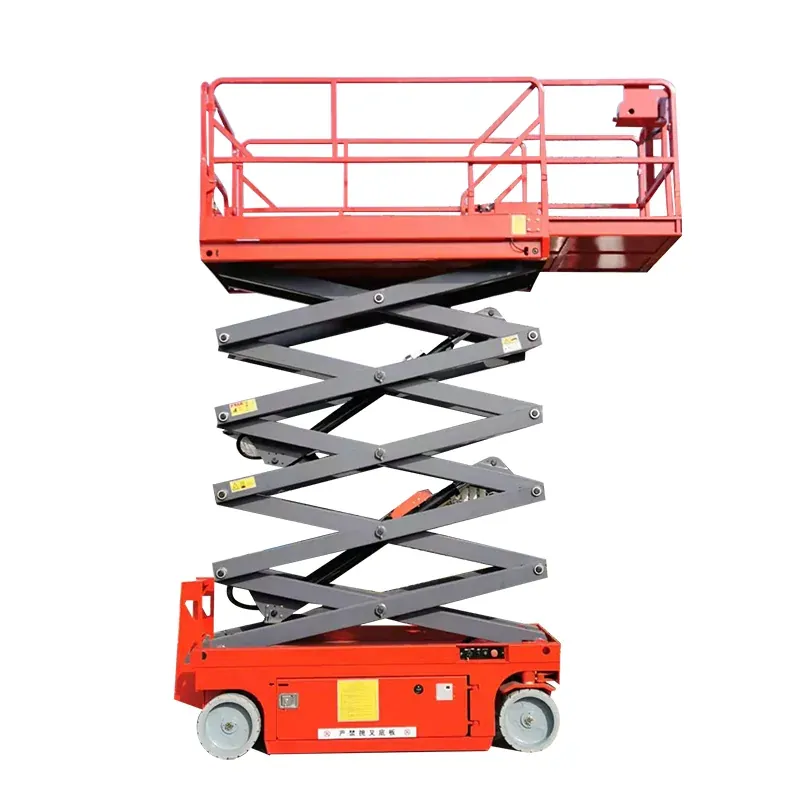 GTJZ-0810 26ft (7.8 m) Self-Propelled Scissor Lift — 450 kg
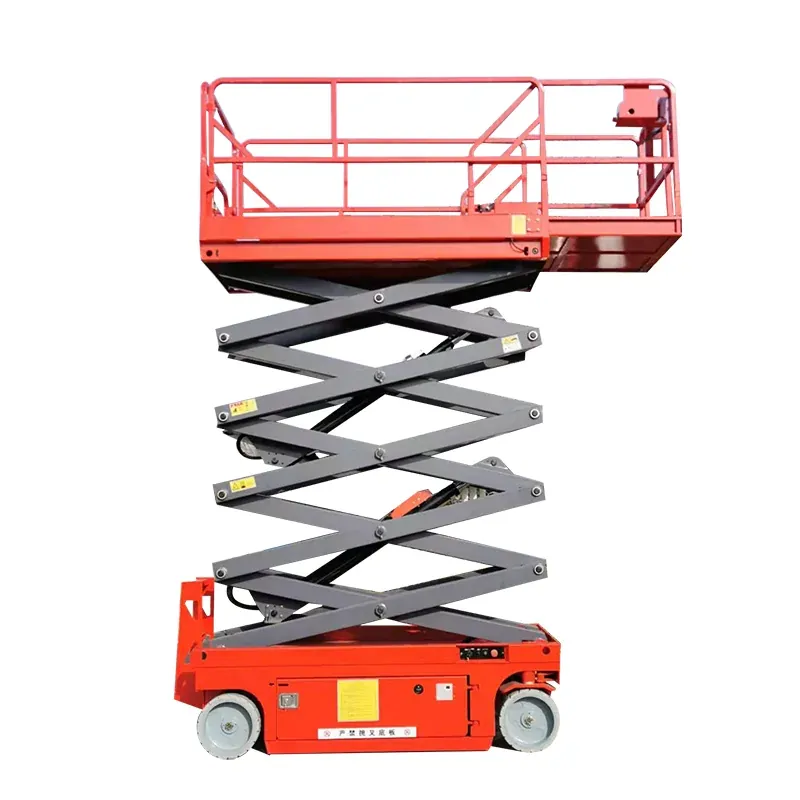 GTJZ-0810-Z Narrow 840 mm Scissor Lift — 26ft (7.8 m), 320 kg
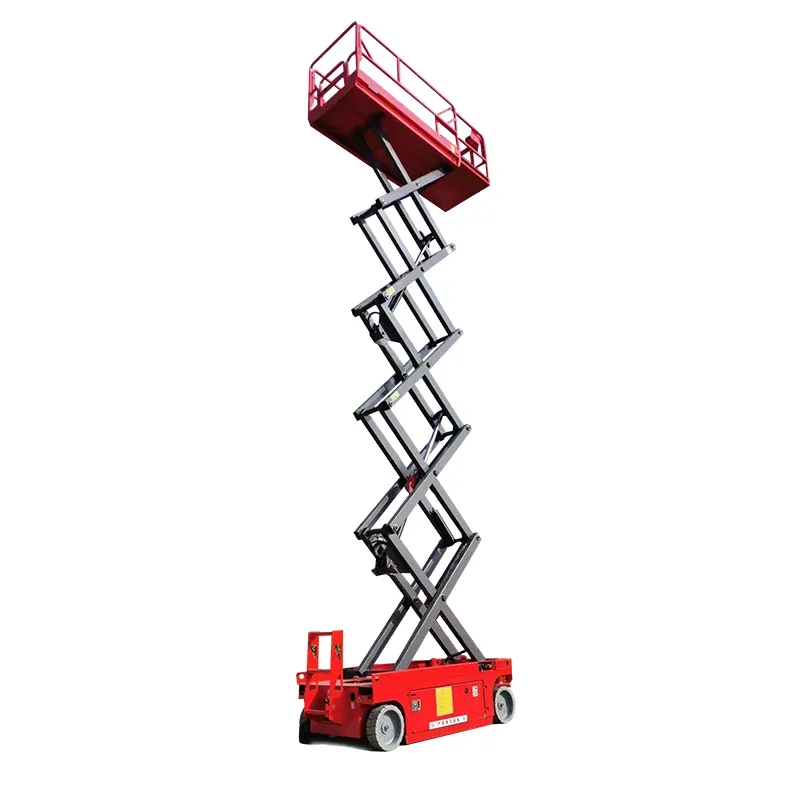 GTJZ-1012 32ft (9.8 m) Self-Propelled Scissor Lift — 320 kg