
en

Scissor lift fleet charging is an arithmetic problem before it is an electrical one. Six machines on a peak week need three charger points and a written roster, not six chargers and hope. The arithmetic is simple: each machine needs three to four hours of charge per shift worked, a charger point can deliver roughly five machine-sessions in a 24-hour day, so three points cover six machines with margin. What breaks the plan is not the number of chargers. It is the site circuit, the cable run, and the fact that nobody wrote down who charges when.
Take a 24 V 200 Ah pack on a GTJZ-1012 or GTJZ-0810-Z, charged from a 24 V 30 A charger. Recovery from 40% to 90% state of charge means putting back 100 Ah. With charger efficiency around 0.85, the effective rate is about 25 A, so the session is close to four hours. That figure is calculated from the pack and charger rating, not measured on your site, and it will be worse on a cold morning.
A charger point running through a working day and a night can host five such sessions if somebody moves the machines. Six machines at one session each is six sessions. Three points, three moves per day, done.
| Plan | Charger points | Moves per day | What goes wrong |
|---|---|---|---|
| One charger per machine | 6 | 0 | Site circuit cannot carry 6 x 30 A; the board trips and everybody blames the machines |
| Three points, rostered | 3 | 3 | Works, if the roster is written and someone owns it |
| Two points, ad hoc | 2 | 6 | Machines queue, the last one out goes to work half charged, battery life drops |
A 24 V 30 A charger draws about 1.5 kW at the input. Three of them is 4.5 kW, which is 20 A at 230 V single phase, comfortably inside a 32 A circuit. Six of them is 9 kW and 40 A, which is outside it, and the failure mode is a tripped breaker at 07:30 on the busiest morning of the week.
Scissor lift site power is never that clean: a site compressor, a welfare unit or a temporary heater on the same circuit, and the margin disappears. We have seen a compound where the charger bank worked perfectly until November, when a site heater was plugged into the same board. The first symptom was machines arriving at the work face at 60% charge.
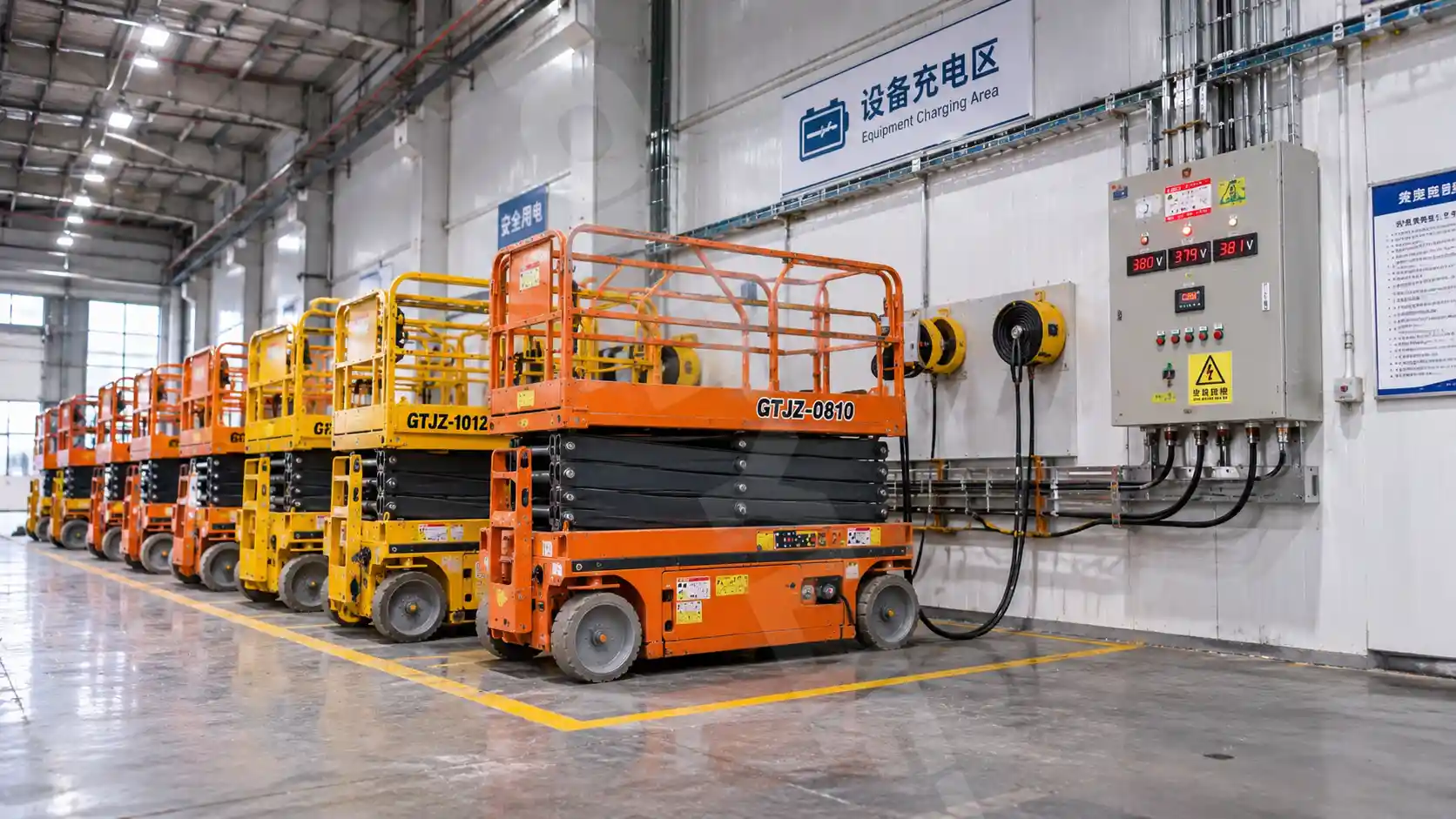
Charger points were placed where the machines park, not where the power was. The second arrangement is the one that works.
Write a named roster. Machine number, time slot, who moves it. A laminated sheet in the site office beats an app nobody opens. Scissor lift charger scheduling is the entire system; the chargers are just hardware.
Charge during the two natural gaps. Every site has them: the lunch break and the changeover between trades. A 45-minute top-up at each covers most of a shift's deficit, and it happens when the machine is idle anyway.
Put the charger where the machine parks. Cable runs longer than 20 m cost voltage and create a trip hazard that the site safety officer will shut down. If the power is 60 m from the parking area, the correct answer is a sub-board, not a longer lead.
Keep one machine out of the rotation. On a six-machine peak week, run five and hold one as the spare. The sixth machine exists to cover the one that is charging, not to add a sixth work face. Sites that plan five work faces and six machines finish the week; sites that plan six and six do not.
We quote charger quantity per container against the customer's shift pattern, not against the number of machines. A customer taking six units for single-shift work gets three chargers; the same six units for two-shift work gets five. It is a small line on the quotation and it prevents the most common warranty conversation we have, which is a two-year-old pack that will not hold a day's work because it was never given time to finish charging.
If you are planning a peak week, send the shift pattern and the site's available supply through the contact form and we will size the charger bank with you. Machine specifications, including charger ratings, are on the range page.
Tell us the constraint you are stuck on — floor loading, doorway width, cold store, aisle width, charge window. We will tell you which model works, what it costs, and what we would refuse to sell you.
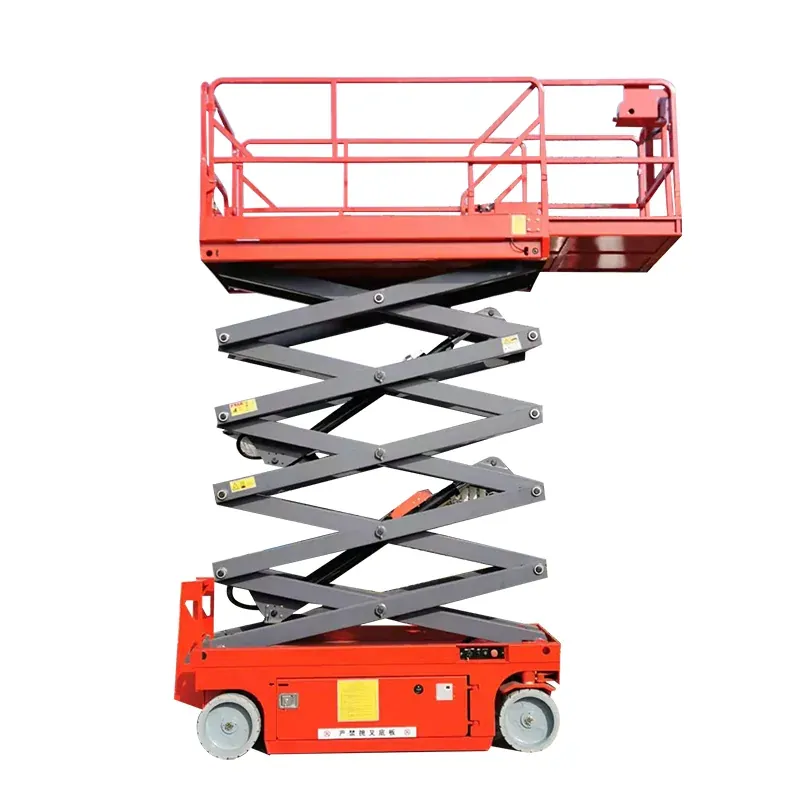 GTJZ-0810 26ft (7.8 m) Self-Propelled Scissor Lift — 450 kg
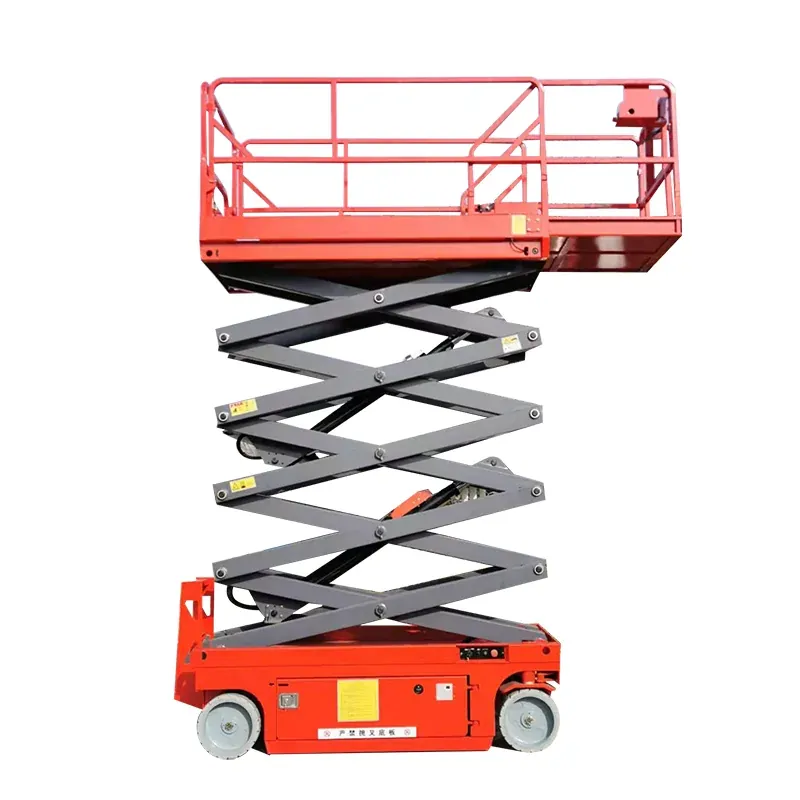 GTJZ-0810-Z Narrow 840 mm Scissor Lift — 26ft (7.8 m), 320 kg
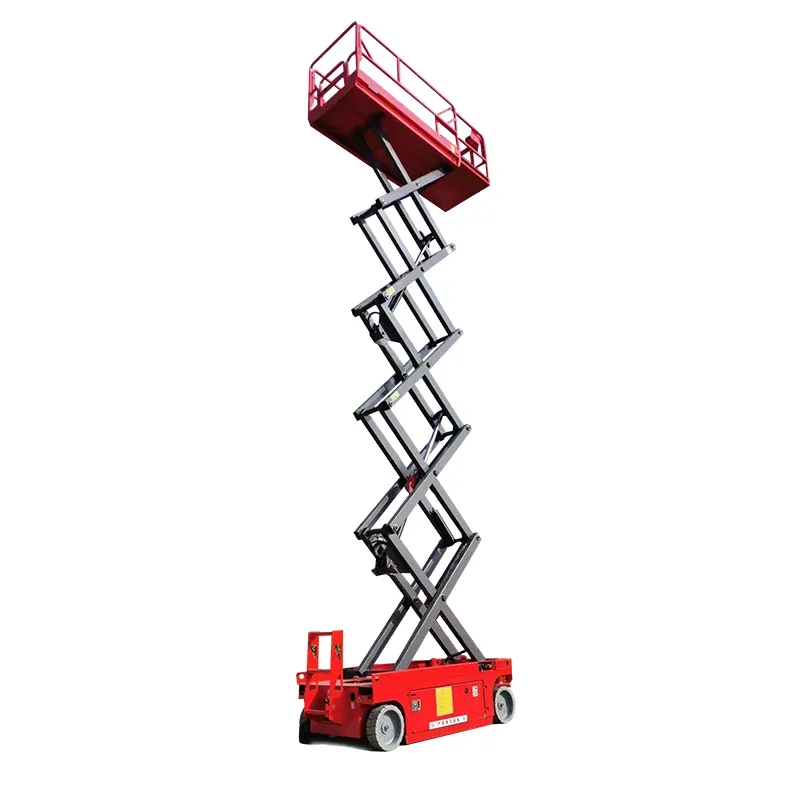 GTJZ-1012 32ft (9.8 m) Self-Propelled Scissor Lift — 320 kg