
en

The same 10 m electric scissor lift can be sold in Texas and in Bavaria, but not with the same bill of materials. Design to EN 280-1 alone and the machine will be refused by a US rental house. Design to ANSI A92.20 alone and it will not carry a CE mark.
We build scissor lifts for both markets, and the differences are narrower than most buyers expect: six items, of which only one is expensive. Here they are, without the standard-speak.
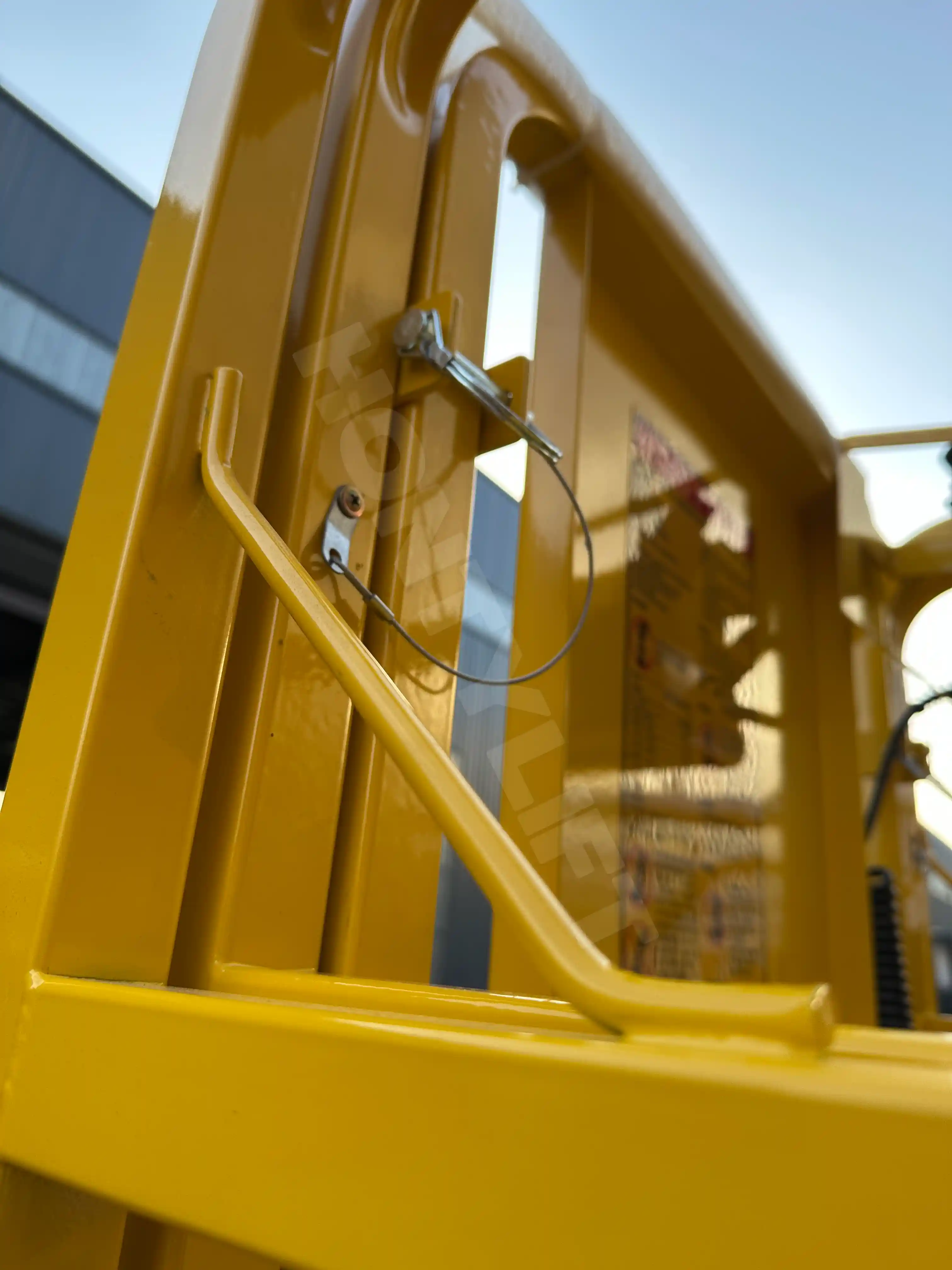
The platform gate and restraint anchorage point on the machine.
EN 280-1 is the harmonised European design standard: stability, structural strength, controls, and the information that has to accompany the machine. ANSI/SAIA A92.20 is the American design standard, and it sits in a family: A92.20 for design, A92.22 for safe use, A92.24 for training. In the US the design standard is only half the argument, because the operator training regime is enforced separately and the rental house carries part of that burden.
This is the one that changes the machine. EN 280-1 works from the guardrail: 1,100 mm top rail, intermediate rail, 150 mm toe board, and the platform is considered to contain the operator. A92.20, in the edition that became mandatory for machines manufactured after 1 June 2022, adds a personal fall restraint requirement on top of the guardrail, with a designated anchorage point on the platform and a restraint system that keeps the operator from reaching past the rail.
That anchorage has to be designed in, welded to a structure that can take the load, and documented. It cannot be added by a distributor with a drill and a bracket. If you are buying one machine for both markets, this is the item to settle before the order, because it is the only one that requires a change to the platform drawing.
Both standards want a gate that cannot be left open in flight. The European route is an interlock that inhibits lift and drive, and it is checked with the platform off the ground, not stowed. The American route adds requirements on gate swing, self-closing and the geometry of the opening that are specific enough to require a different gate assembly on some platform sizes.
In practice: a European-gate scissor lift can often be adapted, but the adaptation is a new assembly, not an adjustment. Budget for it as a part number, not a note.
A92.20 requires the machine to be rated for a stated wind speed, and the rating appears on the platform placard. EN 280-1 handles wind through the stability calculation for machines rated for outdoor use, and the result is a permitted wind speed in the manual rather than a placard figure.
The engineering converges; the documentation does not. A US buyer will look for the placard, an EU inspector will look for the calculation. Both have to exist on a dual machine, and they have to agree, which is why dual-certified machines carry a wind table rather than a single number.
The American machine carries imperial ratings on the placard and the decal set is prescribed in detail. The European machine carries metric ratings, pictograms, and a manual in the language of the member state where it is put into service. A machine shipped to Poland with an English-only manual is not compliant, however good the English is.
For a distributor holding stock for several countries, this is a logistics problem rather than an engineering one: three manual sets, three decal kits, one scissor lift. Plan the labelling operation at the warehouse, not at the factory, and the cost stops being a surprise.
| Item | European market | US market |
|---|---|---|
| Conformity route | Notified Body, type-examination plus production conformity | Manufacturer's declaration to A92.20, with design review |
| Key document | Declaration of Conformity with standards listed | Compliance statement, placards, and the manual |
| Operator training | Employer's duty under national transposition | A92.24, and the rental house is expected to document it |
| Periodic inspection | Per national rules and the manual | A92.22, annual by a qualified person |
Yes, and we do it, but the machine is designed as a dual from the platform drawing upward. What cannot be done is taking a CE machine, adding an anchorage and a placard, and calling it A92.20 compliant. The restraint load path has to be in the structure, and the platform gate has to be the American assembly.
Three practical consequences for a buyer:
Write the standard and the edition, not the market. "ANSI A92.20-2020 compliant" and "EN 280-1:2022 compliant" are specifications. "US spec" and "CE spec" are not, and they are where most disputes start, usually at the destination port.
Then ask for the platform drawing with the anchorage shown, and the gate part number. If a supplier cannot produce those two items, they are not building dual machines, they are building one machine and promising two.
We quote dual builds with the drawing package attached so the difference is visible before the order rather than after. Ask for the dual configuration sheet for any scissor lift from the 5.8 m compact to the 17.8 m platform, and it will come with the weight and lead-time delta on the first page.
Send the working height, the load and the site constraint. An engineer replies with a model recommendation and a written quotation within one business day — or tells you it cannot be done.
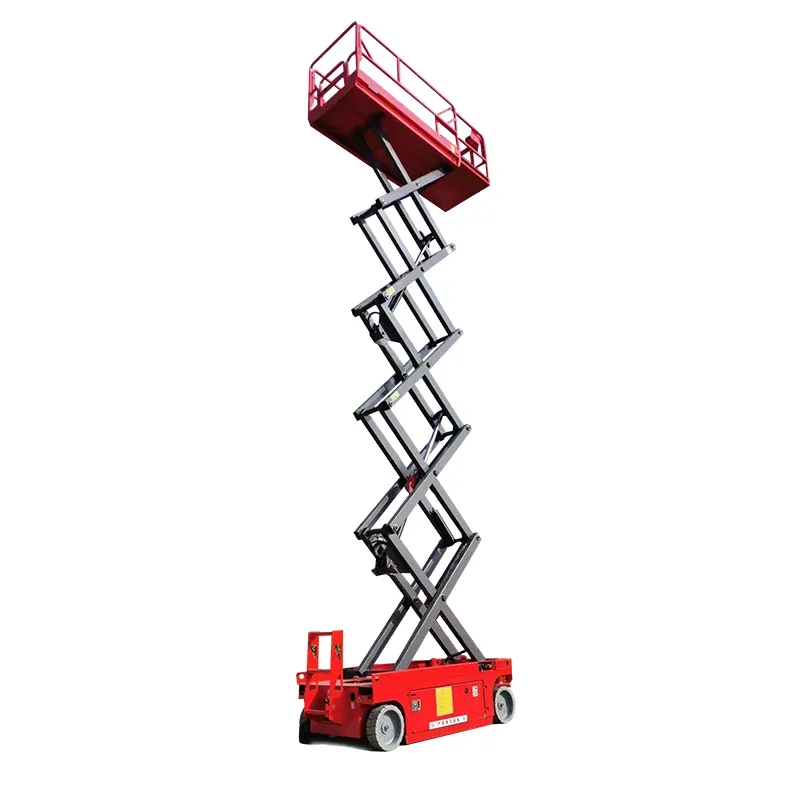 GTJZ-1012 32ft (9.8 m) Self-Propelled Scissor Lift — 320 kg