
en

A 10 m electric scissor lift with a 14,000 USD FOB price does not land in Los Angeles at 14,000 USD. It lands at roughly 21,000 USD before ocean freight, and most of the gap is two separate duty lines that both happen to be 25%.
Buyers in the US keep asking us for a "tariff-included price", which is a reasonable request and an impossible answer unless the incoterm and the port are fixed. What we can do is show the arithmetic. This is the arithmetic, using a machine we build every week.
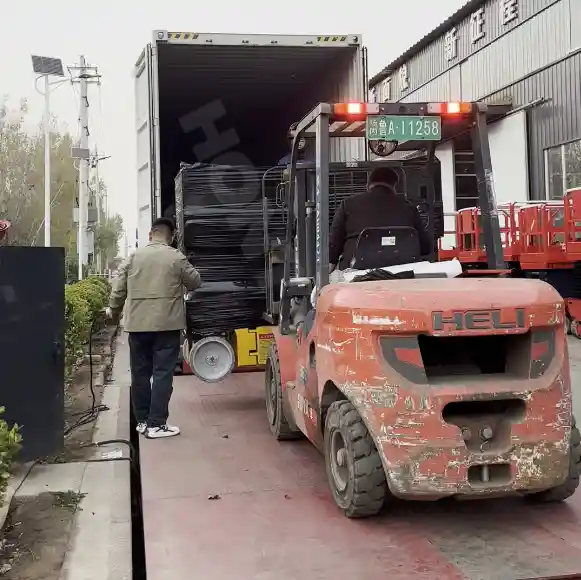
Shipping documents and container handling at the port.
Chinese-origin aerial work platforms enter the US under HTS 8427.20.80.20. The base rate in column 1 is free, which misleads people into thinking the electric scissor lift is duty-free. It is not, because two extra duties sit in chapter 99 of the tariff schedule and both apply on the same customs value:
They stack. There is no netting, no offset and no "higher of the two" rule. That is the single most common error we see in buyers' spreadsheets, and it usually comes from a broker quoting one line and an online calculator quoting the other.
Using the GTJZ-1012, 2,550 kg, stowed at 2,390 x 1,160 x 1,940 mm, one unit in a 40 ft container with room for lashing:
| Line | Basis | Amount (USD) |
|---|---|---|
| FOB value, 1 unit | Transaction value, which is also the customs value | 14,000 |
| Section 232, steel derivative | 25% of customs value | 3,500 |
| Section 301, China | 25% of customs value | 3,500 |
| Merchandise processing fee | 0.3464%, subject to the annual min and max | 48 |
| Harbor maintenance fee | 0.125%, ocean shipments only | 18 |
| Duty and fees | 7,066 | |
| Ocean freight, 40 ft, Shanghai to Los Angeles | Indicative, seasonal | 2,400 |
| Marine insurance | 0.4% of CIF | 96 |
| Landed before inland transport | 23,562 |
Duty and fees come to 50.47% of the customs value. On a scissor lift at this price point the tariff is larger than the ocean freight by a factor of three, which is why negotiating the freight rate is not where the money is.
Everything above assumes 8427.20.80.20. Change the classification and every number changes, so it is worth understanding why a scissor lift sits there. The heading covers self-propelled trucks fitted with lifting equipment, and the subheading is specific to aerial work platforms as described in the statistical note. A machine that is argued into a different subheading is not automatically cheaper, and a misclassification discovered at liquidation produces a bill with interest rather than a refund.
Ask your broker to confirm the subheading in writing before the first shipment, with the reasoning. It costs nothing and it fixes the number your pricing model depends on.
The chapter 99 structure includes exclusion headings, and they exist for specific products, specific periods and specific entry dates. They are not a general relief for scissor lifts, and they change. There are also, separately, antidumping and countervailing proceedings covering mobile access equipment and subassemblies from China. Whether a particular machine falls inside an AD/CVD scope is a legal question with a documentary answer, not a matter of opinion.
The practical rule: before every shipment, read the current chapter 99 text at the USITC site and check the Federal Register for anything naming your product and origin. A rate that was right in April can be wrong in October. Ours changed twice in twelve months.
Every quarter a buyer asks whether we can ship through Vietnam or Malaysia to reset the origin. The answer is no, and the reason is not caution. Origin is determined by where substantial transformation occurs, not where the container was transshipped. A machine assembled in China and railed across a border does not become Vietnamese. When CBP finds it, the penalty regime under 19 USC 1592 applies to the importer, retroactively, and it is not a rounding error.
There are legitimate structures, including genuine manufacturing in a third country, and they take years and capital. Anything that can be arranged in a week is a liability with a delay attached.
None of these is clever, and together they are worth more than a freight negotiation:
Ask for FOB, and ask for the HTS subheading the factory will declare, written on the quotation. Then run the duty yourself. A supplier who will not put the subheading on paper is either unsure of the classification or has something to hide, and both are your problem at the port rather than theirs.
We quote FOB and can produce a landed-cost sheet for a named US port with the duty lines shown separately, so you can see which part is ours and which part is the tariff. Ask for one with your port and quantity, and it will come back within two working days.
Duty rates and fee percentages in this article were checked against the published tariff schedule on 3 November 2026. They change, sometimes with short notice. Confirm the rate in force on the date of entry with your broker before you price a deal, and treat the figures above as the method rather than the answer.
Send the working height, the load and the site constraint. An engineer replies with a model recommendation and a written quotation within one business day — or tells you it cannot be done.
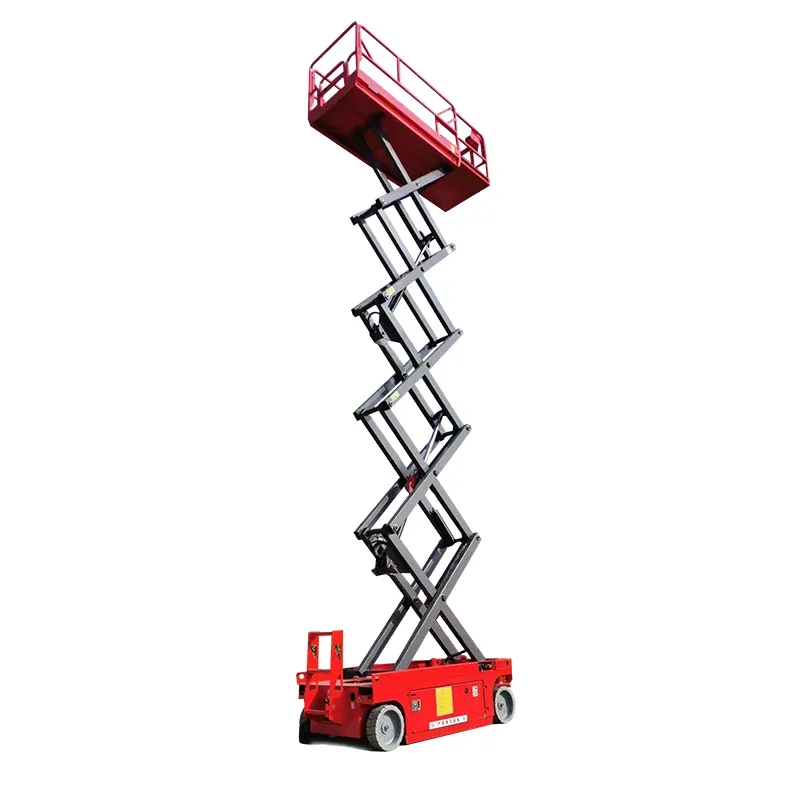 GTJZ-1012 32ft (9.8 m) Self-Propelled Scissor Lift — 320 kg