
en

The purchase price difference is not the argument. The shift pattern is. A one-shift factory machine and a two-shift rental unit will give opposite answers on the same two options, and both answers are correct.
We fit both on the same scissor lift chassis, and we quote both. What follows is the arithmetic we use in front of a customer, with the numbers we can defend.
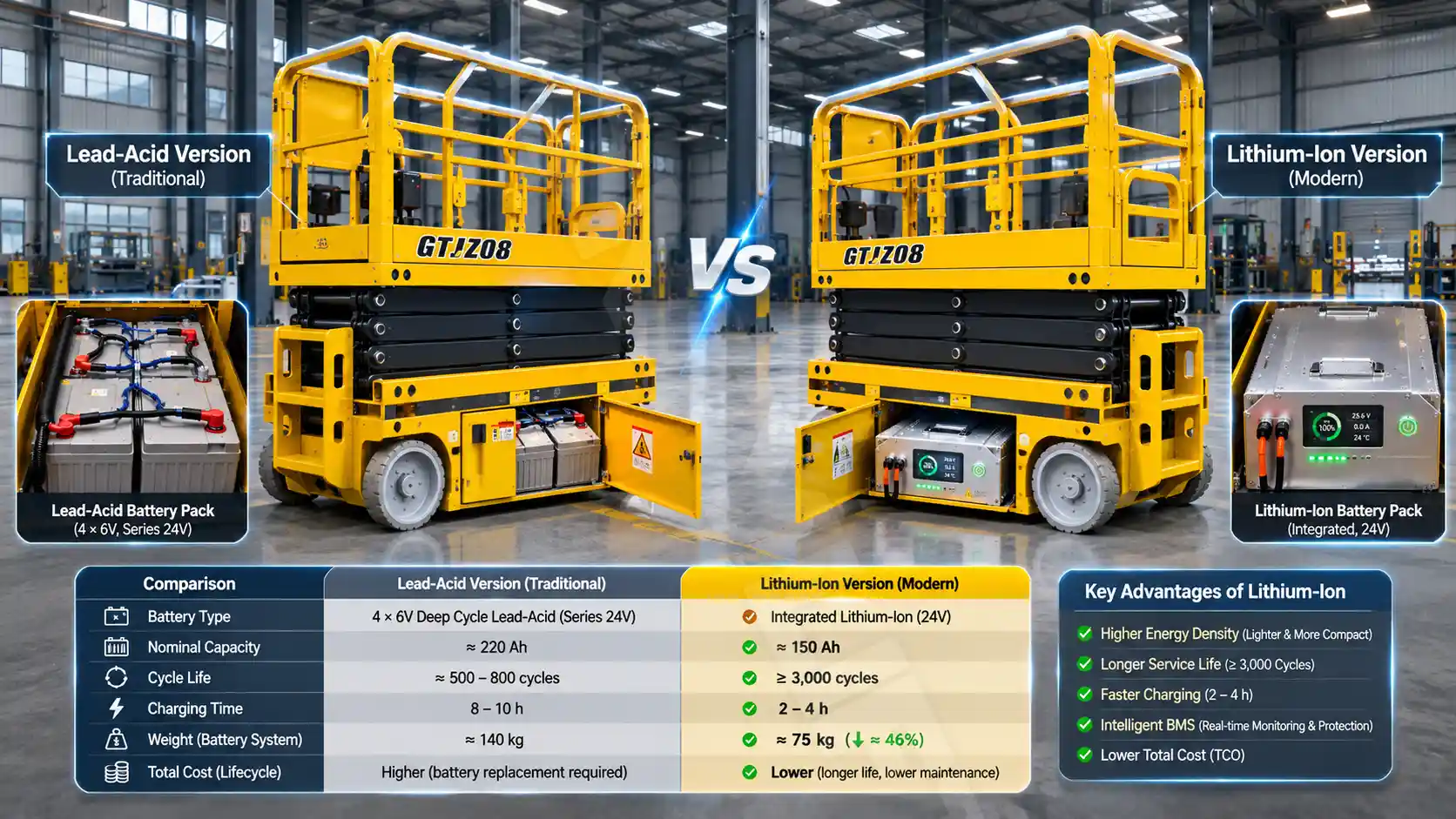
A lead-acid pack and a lithium pack compared side by side.
The standard pack on our 10 m (32 ft) and 12 m (40 ft class) electric scissor lifts is four 6 V blocks at 200 Ah, wired for 24 V. That is 4.8 kWh nominal. The charger is 24 V / 30 A, which means a full recharge from empty takes a little over six and a half hours in theory and seven to eight hours in practice once you allow for the taper at the end of the cycle.
That single number, seven to eight hours, sets the shape of the whole argument. A scissor lift cannot work two shifts on one pack if the pack needs most of the night to recharge, and that is true whether the chemistry is lead-acid or lithium. What changes is how much of the pack you are allowed to use.
A lead-acid pack is normally discharged to 50% before recharging, because deeper cycles shorten its life sharply. So 4.8 kWh nominal gives about 2.4 kWh of working energy. A lithium iron phosphate pack of the same nominal rating is routinely taken to 80%, which gives about 3.8 kWh, and it does not object to being topped up at lunchtime.
In practice that is the difference between a machine that finishes a shift at 40% and one that finishes at 15%. Operators do not care about the chemistry. They care about whether they can finish the job without a charge, and the lithium machine usually can.
Lead-acid in this application is good for roughly 1,200 to 1,500 cycles at 50% depth. Lithium iron phosphate is quoted at 3,000 to 5,000 cycles at 80% depth by the cell makers, and our field experience is consistent with the lower end of that when machines work in heat.
| Usage | Hours per year | Lead-acid pack life | Lithium pack life |
|---|---|---|---|
| One shift, 4 h of drive and lift per day, 250 days | 1,000 | 4 to 5 years | Longer than the machine |
| One long shift, 7 h per day | 1,750 | 2.5 to 3 years | 8 to 10 years |
| Two shifts, 10 h per day with a mid-day charge | 2,500 | 1.5 to 2 years, and unreliable in the second | 6 to 8 years |
The two-shift row is the one that decides most purchases. Replacing a lead-acid pack every eighteen months turns a cheap scissor lift into an expensive one, and it also means the machine is out of service for a day each time, which the maintenance budget never accounts for.
Absolute prices move, so we quote this as a 2026 index with the lead-acid scissor lift at 100. It covers the pack, the replacement packs, and the charging energy, on a two-shift pattern.
| Item | Lead-acid | Lithium |
|---|---|---|
| Machine with pack | 100 | 118 to 126 |
| Replacement packs over five years | 22 to 30, two replacements | 0 |
| Charging energy | Index 100 | Index 86 to 92, because the charger taper wastes less |
| Downtime for pack changes | 2 days | 0 |
| Five-year index | 122 to 130 | 118 to 126 |
On two shifts the two options land within a few points of each other, and the lithium machine wins on uptime rather than on cash. On one shift, lead-acid wins clearly, because the pack outlives the comparison and the extra capital buys nothing. That is the whole decision, and it is why we do not recommend lithium as a default.
Four places, and buyers should hear them before they choose:
Under four hours of actual drive and lift per day, indoors, above 5 degrees C: lead-acid. It is cheaper to buy, cheaper to repair, and the pack will outlive the first owner's interest in the electric scissor lift.
Two shifts, an opportunity-charging pattern, sub-zero sites, or a rental fleet where uptime is the product: lithium. The capital difference pays back inside three years on the two-shift pattern, and the machine stays available while the lead-acid unit is on charge.
Everything in between is a judgement about your charging infrastructure, which we cannot see from here. Tell us the shift pattern and the charge window and we will run the index for your case rather than ours. Send us the two numbers and we will reply with the model and the pack we would fit, including the case where the answer is the cheaper one.
Send the working height, the load and the site constraint. An engineer replies with a model recommendation and a written quotation within one business day — or tells you it cannot be done.
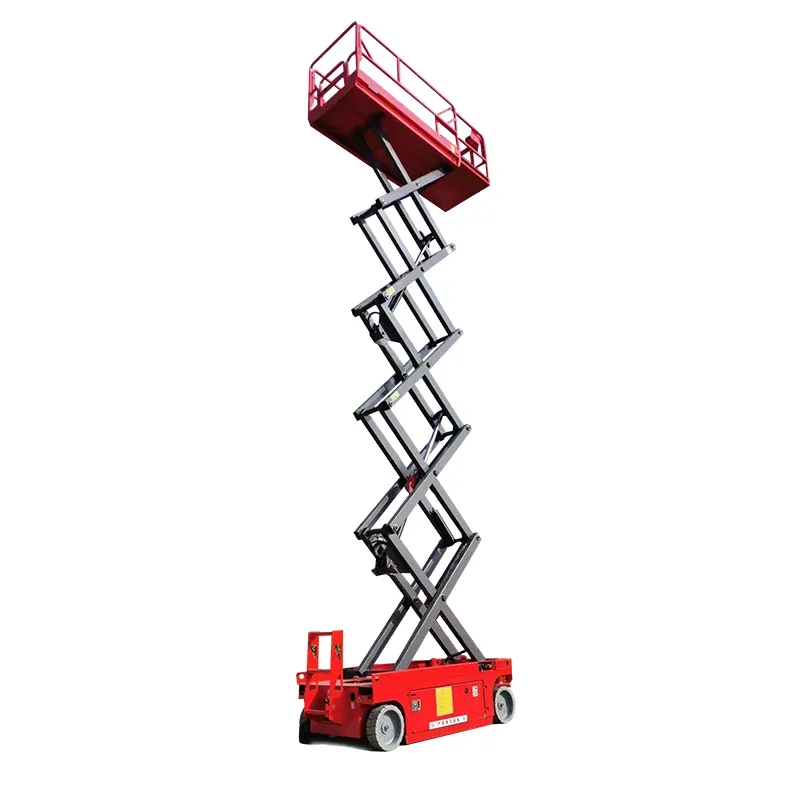 GTJZ-1012 32ft (9.8 m) Self-Propelled Scissor Lift — 320 kg