
en

Every few weeks a customer sends us a drawing of a mezzanine and asks whether an electric scissor lift will be all right on it. We can give them the numbers. We cannot give them the answer, and the difference between those two things has caused more arguments than any other question we get.
Here is the calculation we do give, using the 10 m (32 ft) scissor lift, and an explanation of why the figure that looks reassuring is the one that should worry you.
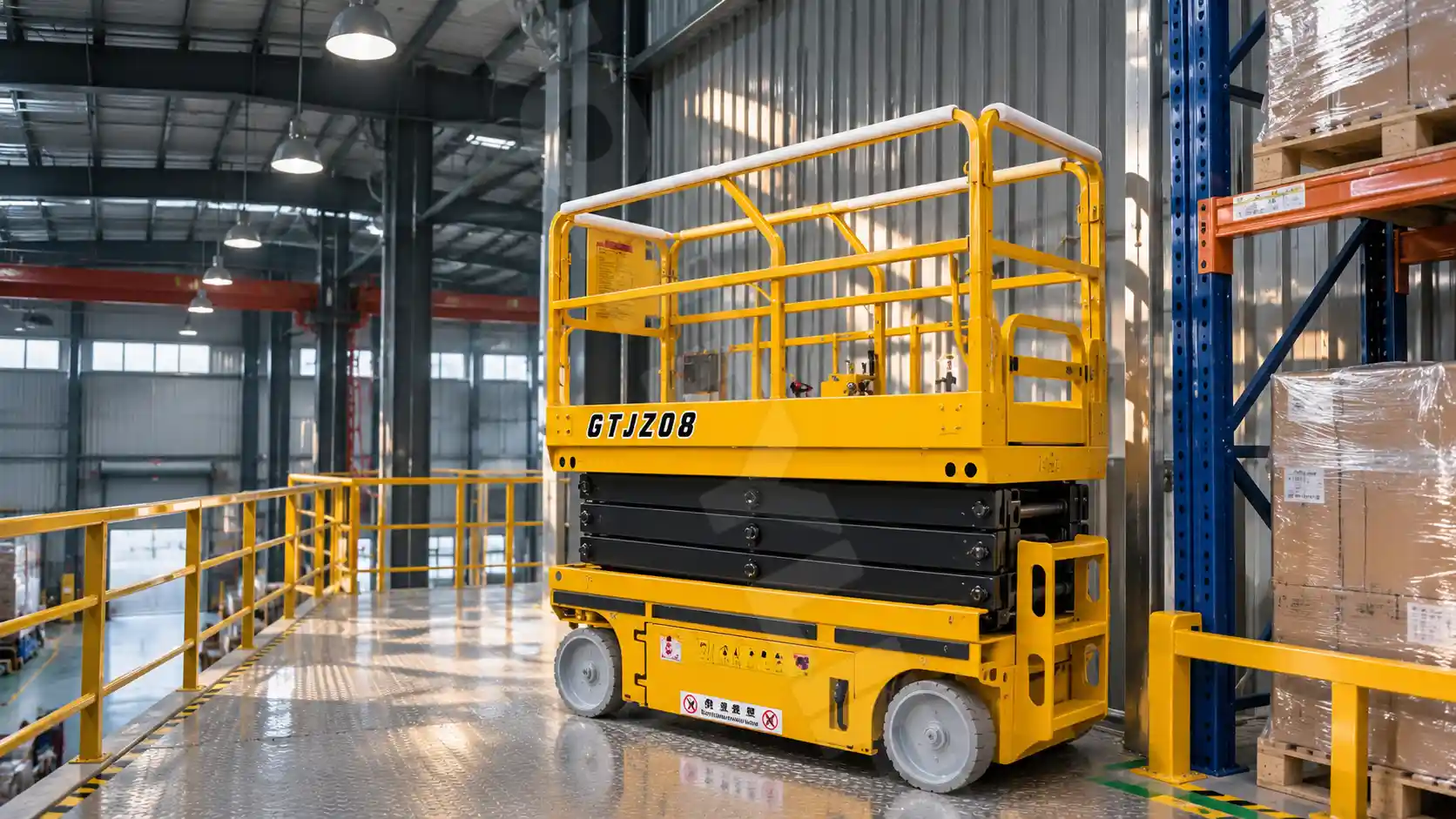
The machine positioned on a mezzanine deck beside the racking.
Take the GTJZ-1012 at 2,550 kg with the platform stowed, standing on a footprint of 2,390 x 1,160 mm. That is 2.77 m2 of ground contact area if you spread the weight over the whole chassis, which gives:
2,550 kg x 9.81 = 25,000 N, spread over 2.77 m2, equals 9.0 kN/m2.
Nine kilonewtons per square metre sounds manageable. A ground-bearing industrial slab will take it without a second thought, and many mezzanine decks are designed for 5 kN/m2 imposed load, so the gap looks closeable. This is where the trouble starts, because the machine does not distribute its weight over its chassis. It stands on four tyres, each roughly the size of a shoe box.
Divide the same 25,000 N by four and you get about 6.3 kN per wheel, or roughly 640 kg standing still with the load centred. On our standard tyre that lands on a contact patch of about 0.02 m2, which is a local pressure near 0.28 N/mm2, or 280 kPa.
Those two numbers, 9.0 kN/m2 and 280 kPa, describe the same scissor lift. The first is what the slab feels on average. The second is what the slab feels directly under a tyre. A suspended slab with a thin topping and a wide bay can carry the average and still crack under the point load, particularly if the wheel lands near a beam line or a penetration.
Three further things move the point load around, and none of them appears in a datasheet:
Ground-bearing slab. Usually fine. Industrial slabs are typically designed well above 9 kN/m2, and the point load is the only thing worth checking, normally for a thin power-floated slab over insulation. Ask for the slab specification and you are done.
Suspended slab over a basement or a production area. This needs a structural engineer, not a supplier. Give them the wheel loads and let them check punching shear at the wheel positions, not just the uniform load. The machine's footprint is small compared with the bay size, so a check based on uniform load alone will pass a floor that fails locally.
Mezzanine over racking. The worst case, and common in warehouses that have added a pick floor above the racking. The deck is often designed for foot traffic and light carts. A 2,550 kg scissor lift on it is a different category of load, and the racking uprights transmit whatever the deck takes straight to the floor slab, which changes the loading on the racking itself.
Five items, and we provide all of them on request for any model:
A supplier who answers this request with a single "ground pressure" figure is not being unhelpful. They are telling you they have not done the calculation.
We will not tell you your floor is suitable. Not because we are being difficult, but because we have never seen your floor. The machine's floor loading is one input into a structural check that depends on the slab thickness, the reinforcement, the span, the supports and what else is standing on it.
What we will do is give you the loads in a form an engineer can use, in writing, with the assumptions stated. That document has been through enough structural reviews by now that it is usually accepted without a follow-up question, which is worth more than an opinion from a machine supplier.
If the floor turns out to be marginal, there is usually a scissor lift that solves it rather than a reinforcement job. Dropping from the 1,160 mm wide 10 m to the 840 mm GTJZ-0810-Z cuts the machine weight to 2,050 kg and widens your options on both the slab and the doorway. That trade is worth having early, before the slab is poured rather than after.
Ask for the wheel load sheet for the model you are considering, and tell us the slab type. If it is a mezzanine over racking, say so in the first line, because that answer is different from the one for a ground slab.
Send the working height, the load and the site constraint. An engineer replies with a model recommendation and a written quotation within one business day — or tells you it cannot be done.
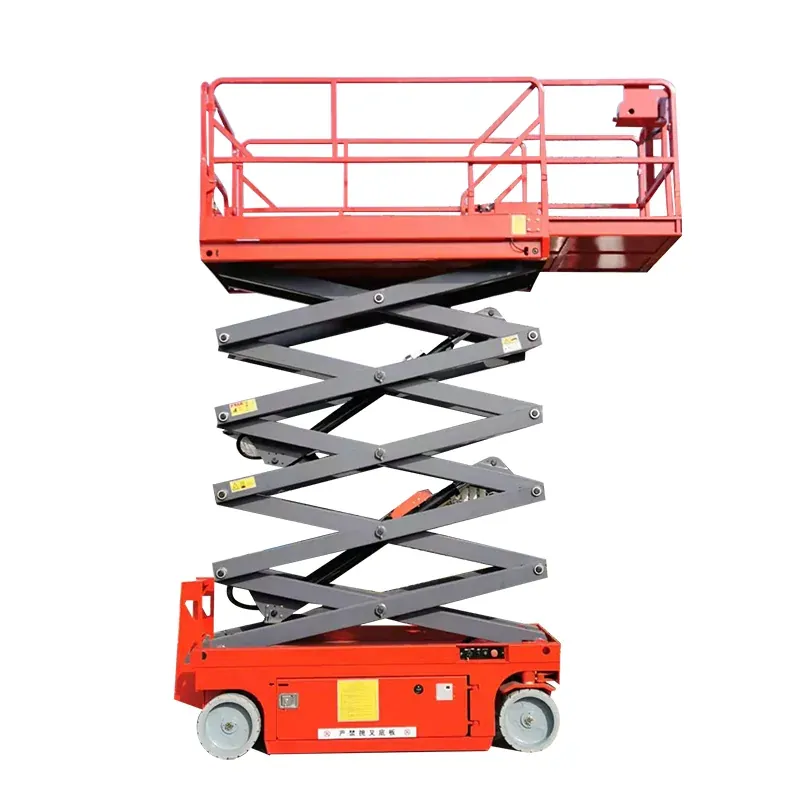 GTJZ-0810 26ft (7.8 m) Self-Propelled Scissor Lift — 450 kg
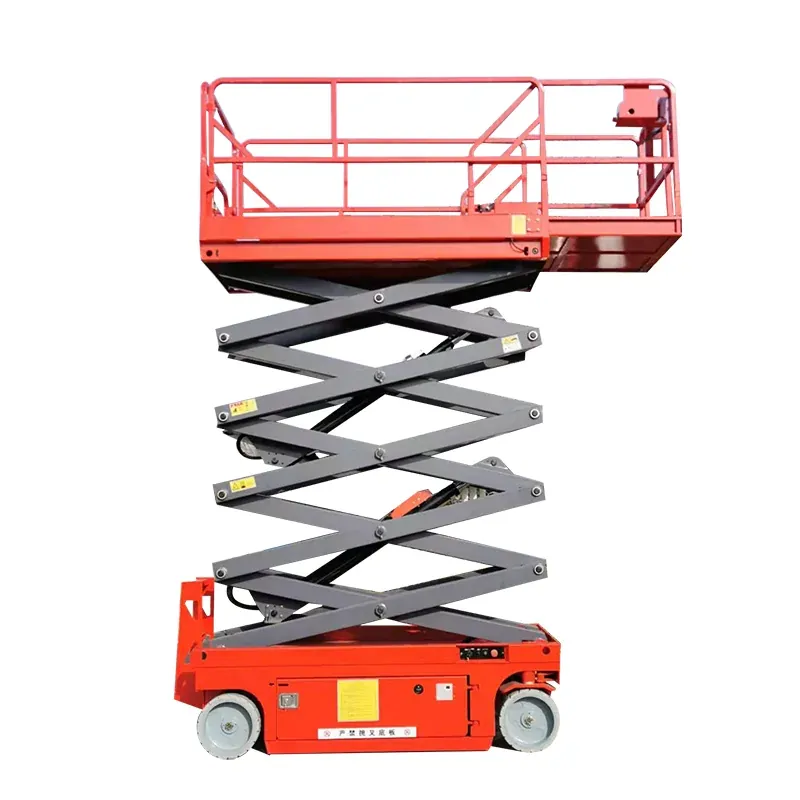 GTJZ-0810-Z Narrow 840 mm Scissor Lift — 26ft (7.8 m), 320 kg
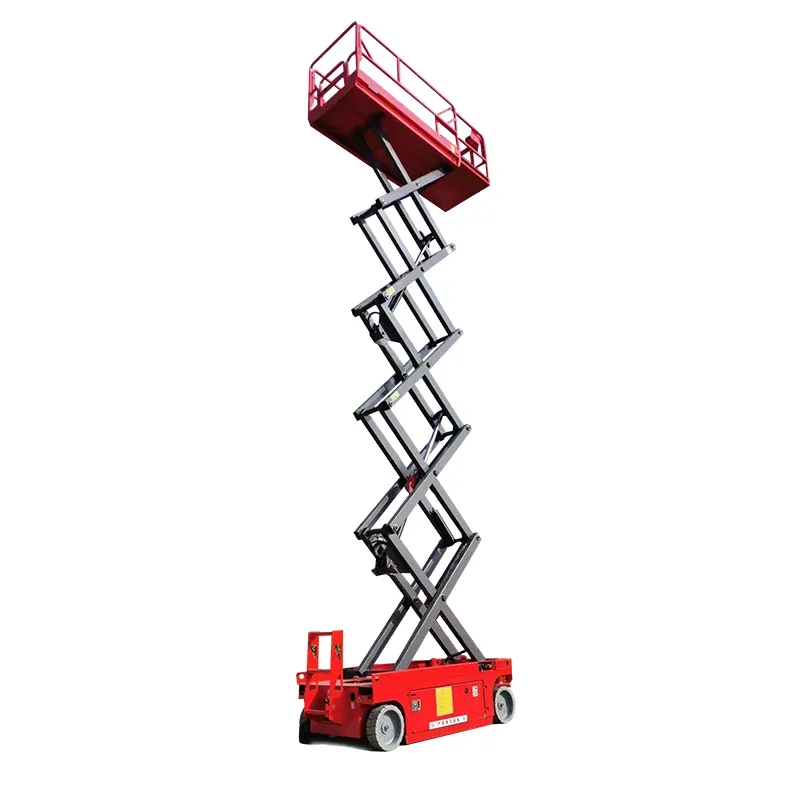 GTJZ-1012 32ft (9.8 m) Self-Propelled Scissor Lift — 320 kg