
en

At minus fifteen an electric scissor lift has three problems and only one of them is the battery. Operators blame the battery because that is the component with a gauge, and then replace a pack that was never the issue.
We ship a lot of machines into Russia, Kazakhstan and northern China, and the winter failures follow a pattern. Here it is in the order the failures actually occur.
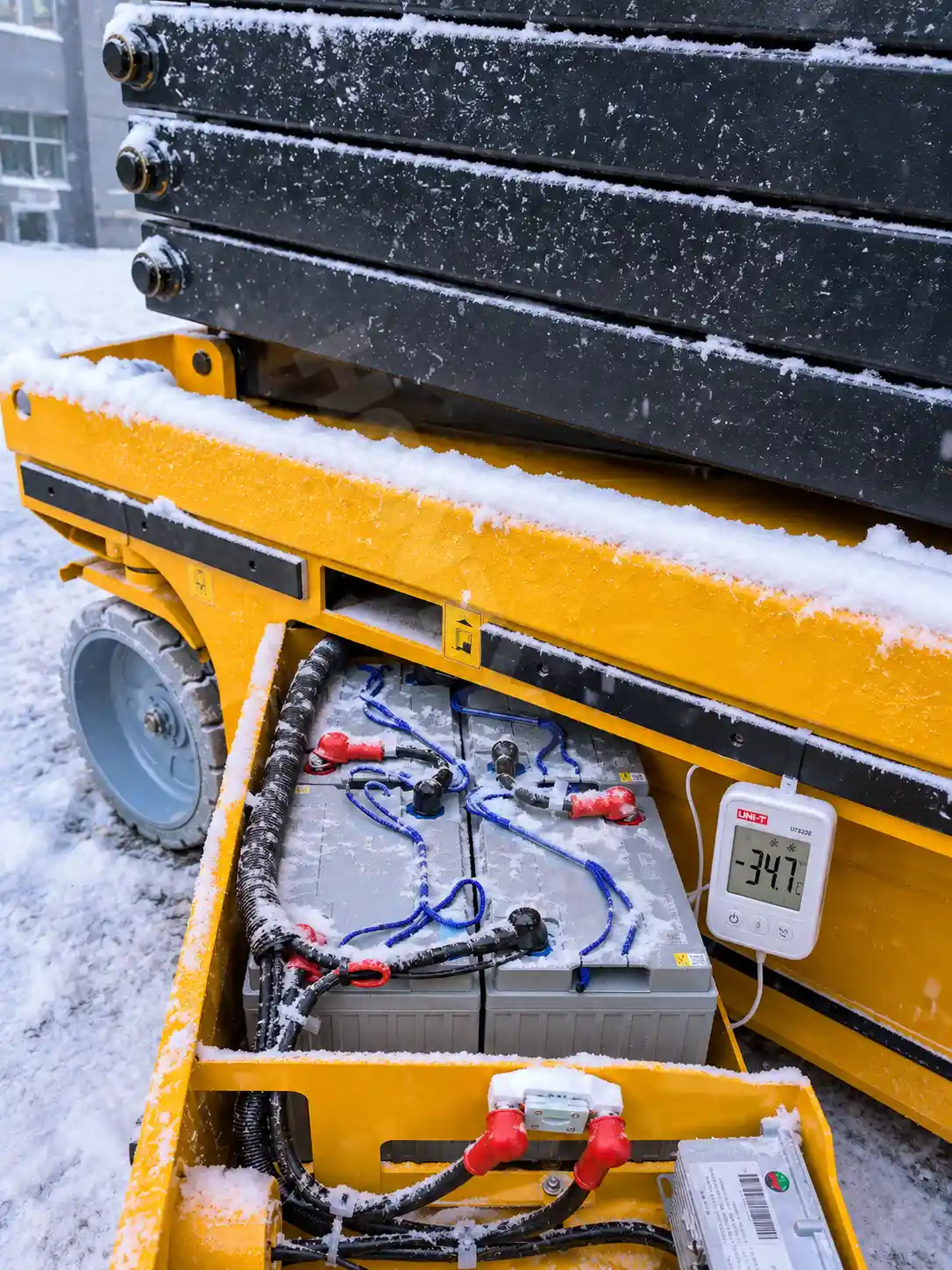
The machine in snow, with the battery compartment open for a cold-weather check.
Hydraulic oil is specified by viscosity grade at 40 degrees C, which tells you nothing about what it does at minus fifteen. A VG46 oil that is correct for a scissor lift working in an air-conditioned warehouse in summer becomes thick enough to be a problem in a yard in January: the pump has to pull it through a cold suction line, and the first thirty seconds of operation produce cavitation, a pressure spike, and a lift that moves in jerks.
The rule we give: VG32 below minus 10, VG46 above it, and if the machine lives outdoors through the winter rather than starting in a cold yard once a week, use VG32 and accept the slightly higher wear in summer. Changing grade twice a year is what fleets do. It is not what single-machine owners do, and it is the reason their machines are slow every January.
Cavitation is the part that turns a nuisance into a repair. A pump running with an air-oil mix for a few seconds each morning will lose its clearances over a winter, and the symptom next spring is a lift that is slow when hot rather than when cold. Warm the machine before loading it, and the pump never sees that condition.
A lead-acid pack at minus fifteen delivers roughly 70 to 80% of its rated capacity, and it accepts charge more slowly. The capacity loss is temporary and comes back in spring. What does not come back is the damage from charging a cold pack or leaving one discharged.
A lead-acid battery charged below zero sulphates, and the damage is permanent. A lithium pack charged below zero plates lithium on the anode, which is also permanent and also reduces capacity. Neither chemistry can be fixed by a longer charge afterwards. The rule for both: charge above 5 degrees C, and if the machine has been outside overnight, that means bringing the pack indoors, fitting a pack heater, or charging in a heated bay.
| Temperature | What to do | What to avoid |
|---|---|---|
| 0 to −10 °C | VG32 oil, warm-up cycles before loading, charge indoors or in a heated bay | Charging a pack straight off a cold machine |
| −10 to −25 °C | VG32, pack heater or indoor charging, hydraulic warm-up of five minutes at low load, check seals weekly | Full-load lift in the first five minutes. Leaving the pack below 50% overnight |
| Below −25 °C | Indoor storage, low-temperature seals specified at order, block heater, synthetic oil if the site allows | Starting an unheated machine and expecting rated performance |
Standard nitrile seals stiffen as the temperature falls, and below about minus 20 they stop sealing as effectively as they do at zero. The result is a scissor lift that weeps at the cylinder rod and stops weeping in spring, which makes it very hard to diagnose in a workshop at 15 degrees.
If a machine is going to work below minus 20, say so at the order. We fit low-temperature seals and hoses for those markets, and it is a specification line rather than a standard feature, because it costs more and most buyers do not need it.
Two smaller items in the same category. Moisture in the hydraulic circuit freezes, and the first place it causes trouble is a relief valve that will not seat. A machine stored outdoors through temperature cycling condenses water into the reservoir every day, which is what the breather is for, and why the breather gets checked on a winter service and not on a summer one. And tyres flat-spot when a loaded machine stands in one place at low temperature for weeks, which is a nuisance that becomes a vibration at speed and then a replacement.
Four lines, no more, because a routine with twenty steps does not survive a Monday morning:
The gate interlock switch is the other one that freezes, usually with ice in the striker. A hair dryer is the correct tool. A screwdriver levering the striker is how a switch gets broken and a machine goes out of service for a week.
Tell us the lowest temperature the electric scissor lift will be started at, not the average winter temperature. They are different numbers and they produce different specifications. A machine for a Moscow yard that sees minus 25 on the coldest night of the year needs the low-temperature option; a machine working inside a heated production hall in the same city does not, and paying for it is a waste.
The larger models carry more oil and more seal surface area, so the specification matters more as the scissor lift gets bigger. Tell us the lowest start temperature and we will quote the configuration that matches it, including the case where the standard machine is the right answer.
Send the working height, the load and the site constraint. An engineer replies with a model recommendation and a written quotation within one business day — or tells you it cannot be done.
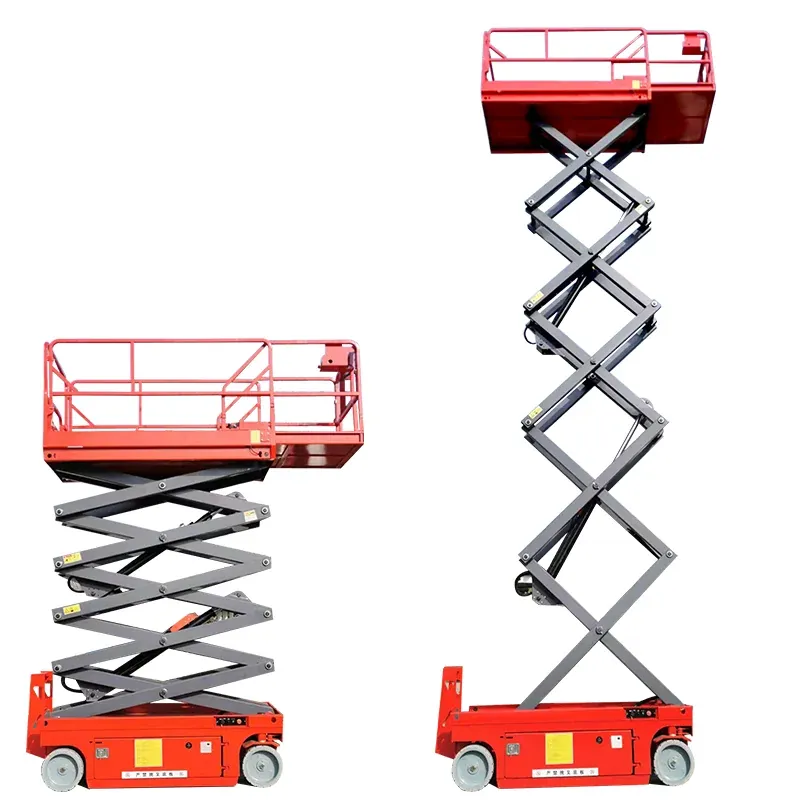 GTJZ-1618 52ft (15.8 m) Scissor Lift — Our Tallest, 320 kg