
en

"Quiet operation" appears in every tender for an electric scissor lift and means nothing until it has a number and a measuring position attached to it. A supplier can meet a requirement for quiet operation with a machine that fails the building's noise limit, and be right on both counts.
Work in occupied buildings is the fastest growing part of our order book: hospitals, data halls, shopping centres, airport terminals, museums. It is also where specifications are written most loosely, so this is how we would write one.
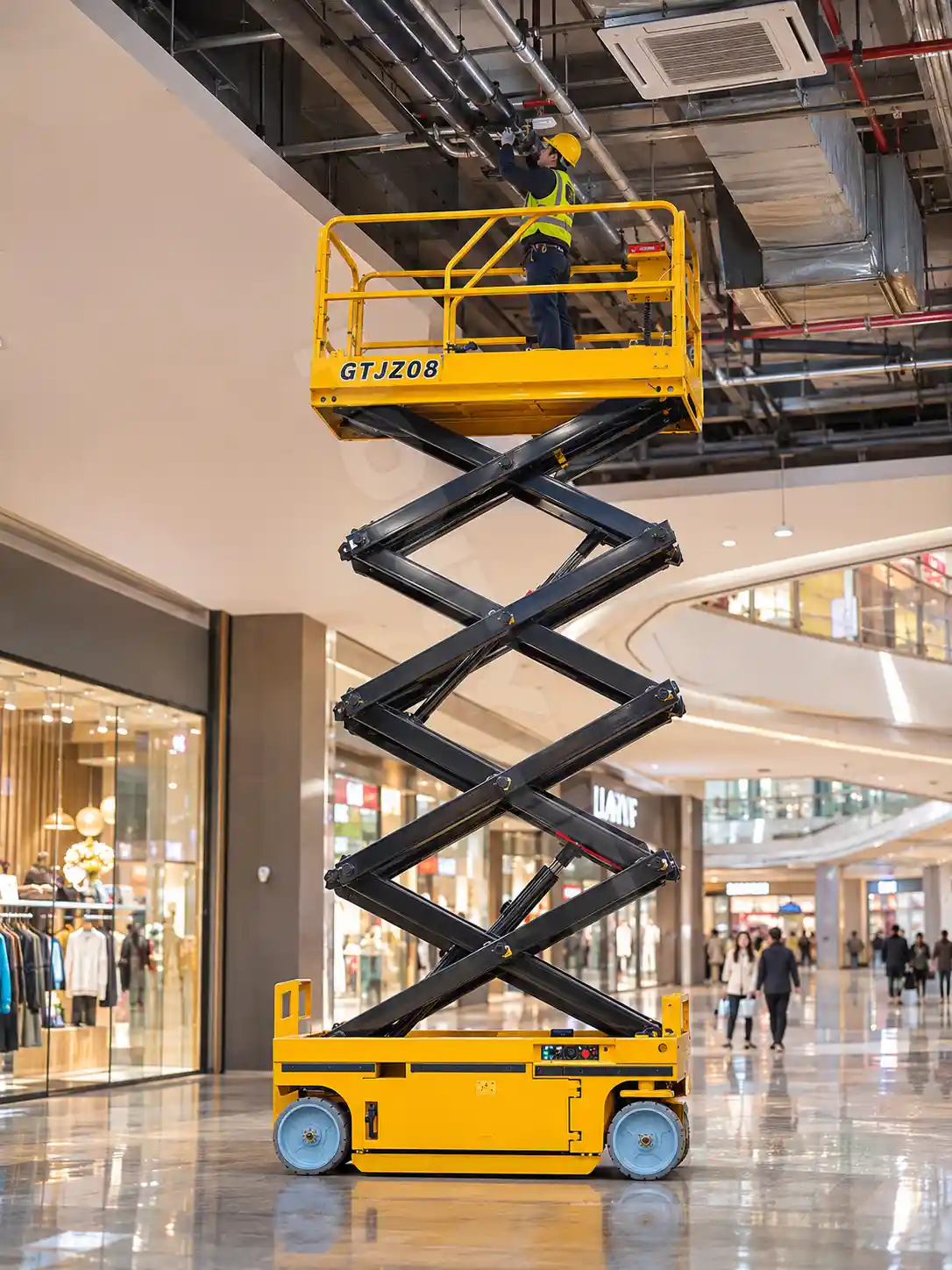
An electric scissor lift working inside an occupied building.
The figure that matters is the A-weighted sound pressure level at the operator's position, measured to a defined standard, at a stated distance, with the electric scissor lift doing a stated task. Change any of those four and the number changes.
In practice two numbers get quoted. One is measured at the operator's ear on the platform, which is what the operator experiences and what most occupational noise rules refer to. The other is measured at one metre from the machine on the ground, which is what a facility manager cares about because it describes what the building hears.
An electric scissor lift in this class typically lands between 62 and 68 dB(A) at the operator position, depending on whether the pump is lifting or the scissor lift is only driving. Driving is quieter than lifting. A machine on a hard floor with a loose guardrail pin will be louder than the same machine on a mat, because the rattle travels.
Four lines, and they convert a preference into a requirement:
Without the fourth line, the first three are marketing. With it, they are a specification, and a supplier who knows the machine will meet the figure has no reason to refuse to sign it.
The hydraulic pump. Dominant while lifting, and the reason a scissor lift is louder going up than driving. It is also the source most affected by oil condition: a pump with aerated oil, or with a partially blocked suction strainer, gets noticeably louder before it fails.
The drive motors and gearboxes. Dominant while travelling on a smooth floor. On a well-built machine this is a low whine rather than a grind; a grind means a bearing or a gearbox on the way out, and it usually appears as a complaint about noise before it appears as a breakdown.
The structure. Loose guardrail pins, a platform gate that does not seat, a battery cover that is not clipped down. These produce rattle and knock rather than a steady sound, and they are the most common cause of a noise complaint about a machine that measures well.
An electric scissor lift produces no exhaust, which is why it is allowed inside in the first place. It does produce three other things worth writing into a method statement:
Three constraints that decide the scissor lift before noise does. The lift car, because most occupied buildings move equipment vertically through a passenger or goods lift and the car dimensions are unforgiving. The door height, because a folded machine of 1,940 mm can fail a 2,000 mm opening once the door closer is counted. And the route width, because a hospital corridor with a bed against the wall is narrower than the drawing says.
Our measurement sheet covers the five numbers to take before ordering. In a hospital, add the lift booking rules: a machine that needs the passenger lift during visiting hours is a machine that works nights.
Working nights is standard in occupied buildings, and it exposes the one weakness of a battery machine: charge time. A 24 V / 200 Ah pack takes seven to eight hours from empty on a 30 A charger. If the machine works a full night shift and the building needs the aisle back by 07:00, there is no window to recharge before the next night unless the pack is changed or a second machine covers.
Two workable answers. Specify two packs and a spare, which is what data hall contractors do. Or specify lithium, which accepts a partial charge at lunchtime and does not mind being topped up, so a four-hour window is enough to get through the next shift. Both are cheaper than discovering the problem on the second night.
A decibel figure without a test report. Machines vary by model, by tyre, by floor and by load, and a number quoted from a datasheet for a different configuration is the kind of promise that ends with a machine being rejected at the loading dock.
Tell us the building type, the noise limit and where it was measured, and we will say whether the standard machine meets it or which change gets you there. Send us the specification clause you are working to, and we will answer against it line by line rather than in general terms.
Send the working height, the load and the site constraint. An engineer replies with a model recommendation and a written quotation within one business day — or tells you it cannot be done.
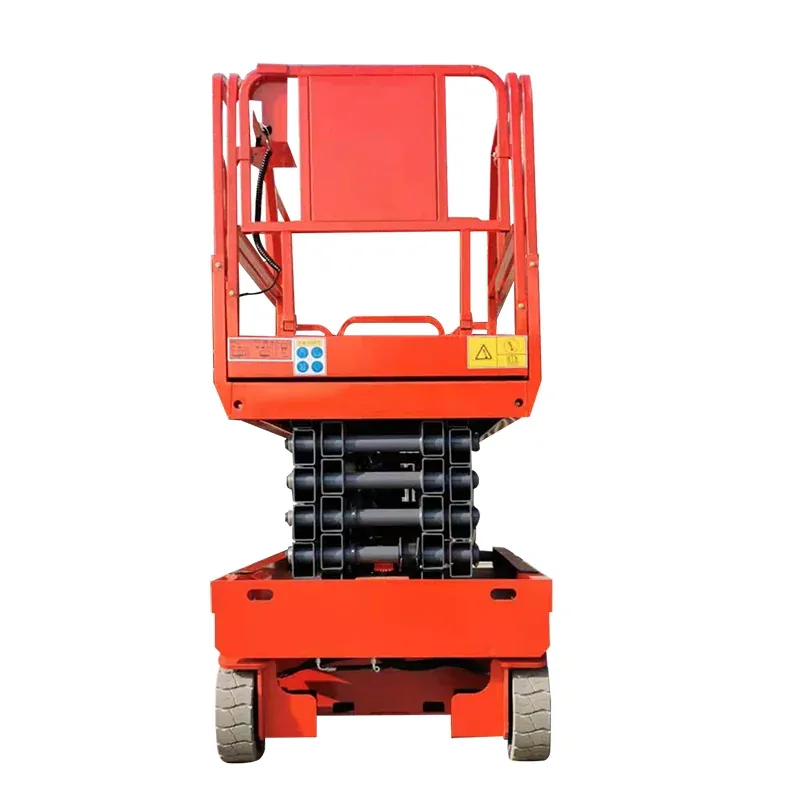 GTJZ-0608-M Compact 19ft (5.8 m) Hydraulic Drive Scissor Lift — 230 kg