
en

A rental buyer and an end user read the same datasheet and ask different questions. The end user asks what the electric scissor lift will do on their site. The rental buyer asks what will happen to it when it goes to somebody else's site, with an operator nobody trained.
We build for both, and the specification for a fleet order differs in five places. None of them appears in a standard brochure, and all of them cost money to retrofit.
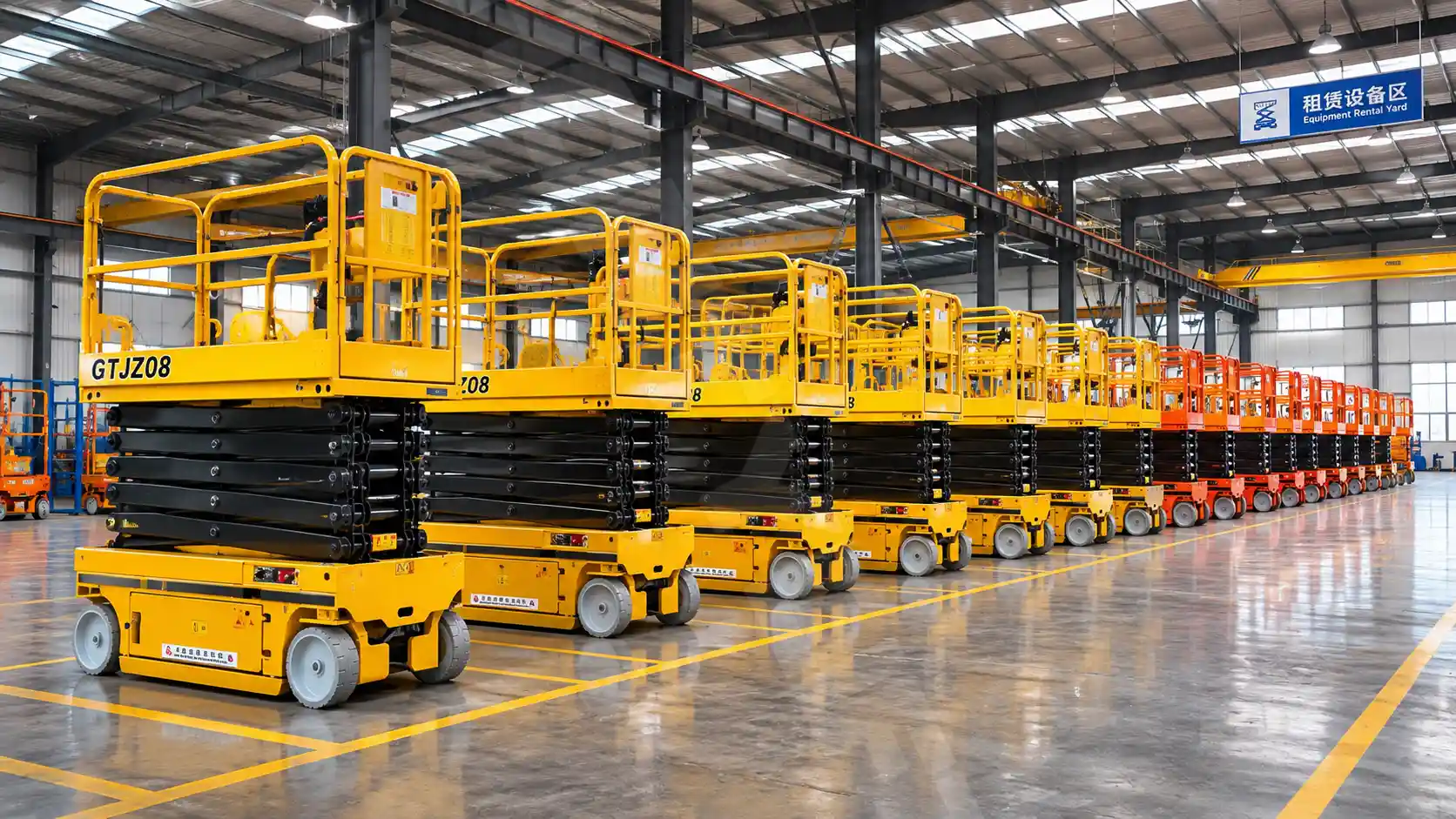
A line of machines parked in a rental yard.
Hours are the basis of rental billing, maintenance intervals and resale value. A mechanical hour meter is a suggestion. What a fleet wants is hours logged in the controller, with the ability to read them without trusting the display on the machine.
Ask two questions. Is the hour count stored in the controller rather than only displayed? And can a technician with the right handset read total hours, traction hours and lift hours separately? A machine that separates traction from lift hours gives a far better maintenance picture, because a machine that drives all day and never lifts needs different attention from one that lifts all day.
When a scissor lift stops on a customer's site, the first person to see it is a driver or a site supervisor. If the display shows a code that can be read over the phone, the call is resolved in ten minutes. If it shows nothing, somebody travels.
This is the single cheapest feature to specify and the most expensive to leave out. On our machines the controller records the last inhibit reason, which is why our service desk asks for the code rather than for a description of the fault.
Rental margins live in the workshop, and the workshop is usually one person. Three questions decide whether that person can service the machine alone:
A scissor lift designed for an owner who services it quarterly can be a machine that takes two people and a chain hoist to change a hose. That difference shows up in the cost per unit per year, not on the invoice.
The most under-specified item in a fleet order. If the 8 m scissor lift and the 10 m scissor lift use the same charger, the same wheels, the same emergency stop buttons and the same pothole bar springs, the stores holding halves and the number of part numbers halves with it.
Ask for the parts list across the models you are buying, and mark the shared items. Then ask which items are shared with the models you might buy next year. A range designed around common components is worth more to a rental fleet than a slightly better specification on one model.
The number that decides the whole business case, and the one nobody discusses at the order stage. Five things hold value on a used scissor lift: a recognised battery brand, original paint, an intact deck, a full service history, and parts availability for the model.
Two of those are decided at the factory. Specify a branded battery and charger rather than an unbranded assembly, and ask for the paint specification. A machine that has been repainted locally loses more value than the paint cost, because it signals a repair.
| Item | End user spec | Rental fleet spec |
|---|---|---|
| Hour meter | Display is enough | Controller-logged, split by traction and lift |
| Diagnostics | Service contract covers it | Code on display, readable by phone |
| Access panels | Standard | Battery, charger and filter reachable by one person |
| Parts | Model-specific is fine | Shared across the fleet, list supplied |
| Battery and charger | Whatever is fitted | Branded, and the same across the fleet |
| Keys and access | One key | Keyed alike across the fleet, or a controlled key system |
| Identification | Machine plate | Fleet number plates, decals in the customer's artwork |
| Training | One session | Train-the-trainer pack, plus a handover video for each model |
Every rental scissor lift will eventually be operated by someone who has not read the manual. Three design points survive that better than others.
A gate interlock that is mechanical as well as electrical, because a bridged switch is the first thing an impatient operator tries. Guardrails with a wall thickness that tolerates a forklift nudge, which is a specification line and not a selling point. And a platform floor with a proper anti-slip surface, because the alternative is a claim.
None of these prevent abuse. They change how much it costs.
Fleet quotes are different from single-unit quotes in three ways: the specification is fixed across the order so every unit is identical, the spares kit is priced with the machines rather than after, and the manual and decal sets are issued per destination market rather than per machine.
Tell us the fleet size, the models, the destination markets and whether you intend to resell at three years or run to end of life. The last answer changes what we recommend, and it is the question most fleet buyers answer only after the order. Send the fleet plan and we will quote against it, including the shared-parts list that makes the stores manageable. Fleet buyers usually start from the self-propelled scissor lift range and then narrow it by platform height. Most fleets never need the top of the range: the 8 m and 10 m machines carry the volume, because racking and mezzanine work is what fills the book.
Send the working height, the load and the site constraint. An engineer replies with a model recommendation and a written quotation within one business day — or tells you it cannot be done.
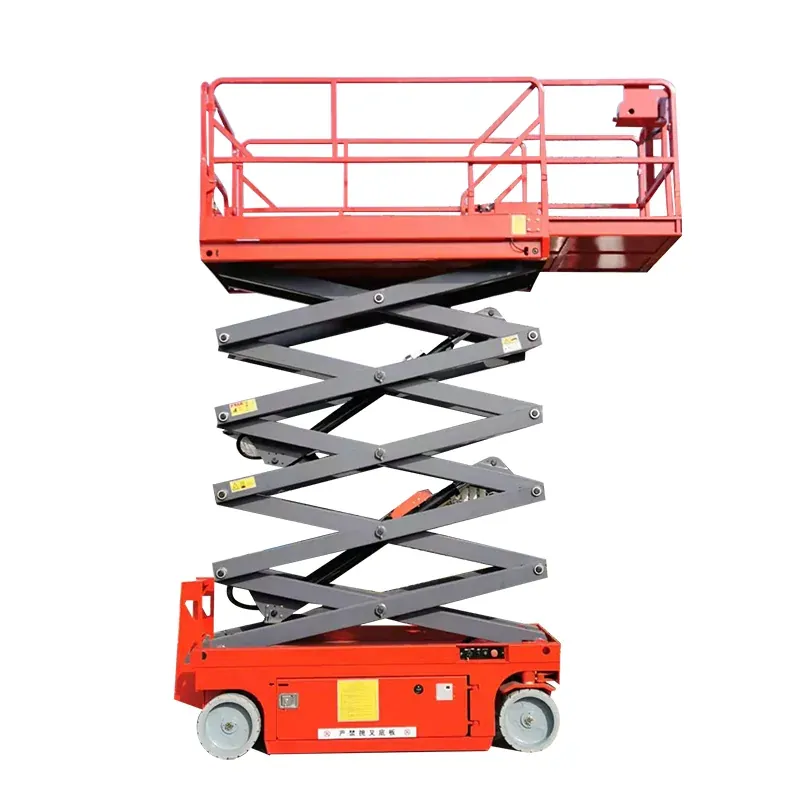 GTJZ-0810 26ft (7.8 m) Self-Propelled Scissor Lift — 450 kg
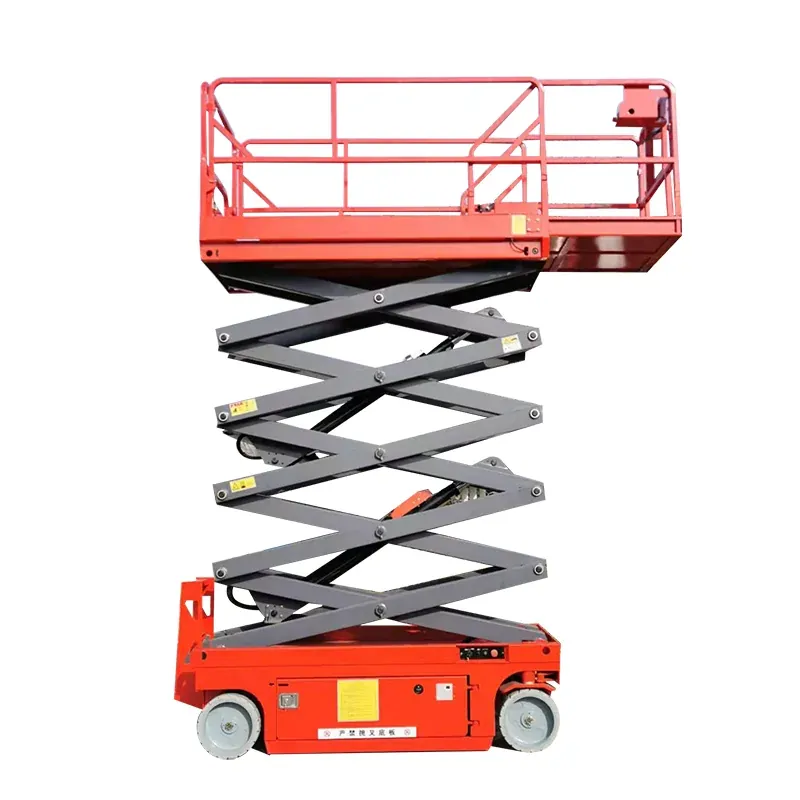 GTJZ-0810-Z Narrow 840 mm Scissor Lift — 26ft (7.8 m), 320 kg