
en

Aisle width decides the electric scissor lift. Clear height under the beams decides the platform. Buyers usually check the first and discover the second after the machine arrives, standing in an aisle that is wide enough and 1.5 m too low.
Warehouse work is the largest single use for a self-propelled scissor lift, and it is also where the specification errors concentrate. Three numbers decide whether a machine can work in a given aisle, and only one of them appears on a warehouse drawing.
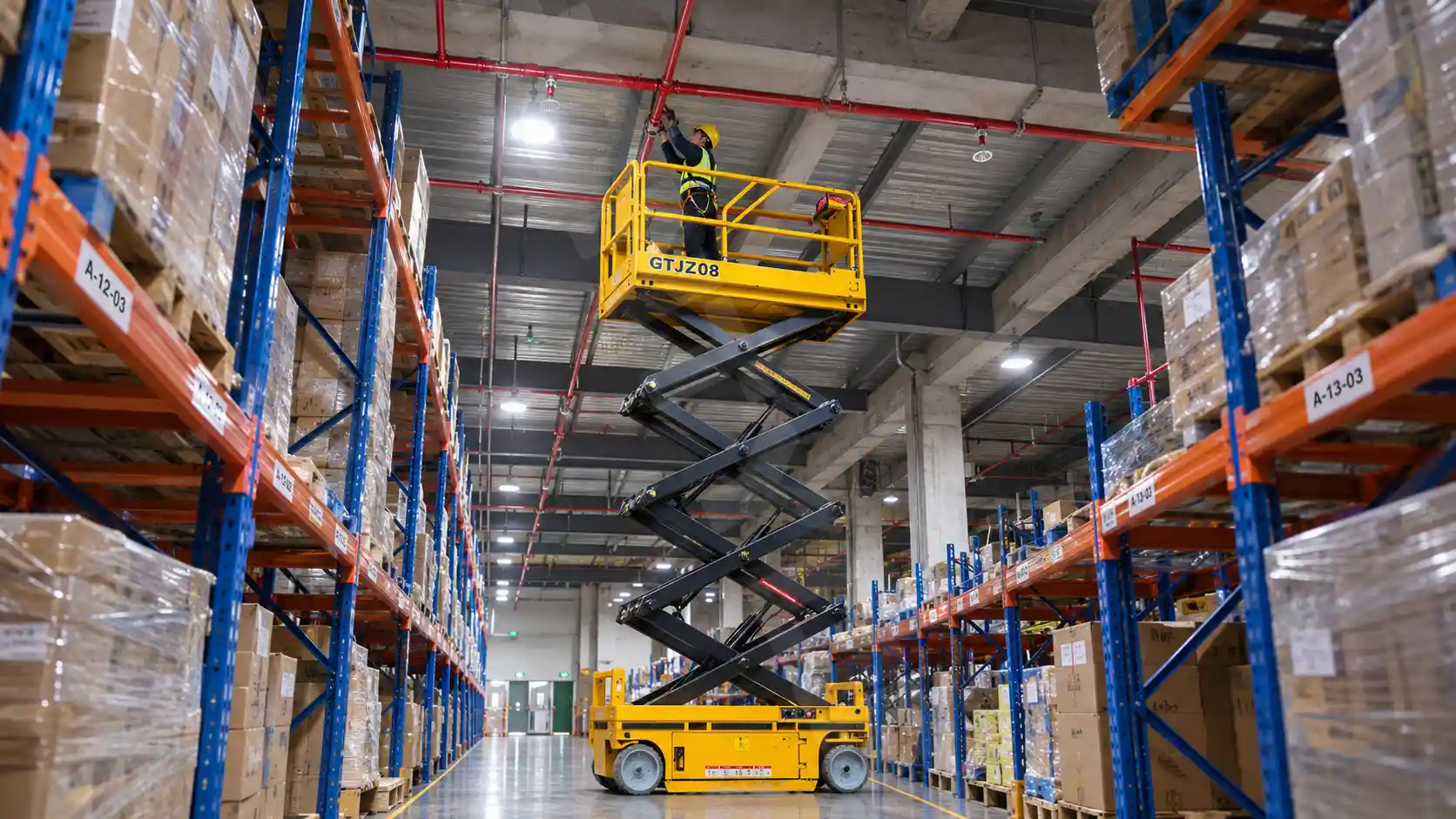
The platform raised between pallet racking, with the ceiling services above.
A 1,160 mm slab scissor lift needs clearance on both sides. Three hundred millimetres each side is the minimum that lets an operator see the racking legs and stop before touching them, which puts the practical minimum aisle at about 1,800 mm for a straight run.
Below that, two things happen. The machine fits, in the sense that it can be driven in, and the operator spends the whole job watching the racking instead of the work. Impacts follow, and a scissor lift hitting an upright at 1,160 mm height is a racking integrity event, not a paint scratch.
If the aisle is between 1,400 and 1,800 mm, the answer is a narrower machine rather than a braver operator. The GTJZ-0810-Z at 840 mm wide gives 280 mm each side in a 1,400 mm aisle and gives up 2 m of platform height against the 10 m machine. That is usually the right trade in a retrofit, and it is a decision to make before the order.
This is the constraint that stops the job. Working height is platform height plus 2 m, because the operator needs headroom and handling space. So a 1012 with a 9.8 m platform needs 11.8 m of clear height to be used at full extension.
A typical distribution warehouse is 10 to 12 m to the beam, and lower under the sprinkler deflectors. That means the 10 m machine can very often only be used to about 80% of its platform height, and the model that looked right on paper is 2 m short in practice.
Measure three heights, not one:
Sprinkler clearance deserves its own line because it is a fire code matter rather than an access matter. Deflectors need clear space below them, commonly 450 mm, and a platform raised into that space is both a code violation and a way to break a head and flood an aisle. If the platform cannot reach the top beam level without entering the sprinkler zone, the job needs a different method, not a taller machine.
Racking legs are point loads on the slab, and the scissor lift adds its own. On a ground-bearing slab with a normal design margin, a 2,550 kg machine at 9.0 kN/m2 average pressure is not the governing case: the racking is.
The case that does matter is a pick floor or mezzanine built above the racking, where the scissor lift works on a suspended deck rather than the slab. That deck was often designed for foot traffic and trolleys, and a machine on it changes the loading on the deck and on the uprights below it. Our floor loading notes cover the calculation, and the short version is: give the wheel loads to a structural engineer before the machine goes up there.
The most serious injury risk in racking work is not the scissor lift failing. It is an operator stepping from the platform onto a rack beam to reach a pallet position, because the beam is at the same height and it is right there.
The platform is a workplace, not a transfer point. Guardrails, gates and restraint systems are designed on the assumption that the operator stays inside. On machines built to A92.20 the restraint system is anchored to the platform precisely to make stepping out impossible, and on European machines the guardrail does the same job less forcibly.
Two practical measures that work better than a rule: park the machine so the work face is within arm's reach rather than beside a beam that invites a step, and brief the team on the specific racking layout they will be working in, not on working at height in general.
Four numbers and we can specify the machine without a site visit: narrowest aisle, lowest obstruction height, the highest beam level to be reached, and the floor type under the racking. Add the racking depth if the machine has to work across two back-to-back runs, because that changes the reach.
We get these enquiries weekly and the answer is often not the biggest machine in the range. In a 1,500 mm aisle under a 9 m beam, the 840 mm machine with a 7.8 m (26 ft) platform does the job and the 10 m machine does not, and that is a cheaper order than the one the buyer started with.
Send the four numbers and we will come back with the model, the platform height you can actually use, and the height you cannot. The second number matters as much as the first.
Send the working height, the load and the site constraint. An engineer replies with a model recommendation and a written quotation within one business day — or tells you it cannot be done.
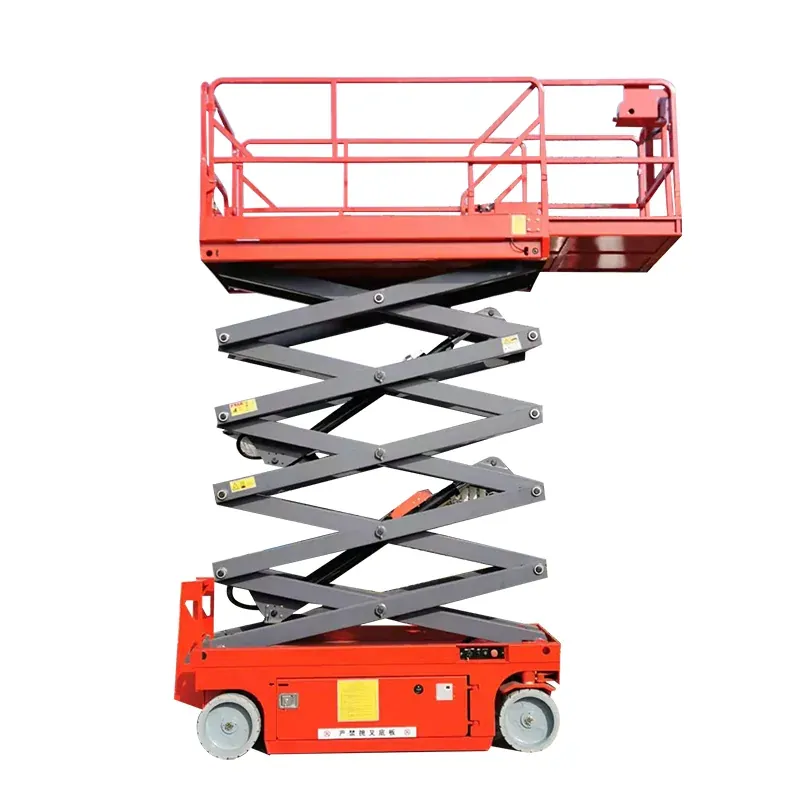 GTJZ-0810 26ft (7.8 m) Self-Propelled Scissor Lift — 450 kg
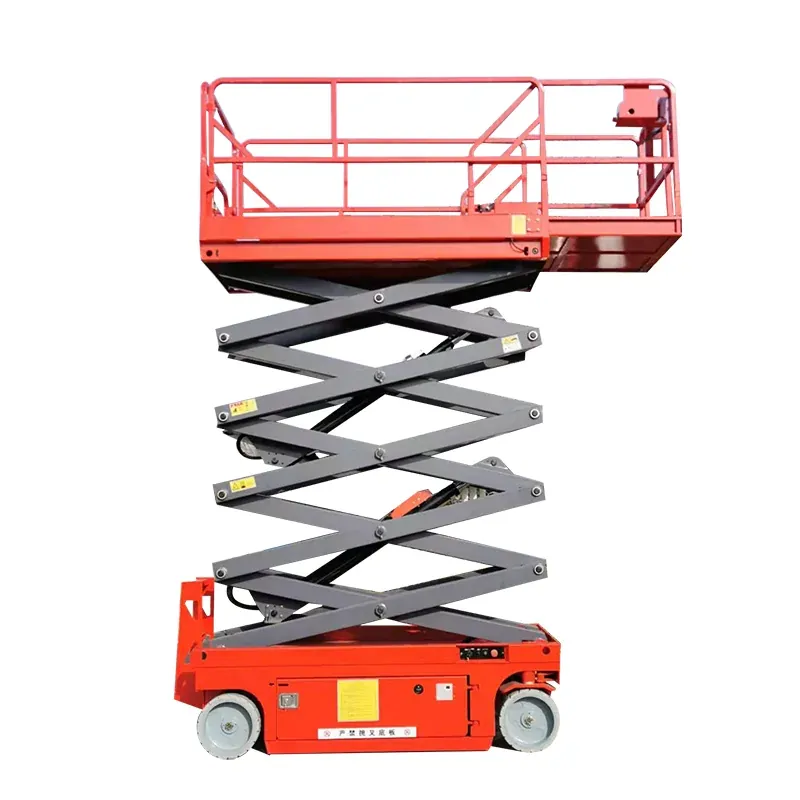 GTJZ-0810-Z Narrow 840 mm Scissor Lift — 26ft (7.8 m), 320 kg
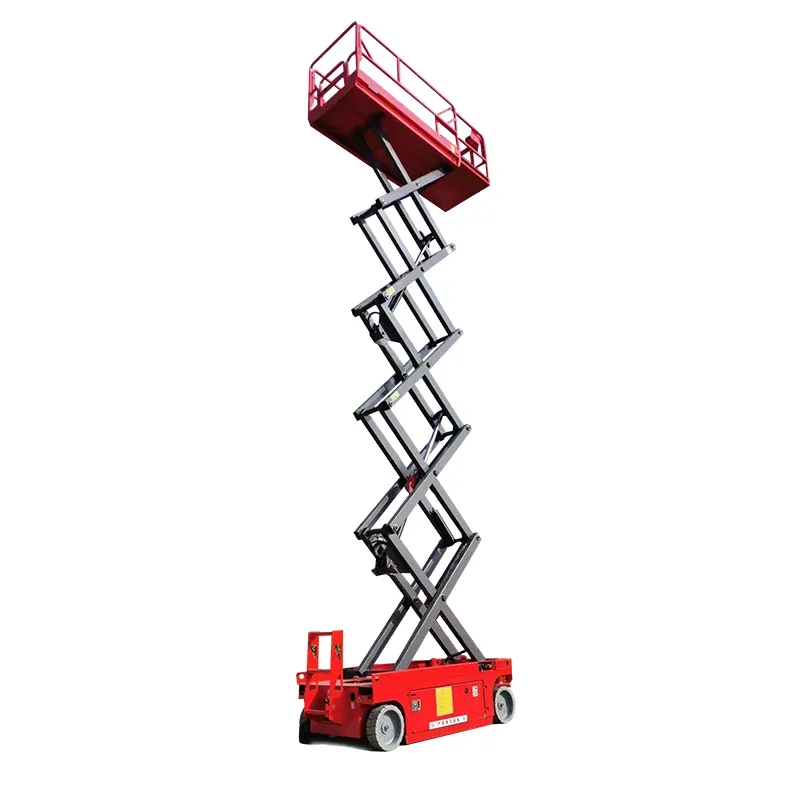 GTJZ-1012 32ft (9.8 m) Self-Propelled Scissor Lift — 320 kg