
en

The question is not how many fit. It is how many fit with room to lash them, and those two numbers differ by about a third on the small models and not at all on the large ones.
We load containers every week and we have the loading photographs to prove the numbers below. They are for guidance, not for a booking confirmation, because the answer also depends on the tyre option and the guardrail position.
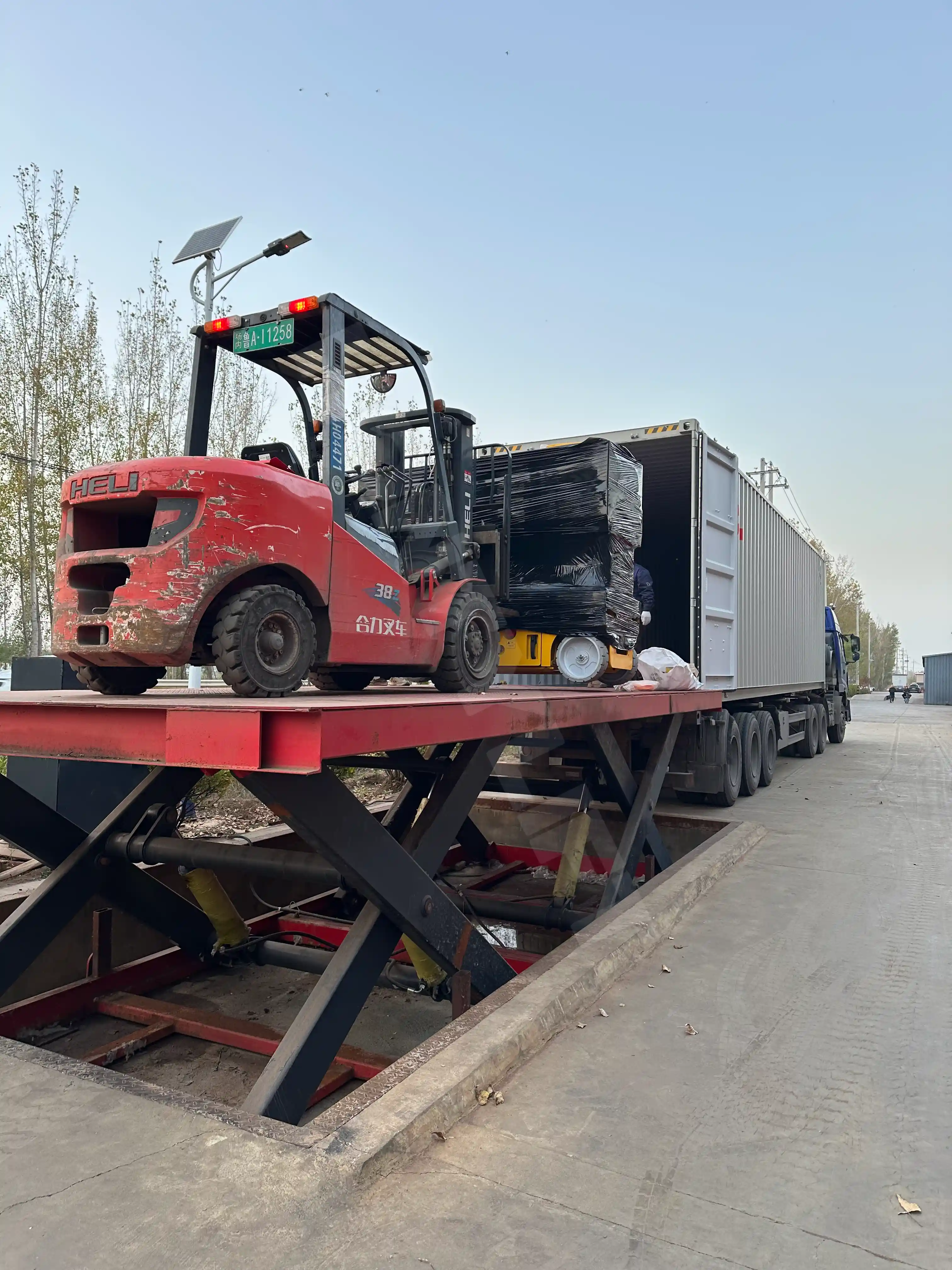
A row of machines loaded inside a 40 ft high cube container.
Stowed length, stowed width, scissor lift weight, and the container's door opening. The first three are on the datasheet. The fourth is not, and it is the one that stops scissor lifts at the terminal.
| Container | Internal dimensions | Door opening | Payload, approx. |
|---|---|---|---|
| 20 ft GP | 5.90 x 2.35 x 2.39 m | 2.34 x 2.28 m | 28,000 kg |
| 40 ft GP | 12.03 x 2.35 x 2.39 m | 2.34 x 2.28 m | 26,500 kg |
| 40 ft HC | 12.03 x 2.35 x 2.69 m | 2.34 x 2.58 m | 26,000 kg |
Note the payload. A 40 ft container carries less weight than a 20 ft one, because the box itself is heavier. On the taller machines the weight limit binds before the floor area does, which is why loading plans for 16 m units are arithmetic about kilos rather than about metres.
| Model | Stowed L x W | Weight | Per 40 ft HC | Per 20 ft GP |
|---|---|---|---|---|
| GTJZ-0608-M | 1,820 x 780 mm | 1,200 kg | 10 to 12, two rows | 6, two rows |
| GTJZ-0810-Z | 2,390 x 840 mm | 2,050 kg | 8, two rows | 4, two rows |
| GTJZ-0810 | 2,390 x 1,160 mm | about 2,300 kg | 4, one row | 2 |
| GTJZ-1012 | 2,390 x 1,160 mm | 2,550 kg | 4, one row | 2 |
| GTJZ-1214 | 2,390 x 1,160 mm | 2,950 kg | 4, one row | 2 |
| GTJZ-1416 | 2,790 x 1,400 mm | about 3,300 kg | 4, one row | 1 |
| GTJZ-1618 | 3,000 x 1,140 mm folded | about 4,700 kg | 3 to 5, weight-limited | 1 |
The interior width is 2,350 mm. Take off the corrugation and the side wall clearance and you have about 2,300 mm of usable width, and you still need a gap between the two rows for the lashing and for a person to work. That gives a practical limit of roughly 1,000 mm per machine.
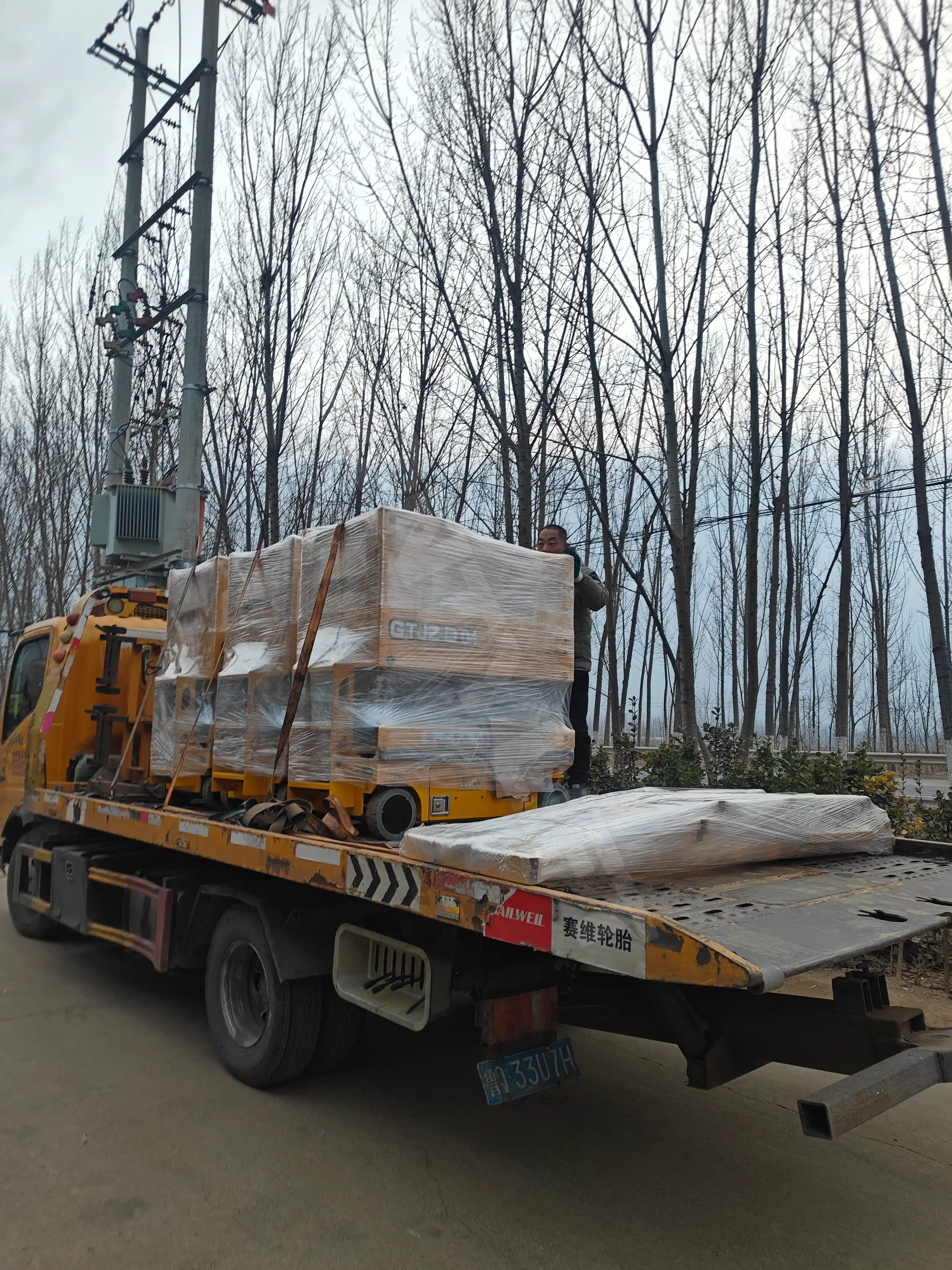
Lashing straps securing the machines to the container floor.
Two machines at 1,160 mm are 2,320 mm before a single strap goes on, which is why the 1012, 1214 and the standard 0810 are one row only. Two at 840 mm are 1,680 mm, which leaves 620 mm for access and lashing, and that is comfortable.
So the machines that look like they should share a container do not, and the difference between the 840 mm GTJZ-0810-Z and the 1,160 mm standard version doubles the freight per unit. On a full container that is a bigger cost difference than most buyers expect when they compare the two models on price.
A standard container door is 2,280 mm high. A high cube is 2,580 mm. The 1012 folds to 1,940 mm, so it clears a standard door with 340 mm to spare. The 1214 folds to 2,060 mm, which is 220 mm of clearance on a standard box and comfortable in a high cube.
That headroom disappears if the electric scissor lift is loaded with anything on the platform or with the guardrail not fully folded. Both happen, both cause a bent rail, and both are visible in the loading photographs before the doors close.
Plan on 200 mm at each end of the container and 100 mm between scissor lifts lengthways. On a 12.03 m box that leaves about 11.9 m of usable length, which is why a 2,390 mm machine gives four per row rather than five: five would be 11.95 m with no room for chocks.
Wheel chocks, timber dunnage and the strap anchors take the rest. A loading plan that fits the machines and forgets the chocks is a plan that gets re-loaded at the port, at your cost.
For the small models, the per-unit freight is lower in a 40 ft high cube because you are dividing one booking by ten scissor lifts rather than by six. For the heavy duty 14 m and 16 m machines the answer flips: a single unit in a 20 ft container is often cheaper than a part-loaded 40 ft, and the machine arrives with less handling damage because nothing is packed around it.
Our rule of thumb for a first order: if you are buying four or more units of the same model, take the container that carries all of them in one row and put the spare parts in the remaining floor space. The spares kit takes about 1.2 m of floor and pays for its freight the first time a machine is down.
Send us the model and quantity and we will send the loading plan with weights, dimensions and the centre of gravity marked. Give that to your forwarder rather than the datasheet: the plan has the lashing points on it, and it is the document a stevedore will actually use.
Ask for the loading plan for your models, and tell us if any unit has the lithium option, because that changes the documentation even when it does not change the dimensions.
Send the working height, the load and the site constraint. An engineer replies with a model recommendation and a written quotation within one business day — or tells you it cannot be done.
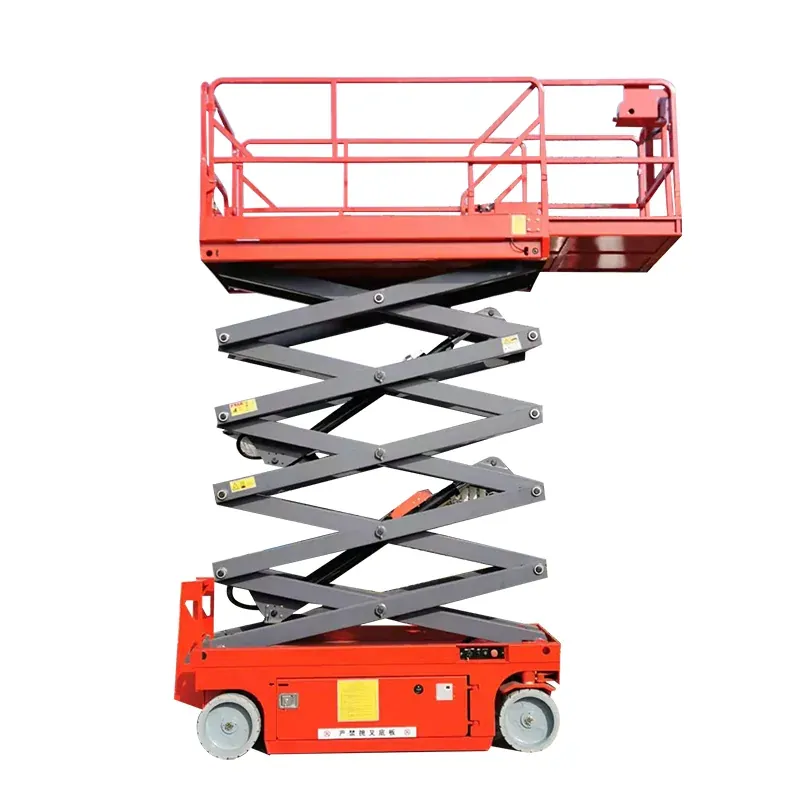 GTJZ-0810 26ft (7.8 m) Self-Propelled Scissor Lift — 450 kg
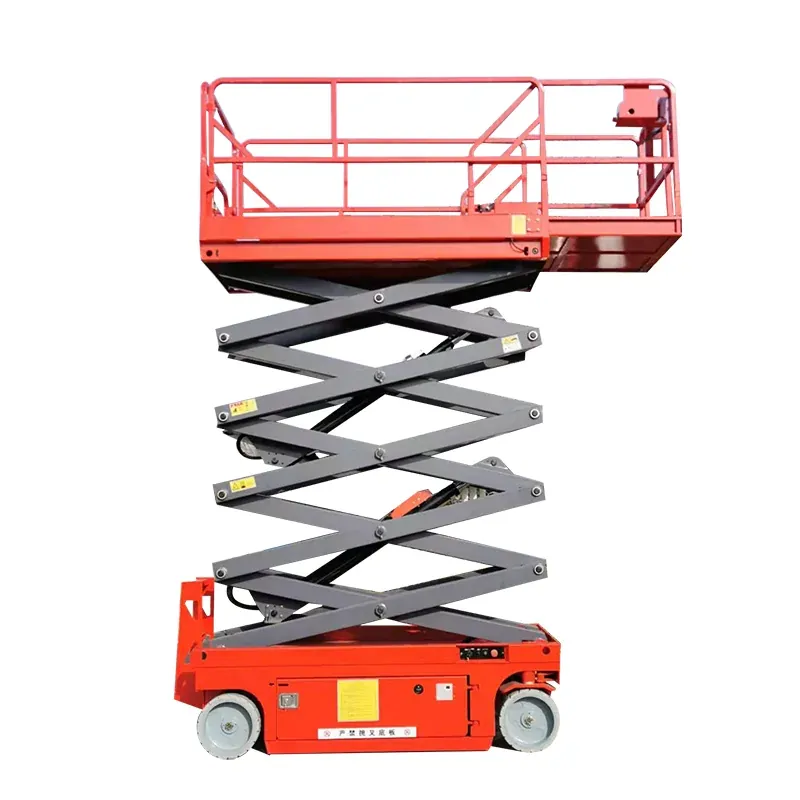 GTJZ-0810-Z Narrow 840 mm Scissor Lift — 26ft (7.8 m), 320 kg
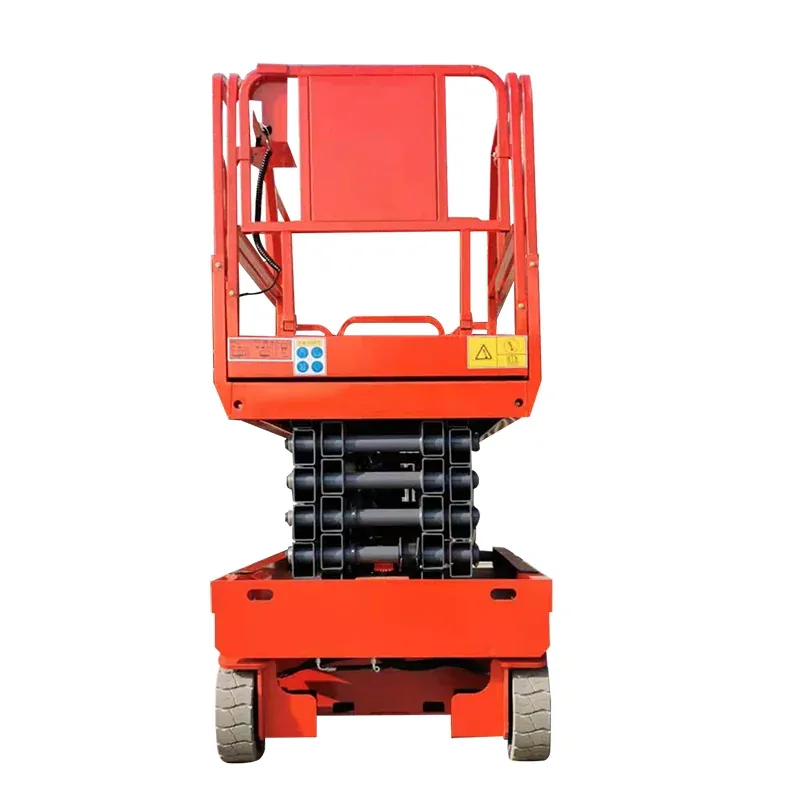 GTJZ-0608-M Compact 19ft (5.8 m) Hydraulic Drive Scissor Lift — 230 kg
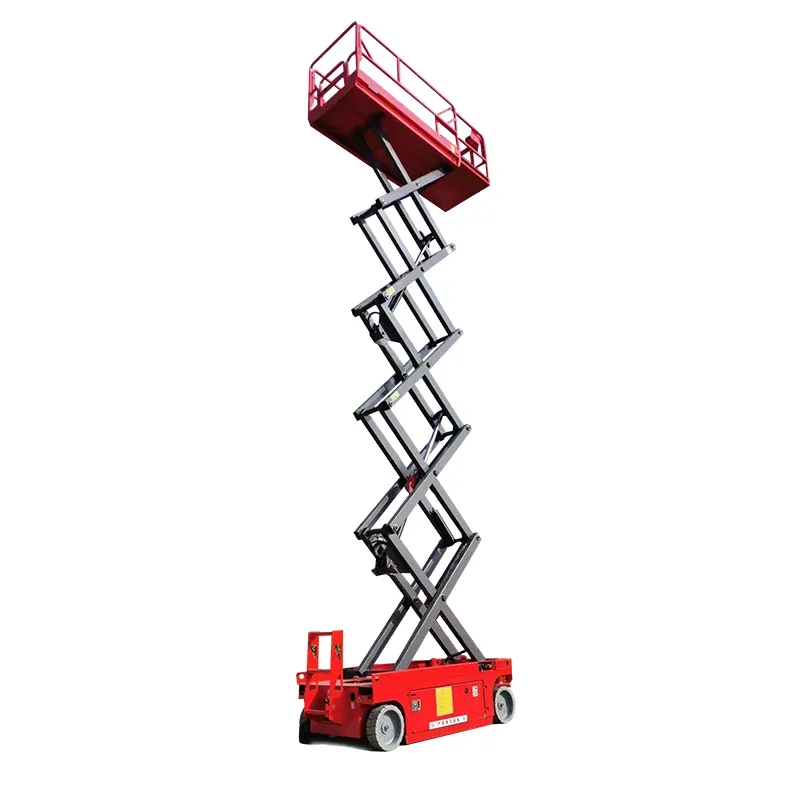 GTJZ-1012 32ft (9.8 m) Self-Propelled Scissor Lift — 320 kg