
en

The damage happened somewhere between our loading bay in China and your yard, and the moment you sign the delivery note it becomes yours. That is the whole reason this article exists, and it is why we photograph every container before the doors close.
Twelve checks, in the order they should be done. The first four happen before you sign anything, which means before the truck leaves.
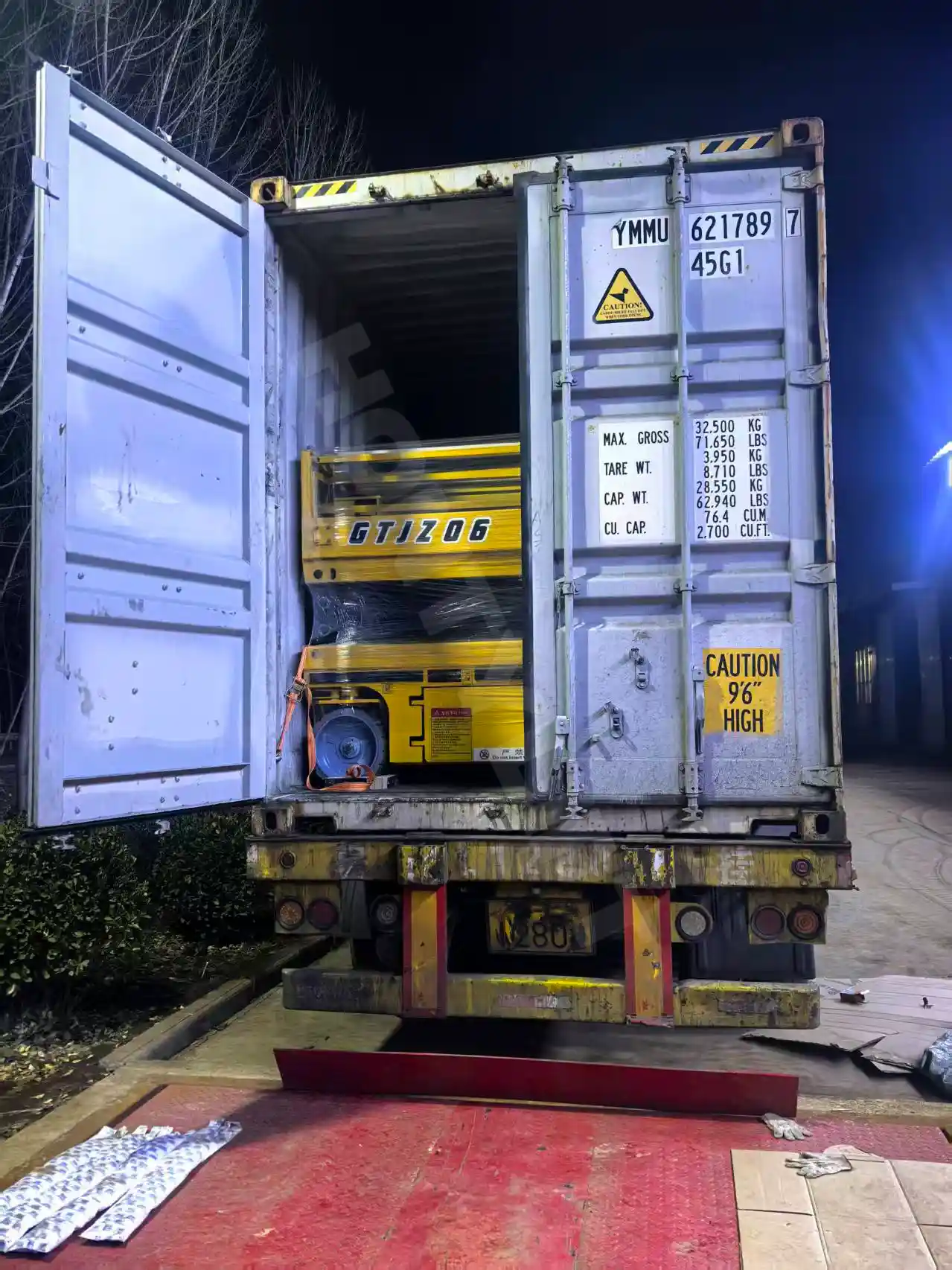
The container doors opened at the delivery site.
If anything is wrong at this stage, write it on the delivery note before signing, with the words "signed subject to survey". Two words, and it keeps the claim alive.
Nearly every transit claim we see involves one of these, in this order of frequency:
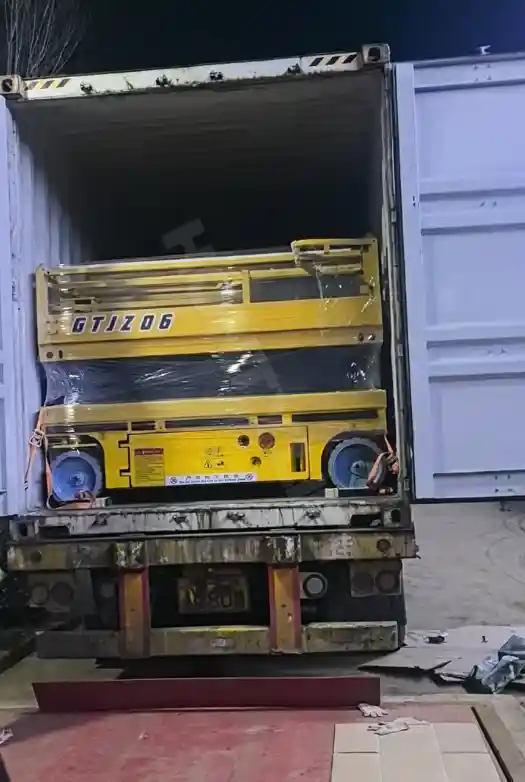
A guardrail section bent during transit.
A fifth item belongs on the list even though it is not damage: the chrome on the cylinder rods. A rust bloom on a rod that has sat in a damp container for eight weeks is not damage in transit, but it becomes pitting, and pitting becomes a seal failure six months later. Photograph it and note it.
| # | Check | What counts as a fail |
|---|---|---|
| 1 | Seal number against the bill of lading | Any mismatch |
| 2 | Container interior, floor and walls | Water, mould, impact marks on the wall |
| 3 | Lashing and dunnage | Broken strap, displaced timber |
| 4 | Machine position in the container | Machine moved more than 50 mm from the loading photograph |
| 5 | Guardrails and gate | Any bend visible along the rail line, gate not closing freely |
| 6 | Control box and display | Cracked cover, moisture inside the lens, dead display |
| 7 | Pothole bars | Bent, missing, or not springing back |
| 8 | Battery compartment | Acid residue, loose terminals, chafed cable |
| 9 | Cylinder rods | Rust bloom, scoring, dented chrome |
| 10 | Tyres and wheels | Flat spots, cuts, loose wheel nuts |
| 11 | Machine plate and hour meter | Serial does not match the documents, hours above the pre-shipment figure |
| 12 | Function test | Lift, drive, steer, both emergency stops, gate interlock |
Check 11 catches more than people expect. An hour meter on the electric scissor lift that reads higher than the pre-shipment photograph means the scissor lift has been used, not just moved, and that is a conversation worth having in the first week rather than the sixth.
Four, and they take ninety seconds:
Send them to us the same day, with the delivery note. Claims on a scissor lift get settled on evidence produced in the first 48 hours, and get argued about when the evidence arrives after the scissor lift has been in service for a month, because at that point nobody can tell transit damage from site damage.
Eight weeks in a container does things to a lead-acid pack. Check the electrolyte level before the first charge, top up with distilled water only if the plates are exposed, and charge slowly for the first cycle. A pack that will not accept charge after a long transit has probably sulphated, and the time to raise that is before the machine goes into service rather than after the first shift.
For lithium machines, check the state of charge on arrival. Anything below 20% after a sea voyage is worth recording, because a pack stored deeply discharged for weeks loses capacity that will not come back.
We photograph every scissor lift at loading, from the same four positions, with the seal number in the last frame. Those images go to the buyer before the vessel sails. When a claim does arrive, the comparison between our loading photographs and the buyer's arrival photographs usually settles it in a day, in one direction or the other.
That is not a substitute for your own inspection. It is what makes your inspection conclusive. Ask for the loading photograph set with your shipment, and keep it with the delivery note. We issue them for every unit in the self-propelled scissor lift range, not only the large ones.
Send the working height, the load and the site constraint. An engineer replies with a model recommendation and a written quotation within one business day — or tells you it cannot be done.
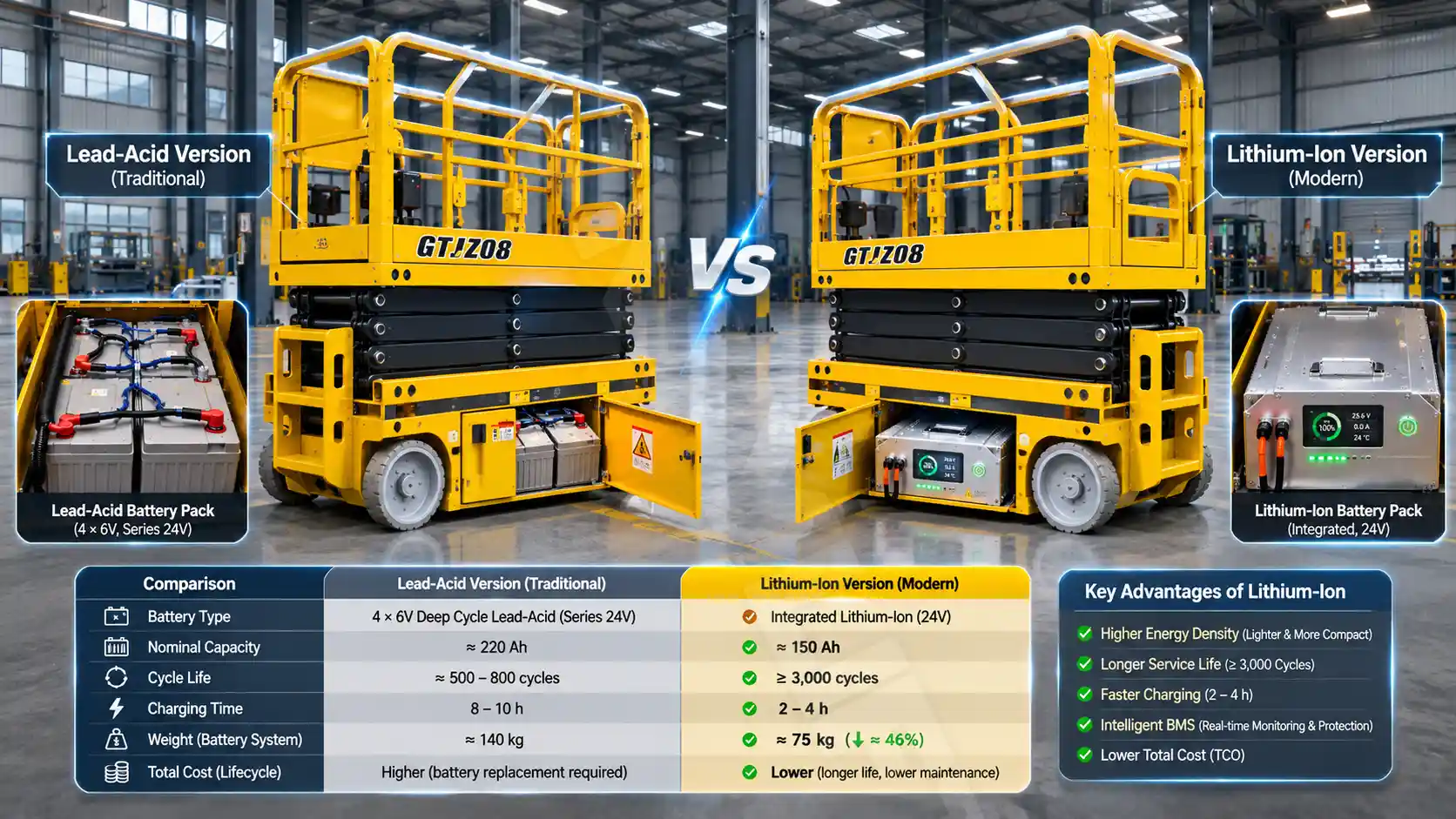 Lead-Acid or Lithium on a 10 m Scissor: Five-Year Math
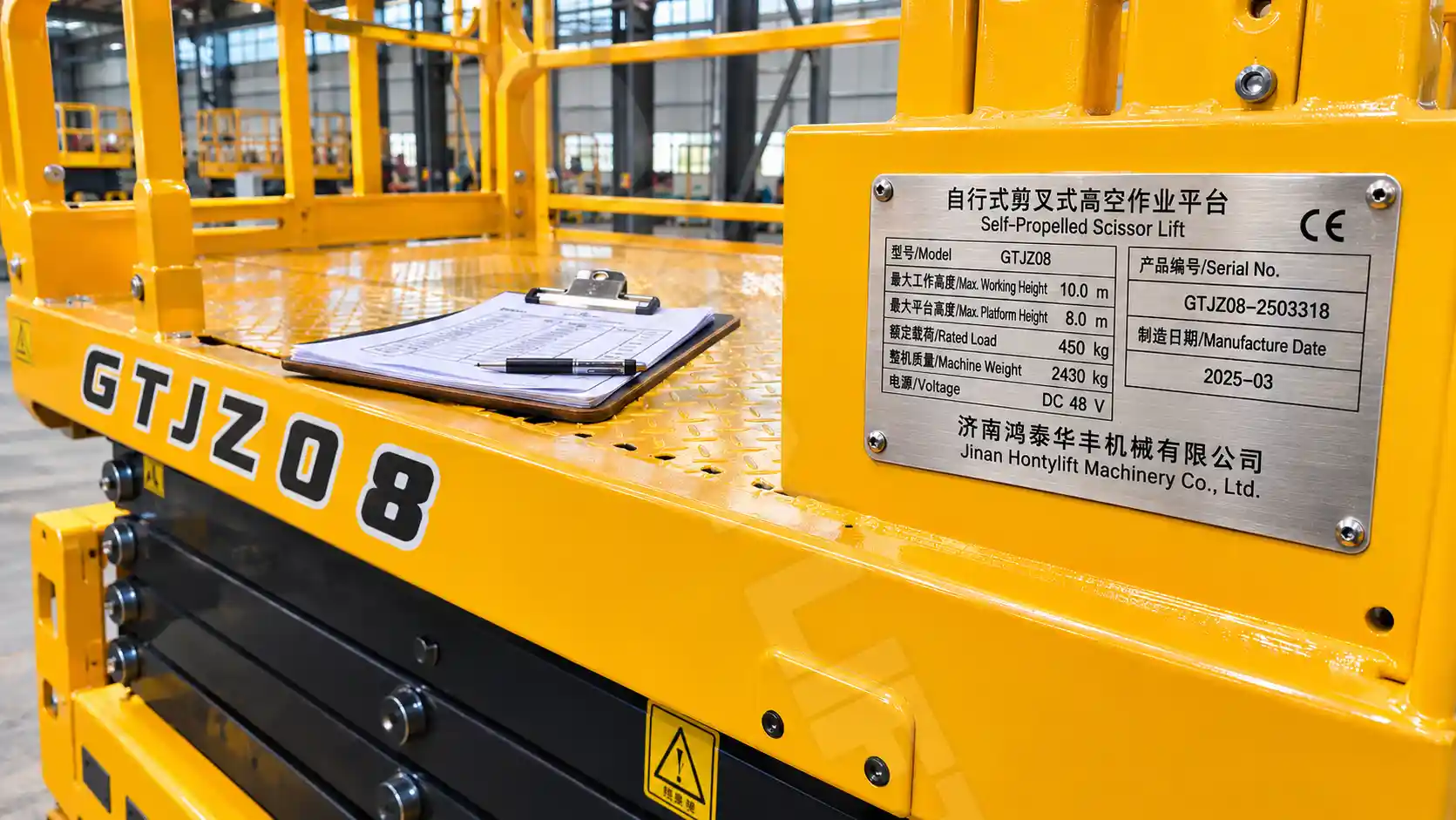 Annual Inspection: The Document Pack a Surveyor Opens First
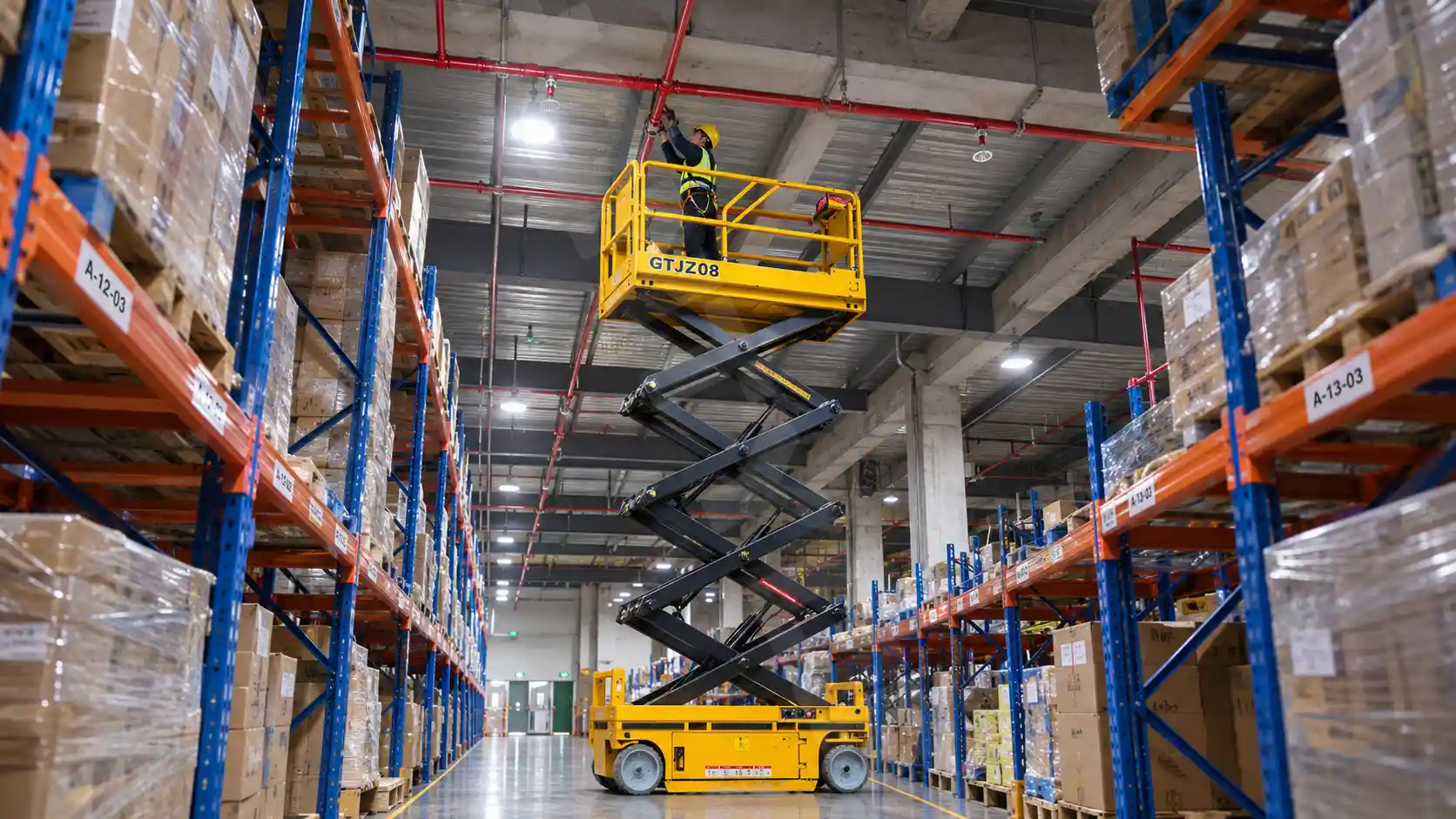 Working Above Racking: Aisle Width, Load and Fall Protection
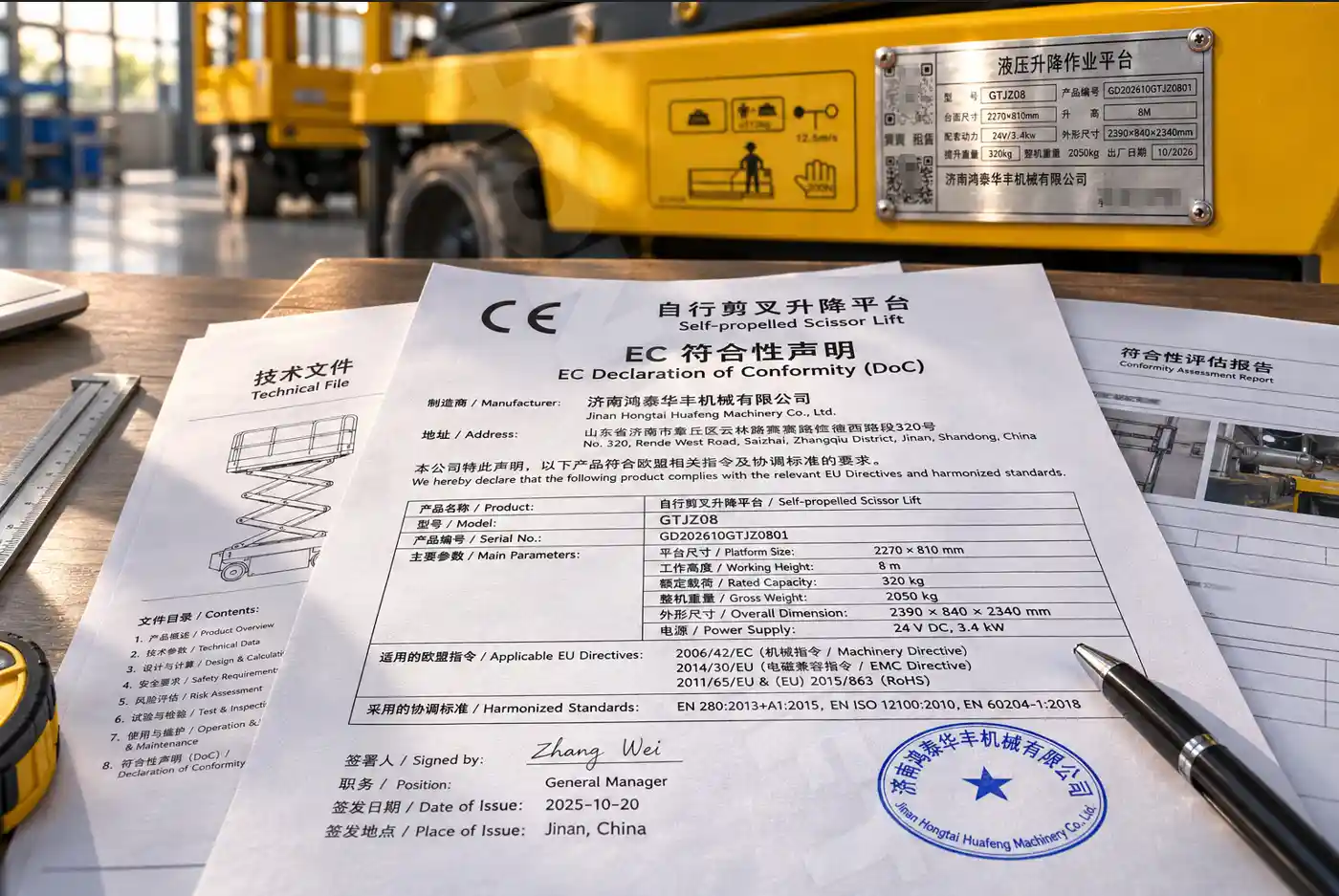 EU Machinery Regulation 2023/1230 for Scissor Lifts