
en

The battery is why your container gets held, and it is never the machine's fault. An electric scissor lift is a piece of steel with a hydraulic ramp; nobody at a port has ever asked a question about the scissor stack. They ask about the battery, every time.
We ship both lead-acid and lithium scissor lifts, and the paperwork is different for each. This is what actually travels with a booking, in the order a forwarder asks for it.
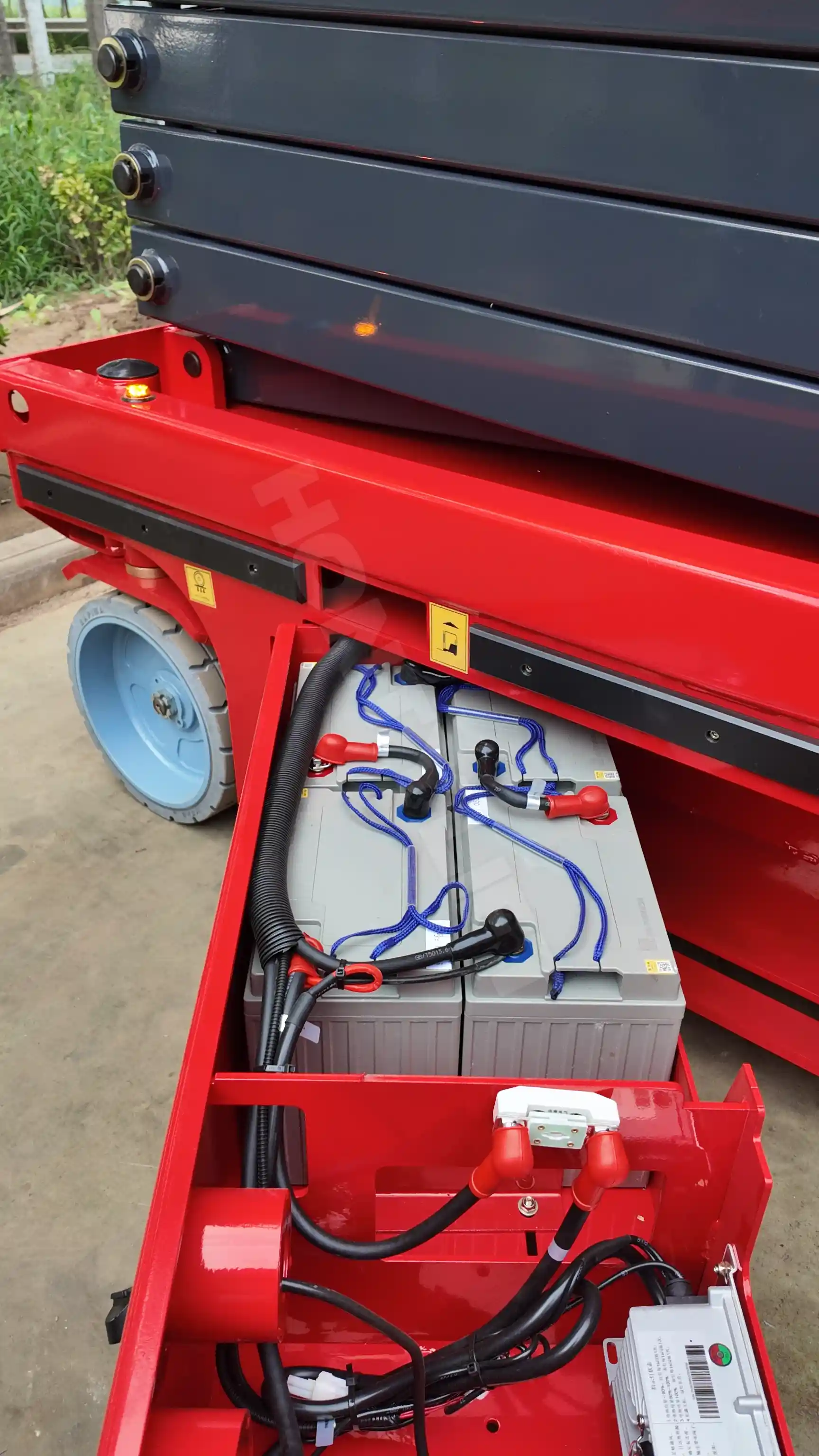
The battery compartment opened for inspection before shipment.
This is where most first-time shippers lose a week, because the answer depends on chemistry and on how the battery is packed, not on the electric scissor lift.
| What is in the machine | UN number | Class | Practical note |
|---|---|---|---|
| Flooded lead-acid, 4 x 6 V / 200 Ah | UN2794, battery wet filled with acid | 8, corrosive | Dangerous goods booking. Many suppliers miss this and the booking collapses at the stack |
| AGM or gel lead-acid | UN2800, battery wet non-spillable | 8 | Can be exempt from full DG treatment if it passes the vibration and pressure tests and is protected against short circuit |
| Lithium-ion pack installed in the machine | UN3481, contained in or packed with equipment | 9 | UN38.3 test summary is mandatory, and it is requested at booking rather than at the port |
| Spare lithium pack shipped loose in the same container | UN3480, batteries on their own | 9 | Stricter than UN3481. Spares travel as a separate declaration |
Two things follow from that table. A lead-acid scissor lift is not "non-hazardous" just because the chemistry is old, and a spare lithium pack in the same container changes the declaration for the whole booking. If you are ordering spares with a first container, tell the forwarder before the booking is made, not after.
The 30% limit that everyone quotes is an air freight rule, and it applies to batteries shipped on their own rather than installed in equipment. Most scissor lifts travel by sea, where the IMDG code does not impose a state-of-charge cap. Forwarders frequently apply a 30% house rule anyway, and arguing with a booking clerk about the distinction is a good way to miss a sailing.
What we do in practice: lithium machines ship at 30 to 50% state of charge, which satisfies air, sea and every forwarder we have dealt with, and is also the healthiest storage level for the pack. Lead-acid machines ship fully charged and with the electrolyte at the correct level, because a discharged lead-acid pack sulphates in transit and arrives with reduced capacity that nobody can prove was not there at loading.
It means four physical things, and a forwarder may ask you to confirm all four:
We photograph all four at loading and send the images with the documents. It has settled two claims in three years, both of which turned out to be damage in transit rather than a battery fault.
The SDS said "not restricted". A supplier used a generic SDS template for a lithium pack and the forwarder rejected the booking on the strength of the contradiction with the UN number on the same page. The fix took nine days and cost a re-booking fee.
A spare pack travelled undeclared. Two spare lithium packs went into a container as "spare parts". The booking was for UN3481. The customs broker spotted it, the container was held, and the buyer paid storage for eleven days. The packs were worth less than the storage.
The scissor lift arrived at 0% state of charge. Not a shipping violation, and the most common arrival problem with lead-acid machines that sit for eight weeks. The pack had sulphated and would only accept a surface charge. It was replaced under warranty, and the argument about who owned the eight weeks is still the reason we now ship lead-acid fully charged and log the date.
Model and serial numbers, battery chemistry and UN number, UN38.3 summary for lithium, SDS, the DG declaration, the isolation statement, and the loading photographs. Seven items. Every one of them takes less than a day to assemble if the factory keeps them on file, and none of them can be produced in a hurry at a terminal.
When you book with us, the document pack is issued against the serial numbers before the container is sealed, so what arrives at the forwarder matches what is inside the doors. Ask for a sample pack for a lithium model and a lead-acid model, and you can see the difference between the two before you place an order. Every model in the self-propelled scissor lift range ships with its pack issued against the serial number, which is the part most suppliers leave to the last week.
Send the working height, the load and the site constraint. An engineer replies with a model recommendation and a written quotation within one business day — or tells you it cannot be done.
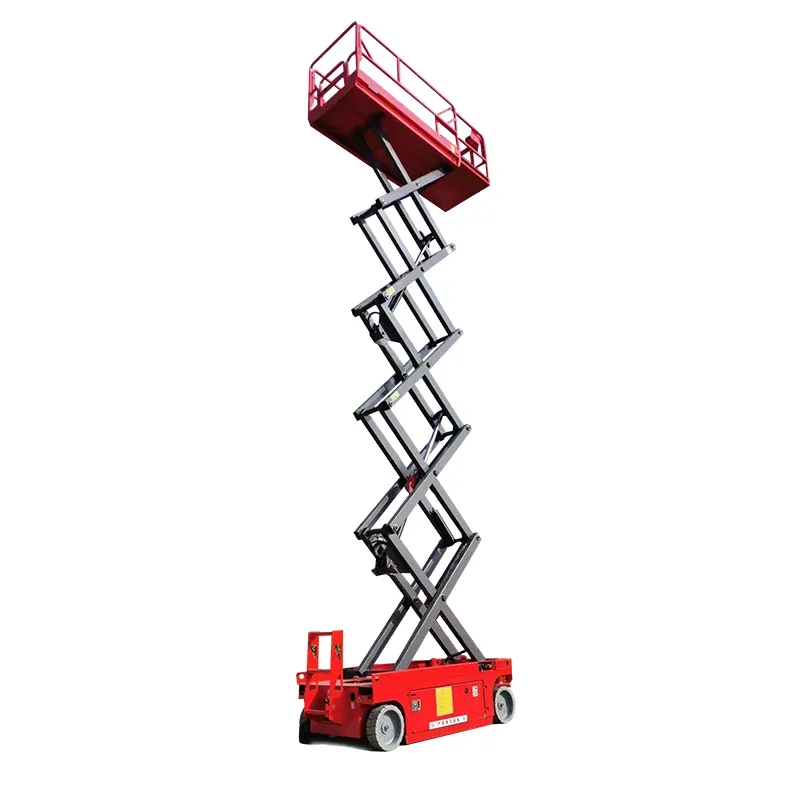 GTJZ-1012 32ft (9.8 m) Self-Propelled Scissor Lift — 320 kg