
en

An inspector arriving at a site spends the first ten minutes on paperwork and the next forty on the electric scissor lift. If the paperwork is missing, the forty minutes do not happen, and the visit is billed as a failed inspection with a re-booking fee attached.
We are on the manufacturer's side of this, not the inspector's, but we sit in enough audits to know which documents get asked for and which ones are produced with an apology. Here is the list, in the order it is requested.
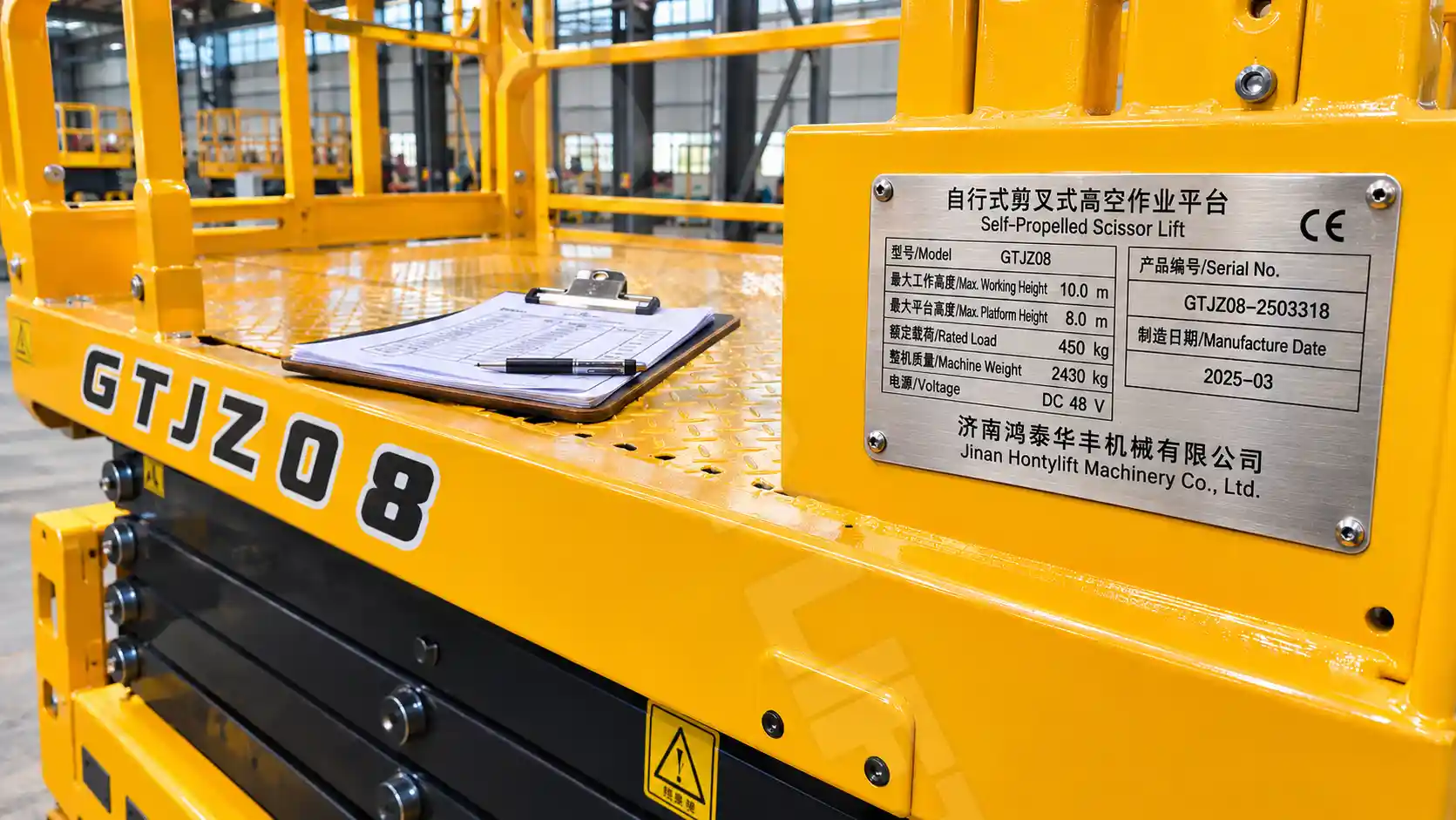
An inspection clipboard and the machine plate on the platform.
The daily check, signed by the operator, one line per shift. What matters is not that a form exists but that the entries vary: a log where every day reads "all OK" in the same handwriting is a log that was filled in on a Friday for the whole week, and an inspector who has done the job for a year can see it in ten seconds.
What it should capture: visual damage, tyre condition, hydraulic leaks, battery state, function of the emergency stop at both stations, gate interlock, and the pothole protection bars. Six lines is enough. The failure mode is a form with forty lines, which nobody completes honestly.
Monthly, or at the hour interval in the manual, by a competent person rather than the operator. This is where the structural items appear: scissor arm wear pads measured against a limit, pivot pin play, weld inspection, hose condition, chain or cable where fitted, and the safety device function tests.
Two entries make the difference between a record and a claim. The wear pad measurement in millimetres, and the name of the person who took it. "Wear pads checked" tells the inspector nothing and tells you less.
In the US market this comes from ANSI A92.22, which sets out the annual periodic inspection by a qualified person and defines what qualified means. In the EU the interval comes from national transposition and from the manual, not from EN 280-1 itself, which is why the same machine is inspected annually in one country and at a different interval in another. The machine's manual states what we require, and that statement is the one to follow when local rules are silent.
The certificate should name the scissor lift by serial number, the standard applied, the inspector, the date, the findings, and the next due date. A certificate without a serial number is a certificate for a machine, not for your machine.
| Record | Frequency | Who signs | What an inspector checks first |
|---|---|---|---|
| Pre-use inspection | Every shift | Operator | Whether entries vary, and whether defects were raised |
| Periodic inspection | Monthly or per hour interval | Competent person | Measured values, not ticks |
| Annual inspection | Annual, or per national rule | Qualified person | Serial number and standard cited |
| Repair history | Per event | Technician | Parts used, and whether they were original |
| Operator training | On engagement, refreshed per policy | Employer | That the named operator actually attended |
A list of what was replaced and when. The item inspectors look for is not the repair itself but whether the parts were original. A cylinder resealed with a generic kit, a controller replaced with a different model, a battery of a different capacity: each of these can change the machine's conformity, and none of them is recorded on most sites.
If a scissor lift has had a structural repair, a weld, or a modification to the platform, there should be a drawing and an approval behind it. This is rare on scissor lifts and common on machines that have been customised for a site, which is exactly where an inspection becomes awkward.
Named operators, dated training, and a stated standard. Training is the employer's obligation in most jurisdictions, and the record is the only evidence that it happened. A scissor lift with perfect maintenance records and no training records fails an audit just as surely as the reverse.
Torque records. After a cylinder reseal or a wheel change, the fasteners have specified torque values. Almost nobody records them, and after a wheel loss is exactly when the question gets asked.
The battery log. Water top-ups on flooded lead-acid, charge times, and any occasion the machine was left discharged. This is the record that decides a warranty claim on a pack, and it is the one nobody keeps. A single line per month is enough.
The modification log. Anything added to the machine that did not come from us: a light bar, a non-original charger, a different tyre size, a welded bracket for a tool box. Each one is a potential conformity question, and a one-page log turns a dispute into a note.
Buyers occasionally present our pre-delivery report as evidence that the machine has been inspected. It is not the same document and it does not serve the same purpose. The PDI confirms the machine was built and configured correctly on the day it left the factory. The annual inspection confirms the machine is fit for use today, on your site, after however many hours of work. Presenting the first as the second is the fastest way to lose an inspector's confidence.
Scissor lift serial number and model, date of first use, pre-use log for the last three months, periodic inspection records, annual certificate with the standard cited, repair history with part numbers, training records for every named operator, battery log, modification log, and the manual revision currently on the machine.
Ten items. A site that can produce all ten in a folder has never failed an inspection in our experience, not because the machine is better but because the inspector's questions have already been answered. Ask us for the record templates we supply with new machines, and use them from the first shift rather than reconstructing them a year later. The templates are the same for every model in the self-propelled scissor lift range; what changes with the model is the interval.
Send the working height, the load and the site constraint. An engineer replies with a model recommendation and a written quotation within one business day — or tells you it cannot be done.
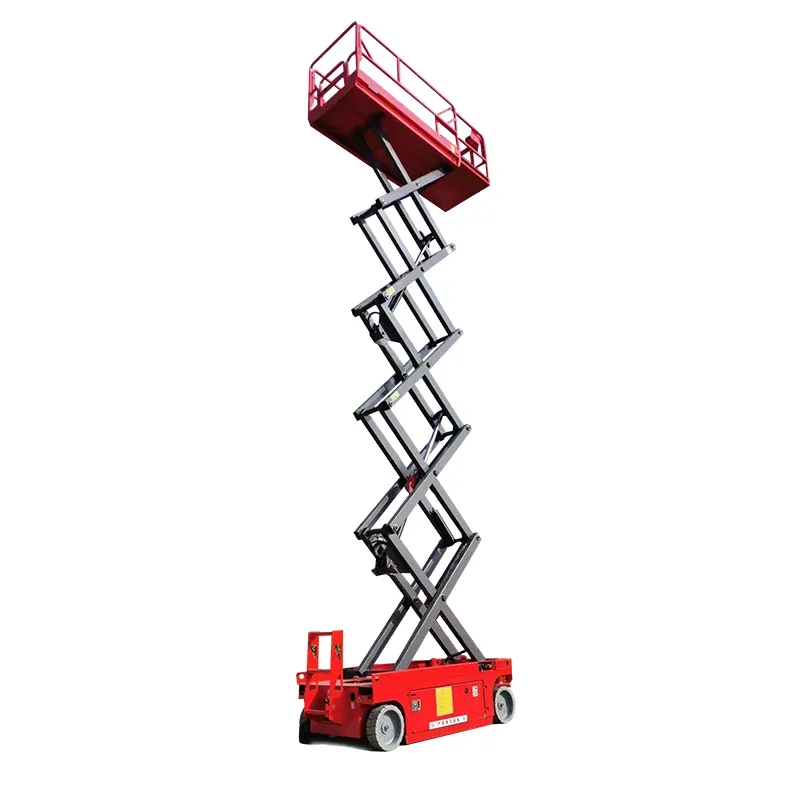 GTJZ-1012 32ft (9.8 m) Self-Propelled Scissor Lift — 320 kg