
en

A scissor lift platform that settles a few millimetres overnight is normal. A platform that drops 200 mm while someone is working on it is a fault, and the difference between the two is measured, not argued about.
Drift has three signatures and they point at three different components. Getting the signature right before touching anything saves the cost of a cylinder rebuild that was never needed.
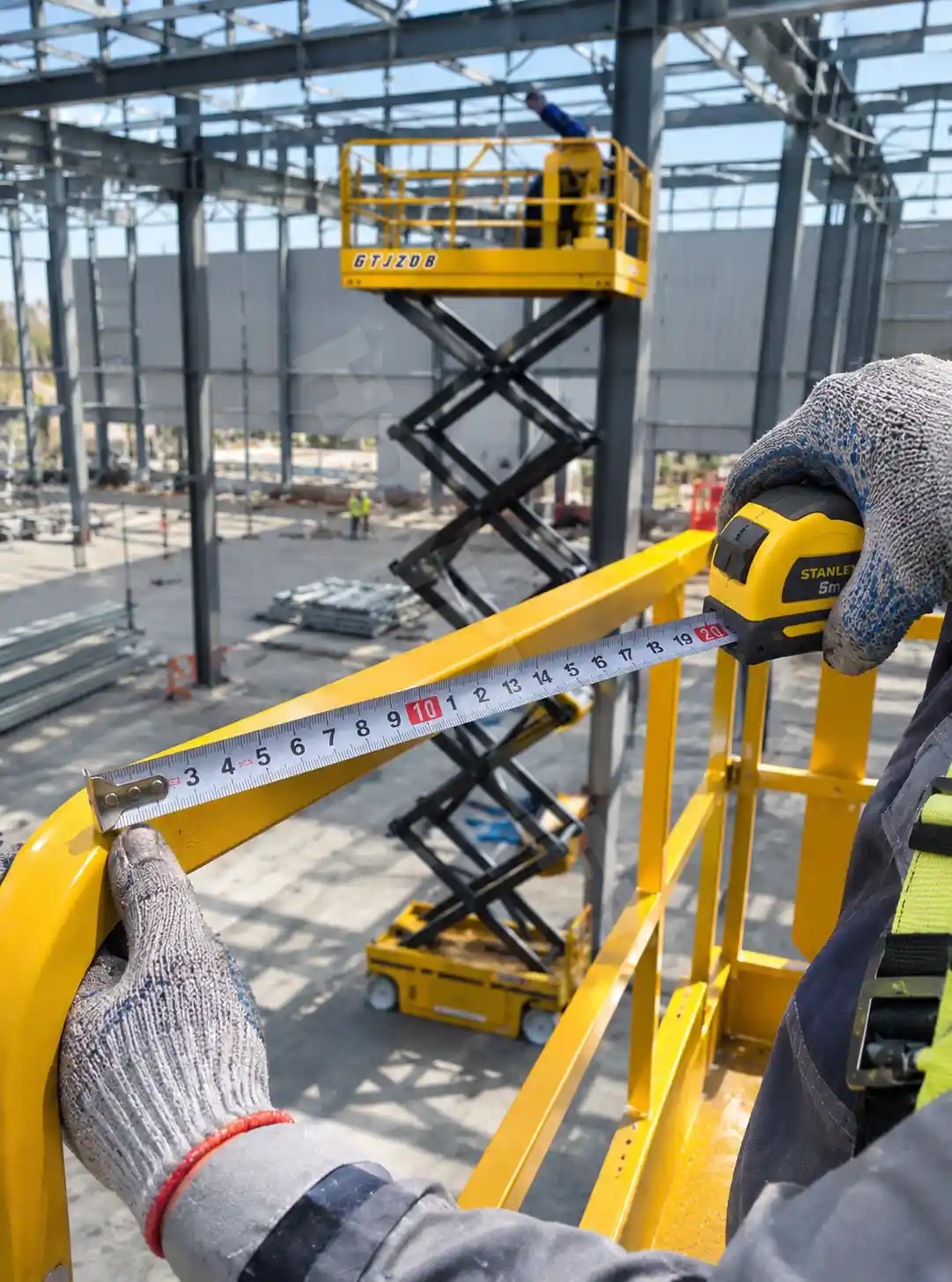
A tape measure held against the guardrail while the platform is raised.
The platform sinks at a steady rate that does not change much with load, and it stops sinking the moment the hold valve closes. This is oil passing back through the control valve or the check valve, and it is the most common cause on a machine with a few thousand hours.
The giveaway is the constant rate. Load it or empty it, the descent is the same, because the leak path is the same. On an electric scissor lift where the drift doubles when two people climb on, the valve is not the suspect.
Oil is passing from the pressure side to the return side inside the cylinder, past the piston seal. There is no external leak, the reservoir level does not move, and the platform sinks faster with a load on it, because the load is what pushes the oil past the seal.
This is the expensive one, and it is also the one that gets misdiagnosed as a valve fault. The distinguishing test: load the platform to rated capacity and time the drift. If the rate roughly doubles compared with an empty platform, the seal is bypassing. If it stays constant, go back to signature one.
Air does not cause a steady sink. It causes a spongy, jerky descent, a platform that settles a little and then stops, and a pump that sounds different from the day before. It almost always follows work on the hydraulic circuit: a hose change, a cylinder reseal, a filter change with the reservoir drained too far.
Air is also the only one of the three that fixes itself with a procedure rather than a part. Cycle the platform through three to five full strokes, hold it at the top for thirty seconds each time, check the reservoir level after every cycle, and repeat until the motion is smooth. If the drift returns after bleeding, there is a suction leak at the pump inlet or a hose drawing air, and that needs finding rather than bleeding again.
| Signature | How it behaves | Check | Fix |
|---|---|---|---|
| Valve leakage | Constant rate, load-independent | Hold test with the manual valve closed | Valve clean or replace, check for contamination |
| Seal bypass | Rate rises with load | Loaded and unloaded hold test, compare | Cylinder reseal |
| Air | Jerky, settles then stops | Recent hydraulic work, pump noise | Bleed procedure, then find the suction leak |
| External leak | Oil on the floor or the chassis | Visual, under the machine after a shift | Hose or fitting, before it becomes a slip hazard |
Ten minutes, one tape measure, one mark on a wall.
On our scissor lifts the bench specification is no more than 5 mm in ten minutes at full height with rated load, measured at the guardrail. A scissor lift inside that figure is not drifting in any sense that matters, and the operator who reports it is reporting the normal behaviour of a spool valve. A machine outside it needs the signature identified before anything is dismantled.
Measure at the guardrail rather than at the platform floor, and measure on the same side every time. A 5 mm drop at the rail is a smaller movement at the cylinder, and mixing the two reference points produces arguments rather than diagnoses.
Four things to rule out, in this order, because each of them is cheaper than a reseal:
Any drift that continues while a person is on the platform, any external leak, and any drift that exceeds the hold test figure by a factor of three. A scissor lift in that condition is not a maintenance item to schedule for next month. The 12 m machine has a 900 mm extension deck, and a platform that drifts while someone is working at 11.8 m on the extended deck is not a risk worth taking for the sake of a week's schedule.
Send us the two hold test figures, loaded and empty, and the machine's hours, and we can usually name the component before anyone opens a panel. The service desk answers these in a day, and the answer is sometimes "that is normal", which is also worth knowing.
Send the working height, the load and the site constraint. An engineer replies with a model recommendation and a written quotation within one business day — or tells you it cannot be done.
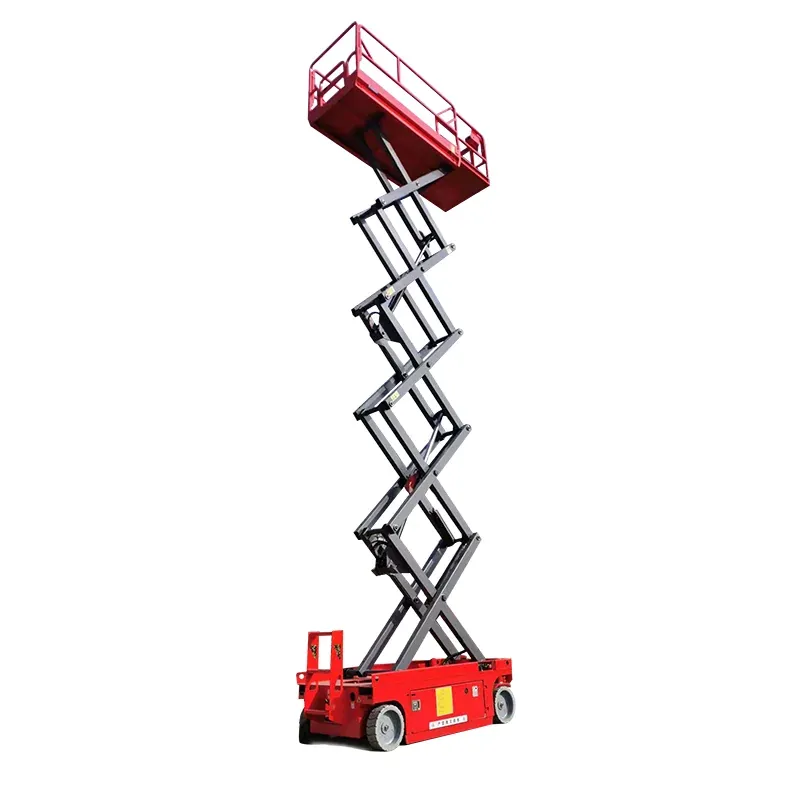 GTJZ-1214 40ft (11.8 m) Self-Propelled Scissor Lift — 320 kg